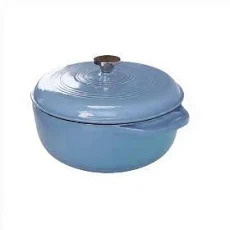
Enameled Cast Iron Dutch Oven Lodge, Is It Non-Toxic?
Lower concern; traditional enameled cast iron is PFAS-risk-free by material design.
Fired enamel coating on cast iron with no nonstick treatment or waterproofing layer. Lodge avoids PFAS claims because the material class itself carries minimal exposure.
Still want this one anyway? Check the price on Amazon. We’d swap it.
Material
enameled cast iron (enamel coating on cast iron base)
Lab data
No public lab test
You may also be interested in
Top-graded picks in the categories readers replace first, every one scored on the same rubric.

- polypropylene filter housing, carbon/sediment cartridge
- We found no PFAS statement from the brand
- Bacterial growth in spent cartridges
3 hazards checked on this product, all on its full breakdown.

Aquasure
Premier Series 75 GPD Under Sink Reverse Osmosis Water Filtration System
- RO membrane, carbon filters, stainless steel housing
- We found no PFAS statement from the brand
- Bacterial and microbial growth in housing and filters
4 hazards checked on this product, all on its full breakdown.

Avocado
Vegan Mattress
- organic cotton, natural latex, coconut coir, recycled steel coils
- The brand calls it PFAS-free, which we have not verified
- Heavy metals
2 hazards checked on this product, all on its full breakdown.
Is Enameled Cast Iron Dutch Oven Lodge non-toxic? What it is made of
Lodge enameled Dutch ovens consist of a cast iron core coated with a vitreous enamel (glass-like ceramic fused to metal at high temperature). The enamel layer is chemically inert once cured and does not leach aluminum or release volatile fumes during normal cooking. Cast iron itself is food-safe and will not degrade from acidic or salty foods in ways that compromise safety, though the enamel coating is the barrier that prevents iron oxidation and contamination of food.
What’s concerning
No PFAS disclosure
No public statement from the brand about PFAS in this product.
Category baseline
The starting point for this type of product, before anything specific to this product is counted.
Enamel coating degradation and metal leaching
If the enamel coating is chipped, cracked, or worn through, the underlying cast iron can oxidize and iron can leach into acidic foods. This is a mechanical wear issue rather than a manufacturing defect; risk is proportional to the extent and depth of damage. Visible deep chipping warrants replacement.
Thermal stress fracture of enamel
Rapid temperature changes (thermal shock) can cause enamel to crack or shatter, especially if a hot pot is exposed to cold water or cold surfaces. This is a usage hazard, not a material hazard, and is preventable with proper care. Once cracked, risk shifts to iron leaching as noted above.
What’s reassuring
Base material not linked to PFAS
The main material recorded for this product is not one associated with PFAS.
Lead
Modern vitreous enamel used on enameled cast iron cookware does not typically contain lead or cadmium, and Lodge has no public record of violations or recalls on this basis. Traditional enamels were sometimes formulated with these metals, but contemporary U.S. and EU manufacturing standards prohibit them.
Source, ATSDR ↗Teflon-type coating or non-stick fume release
Enameled cast iron does not use Teflon-type coating or synthetic non-stick coatings; the enamel is a glass-ceramic product that does not off-gas toxic fumes at normal cooking temperatures or even at high heat.
Volatile organic compound (VOC) off-gassing
Vitreous enamel is a fully cured inorganic ceramic and does not off-gas VOCs, formaldehyde, or other volatile compounds during normal use or storage, in contrast to some nonstick or ceramic-coated alternatives.
How is this PFAS grade calculated?
The brand's record and disclosure
Lodge Manufacturing is one of the oldest continuously operating cast iron cookware makers in the United States (founded 1896) and manufactures enameled Dutch ovens domestically. The company does not routinely publish heavy metal or coating safety test results for consumer access, which is typical for cookware manufacturers but limits transparency. No significant recalls or safety controversies specific to enameled Dutch ovens have been established in public records. Lodge's enamel formulations are not disclosed in detail, but traditional vitreous enamel standards do not typically include lead or cadmium in modern production.
How it compares in its category
Enameled cast iron Dutch ovens (Lodge, Le Creuset, Staub) have lower concern for leaching and are often recommended by food safety professionals. They avoid the Teflon-type coating fume risk of non-stick pans and the aluminum leaching concerns of bare aluminum cookware. Compared to ceramic-coated or non-stick alternatives, enameled cast iron has a longer track record of chemical stability and a well-established safety profile over decades of use. The main trade-off is weight and the need for careful handling to prevent enamel chipping.
If you buy it
Avoid thermal shock (do not move a hot Dutch oven directly to a cold surface or run cold water on it) as this can crack the enamel. Do not use steel wool or abrasive scrubbers on the enamel surface; hand wash with a soft sponge. If the enamel coating chips or cracks significantly, the exposed cast iron will begin to rust; shallow chips are cosmetic, but large chips warrant replacement of the lid or pot. Enamel-coated cookware has lower concern for leaching at stovetop temperatures and oven use up to the manufacturer's stated limit (typically 350-500 degrees Fahrenheit depending on the brand).
What is not known about PFAS in this product?
- Basis
- Model estimate, 92% confidence, not a lab result
- Lab test
- None on record for this exact product
- Brand statement
- Lodge has made a specific claim
Formulations change between production runs, so check the current label. How we grade.
More dutch ovens grades
How we score, every product runs through the same public 0-100 rubric based on materials, coatings, brand disclosure, lab findings, and recalls. See the full methodology → Spotted a mistake? Report an error.