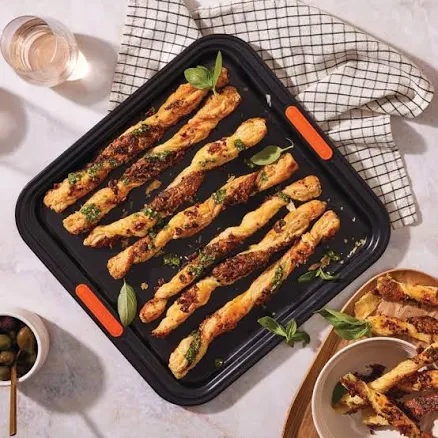
Le Creuset Square Baking Sheet, Is It Non-Toxic?
Good choice, enameled cast iron is traditional non-Teflon-family coating cookware.
Le Creuset square baking sheets are enameled cast iron with a glass enamel finish, not Teflon-family coating nonstick. The material type presents lower PFAS risk than modern nonstick cookware.
The better-graded swap
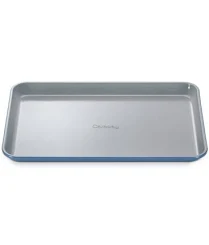
Caraway
Caraway Nonstick Ceramic Medium Baking Sheet
100/100 safety
Same rubric that flunked this product. The swap earned Excellent.
Still want this one anyway? Check the price on Amazon. We’d swap it.
Material
enameled cast iron
Lab data
No public lab test
You may also be interested in
Top-graded picks in the categories readers replace first, every one scored on the same rubric.

- polypropylene filter housing, carbon/sediment cartridge
- We found no PFAS statement from the brand
- Bacterial growth in spent cartridges
3 hazards checked on this product, all on its full breakdown.

Aquasure
Premier Series 75 GPD Under Sink Reverse Osmosis Water Filtration System
- RO membrane, carbon filters, stainless steel housing
- We found no PFAS statement from the brand
- Bacterial and microbial growth in housing and filters
4 hazards checked on this product, all on its full breakdown.

Avocado
Vegan Mattress
- organic cotton, natural latex, coconut coir, recycled steel coils
- The brand calls it PFAS-free, which we have not verified
- Heavy metals
2 hazards checked on this product, all on its full breakdown.
Is Le Creuset Square Baking Sheet non-toxic? What it is made of
Le Creuset's square baking sheet is enameled cast iron, a steel core coated with a vitrified glass-ceramic enamel layer. This enamel is fused at high temperature and chemically inert once cured, meaning it does not leach metals or break down into particles during normal baking use. Unlike nonstick Teflon-family coating coatings (Teflon-type coating/PFOA), enameled cast iron has no synthetic polymer matrix that can degrade, peel, or release fumes when overheated.
What’s concerning
No PFAS disclosure
No public statement from the brand about PFAS in this product.
Category baseline
The starting point for this type of product, before anything specific to this product is counted.
Enamel coating degradation and peeling
Enameled cast iron can chip or crack with impact or abrasive scrubbing, exposing bare cast iron underneath. This is a durability issue more than a chemical hazard, but Le Creuset's premium enamel thickness makes this less likely than budget alternatives.
Thermal shock and fracture
Enameled cast iron can crack if moved rapidly between very hot and cold conditions (e.g., hot oven to cold water). This is a physical hazard, not chemical, but can create sharp edges. Allow cookware to cool before cleaning.
Nickel migration from stainless steel components (handles/edges)
If the baking sheet uses stainless steel trim or hardware, trace nickel leaching is theoretically possible in acidic foods over long contact. Le Creuset does not disclose nickel content; risk is low but not quantified publicly.
What’s reassuring
Base material not linked to PFAS
The main material recorded for this product is not one associated with PFAS.
Lead
No recalls or test reports documenting lead or cadmium in Le Creuset enameled cookware are on record. EU and US food contact regulations limit lead in glazes; enameled cast iron from reputable manufacturers has passed such tests for decades.
Source, ATSDR ↗Aluminum leaching (if underlying steel contains aluminum)
This product is cast iron, not aluminum. The enamel coating fully blocks any theoretical leaching. No hazard applies.
How is this PFAS grade calculated?
The brand's record and disclosure
Le Creuset is a heritage cookware maker with a 100-year manufacturing history in France. The brand has not published detailed safety certifications or public PFAS statements, and no major recalls or safety complaints specific to this baking sheet are on record. The company's lack of transparency on chemical testing is typical for traditional cookware makers, but is not itself a red flag given the well-established safety profile of enameled cast iron as a material class.
How it compares in its category
Enameled cast iron baking sheets sit at the lower end of chemical leaching risk compared to aluminum, mild steel with synthetic nonstick coatings, or ceramic-coated alternatives. The enamel layer acts as a complete barrier between food and the underlying metal, eliminating aluminum leaching concerns. Le Creuset's premium positioning reflects thicker enamel and tighter quality control than budget enameled alternatives, reducing flaking risk.
If you buy it
Season the enamel lightly with oil before first use to improve release; avoid abrasive scouring that can damage the enamel finish. Use on moderate to moderately high heat (up to 400-500°F in the oven; avoid direct stovetop use). Inspect the enamel annually for chips or cracks; small chips are cosmetic, but deep damage exposing cast iron should trigger replacement to prevent rust. Hand wash and dry promptly to prevent water spotting and rust at exposed iron edges.
What is not known about PFAS in this product?
- Basis
- Model estimate, 82% confidence, not a lab result
- Lab test
- None on record for this exact product
- Brand statement
- Le Creuset has made a specific claim
Formulations change between production runs, so check the current label. How we grade.
What are the PFAS-free alternatives to Le Creuset Square Baking Sheet?
- ceramic nonstick coating
- A third party reports verifying it as PFAS-free
- Ceramic coating degradation over time
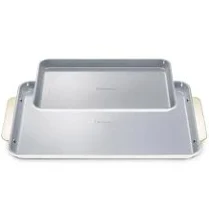
- ceramic nonstick coating
- A third party reports verifying it as PFAS-free
- Coating degradation and durability
2 hazards checked on this product, all on its full breakdown.
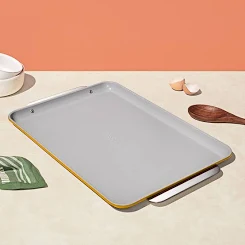
- ceramic nonstick coating
- The brand calls it PFAS-free, which we have not verified
- Ceramic coating degradation and particle shedding
3 hazards checked on this product, all on its full breakdown.
More bakeware grades
How we score, every product runs through the same public 0-100 rubric based on materials, coatings, brand disclosure, lab findings, and recalls. See the full methodology → Spotted a mistake? Report an error.