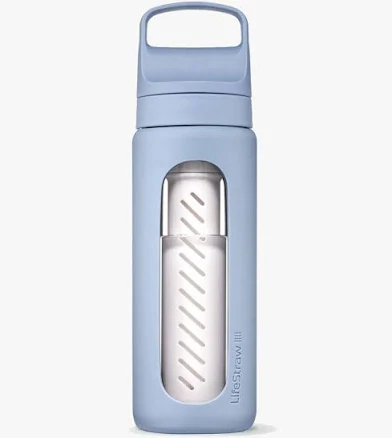
LifeStraw Go Series Glass Water Filter Bottle 20oz
Lower concern based on materials recorded and no disclosed water-repellent coating.
The borosilicate glass container is not a material linked to PFAS. The internal carbon and membrane filter composition is not stated. The brand has no PFAS statement on record for this product.
We flunk more products than we pass. This one earned its grade. How we grade
Material
Borosilicate glass container, internal carbon/membrane filter
Lab data
No public lab test
You may also be interested in
Top-graded picks in the categories readers replace first, every one scored on the same rubric.

Aqua Pure
3M Aqua-Pure AP802B Whole House Filter Housing
- polypropylene filter housing, carbon/sediment cartridge
- We found no PFAS statement from the brand
- Bacterial growth in spent cartridges
3 hazards checked on this product. See all of them.

Aquasure
Premier Series 75 GPD Under Sink Reverse Osmosis Water Filtration System
- RO membrane, carbon filters, stainless steel housing
- We found no PFAS statement from the brand
- Bacterial and microbial growth in housing and filters
4 hazards checked on this product. See all of them.

Avocado
Vegan Mattress
- organic cotton, natural latex, coconut coir, recycled steel coils
- The brand calls it PFAS-free, which we have not verified
- Heavy metals
2 hazards checked on this product. See all of them.
What LifeStraw Go Series Glass Water Filter is made of, ingredients and materials
The LifeStraw Go Series uses a borosilicate glass container, which is chemically inert and does not leach minerals, BPA, or other endocrine disruptors into water at any temperature. The internal filter uses activated carbon and a membrane (likely polypropylene or similar polymer) to reduce chlorine, taste, odor, and particulates. Glass presents lower concern for degradation and leaching risks compared to plastic bottles, making this design potentially preferable for long-term daily use.
What’s concerning
No PFAS disclosure
No public statement from the brand about PFAS in this product.
Bacterial growth in filter cartridge if unmaintained
Water filter bottles create a warm, moist microenvironment favorable to microbial colonization if filters are not replaced on schedule or if the bottle sits unused for weeks. No recalls are on record, but this is a category-level risk common to all portable filter bottles.
Glass container breakage and sharp edges
Borosilicate glass is durable but not shatterproof. Impact damage can create sharp edges or small glass shards; this is a mechanical hazard rather than chemical, but relevant for portable use.
Reduced filter effectiveness over time without replacement
Independent user reports indicate taste/odor reduction diminishes after 1.5 to 2 months of regular use; continued use beyond manufacturer guidance may reduce contaminant removal efficacy, though no acute health incidents are documented.
What’s reassuring
Base material not linked to PFAS
The main material recorded for this product is not one associated with PFAS.
Filter cartridge material leaching
LifeStraw does not disclose detailed polymer composition of the internal filter membrane in public spec sheets. The activated carbon itself is inert, but polymer housing material is unspecified and not independently tested in published results.
Seal/gasket material degradation
Cap seals and gaskets are not detailed in product documentation. If composed of rubber or silicone, they may degrade over 1-2 years, reducing water-tightness and potentially introducing mold growth in the cap assembly. Replacement guidance is unclear.
The full breakdown
The brand's record and disclosure
LifeStraw has not published detailed third-party certifications for filter composition or contaminant reduction claims on this specific model in easily accessible public records. The brand markets the product for NSF/WQA claims in some regions, but transparency on filter material sourcing and manufacturing is limited. No significant safety recalls or contamination incidents are on record for this product line. The company's PFAS stance remains undisclosed publicly.
How it compares in its category
Most reusable water filter bottles use plastic housings (polycarbonate or tritan), which introduces leaching and degradation concerns absent here. The glass construction places this product in a premium subset of the market. However, competitors with equivalent glass designs (e.g., some Soma or Brita models) offer similar safety profiles; the LifeStraw Go's main differentiator is portability and filter durability claims rather than material safety.
If you buy it
Replace the filter cartridge every 2 months or 40 gallons per LifeStraw guidelines to prevent bacterial growth and reduced effectiveness. Hand wash the glass vessel and cap regularly; the glass is durable but can break if dropped. Do not expose to extreme temperature shock (e.g., boiling water to ice). Store dry when not in use to prevent mold in the filter chamber. Borosilicate glass can be heated, but the filter cartridge should not be submerged in boiling water.
What we don’t know
- Basis
- Model estimate, 72% confidence, not a lab result
- Lab test
- None on record for this exact product
- Brand statement
- LifeStraw has made a specific claim
Formulations change between production runs, so check the current label. How we grade.
Better-graded alternatives in Water Filters

Aquamira
Water Storage Treatment 2 oz Glass Bottles 60 gallons Purification
- glass bottles, sodium dichloroisocyanurate treatment chemical
- We found no PFAS statement from the brand
- Chemical overdose or misuse
5 hazards checked on this product. See all of them.

Big Berkey
Empty Housing with NO Filters Included
- Stainless steel housing and spigot
- We found no PFAS statement from the brand
- Bacterial growth and biofilm if filters not replaced
5 hazards checked on this product. See all of them.

LifeStraw
Home Glass Water Filter Pitcher
- Borosilicate glass pitcher, replaceable activated-carbon filter cartridge
- Bacterial growth in filter cartridge if unmaintained
5 hazards checked on this product. See all of them.
More water filters grades
How we score, every product runs through the same public 0-100 rubric based on materials, coatings, brand disclosure, lab findings, and recalls. See the full methodology → Spotted a mistake? Report an error.