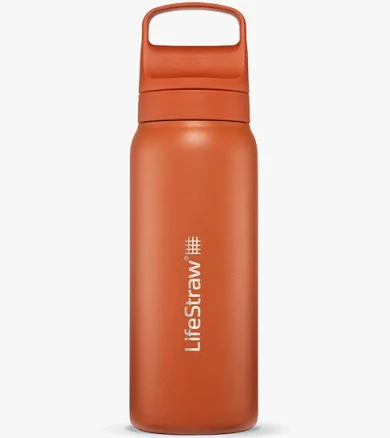
LifeStraw Go Stainless Steel Water Filter Bottle
Lower concern for bottle, but activated carbon filter composition remains unconfirmed.
The stainless steel bottle itself presents lower concern. LifeStraw does not disclose PFAS risk or filter composition, and activated carbon filters vary by manufacturer in binder composition.
The better-graded swap
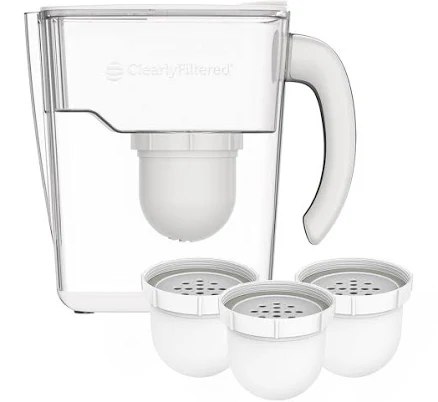
Clearly Filtered
Clearly Filtered No. 1 Filtered Water Pitcher
95/100 safety
Same rubric that flunked this product. The swap earned Excellent.
Still want this one anyway? Check the price on Amazon. We’d swap it.
Material
Stainless steel bottle with activated carbon/coconut shell filter
Lab data
No public lab test
You may also be interested in
Top-graded picks in the categories readers replace first, every one scored on the same rubric.

Aqua Pure
3M Aqua-Pure AP802B Whole House Filter Housing
- polypropylene filter housing, carbon/sediment cartridge
- We found no PFAS statement from the brand
- Bacterial growth in spent cartridges
3 hazards checked on this product. See all of them.

Aquasure
Premier Series 75 GPD Under Sink Reverse Osmosis Water Filtration System
- RO membrane, carbon filters, stainless steel housing
- We found no PFAS statement from the brand
- Bacterial and microbial growth in housing and filters
4 hazards checked on this product. See all of them.

Avocado
Vegan Mattress
- organic cotton, natural latex, coconut coir, recycled steel coils
- The brand calls it PFAS-free, which we have not verified
- Heavy metals
2 hazards checked on this product. See all of them.
What LifeStraw Go Stainless Steel Water Filter is made of, ingredients and materials
The bottle itself is food-grade stainless steel (typically 18/8), which does not leach metals or degrade into the water under normal use. The filter element is coconut shell activated carbon combined with ion exchange resin; activated carbon is well-established for removing chlorine, taste, and odor but does not remove all chemical contaminants or bacteria on its own. The exact resin composition and filter housing materials are not fully disclosed by LifeStraw in public documentation, which limits independent assessment of leaching potential.
What’s concerning
No PFAS disclosure
No public statement from the brand about PFAS in this product.
Bacterial growth in filter housing if unmaintained
Activated carbon and filter housings can harbor bacteria if not rinsed regularly or if filters are not replaced on schedule. LifeStraw's design includes a replaceable cartridge, which mitigates this, but user compliance is critical.
Housing leachables (filter casing composition)
The filter cartridge housing material is not explicitly stated as tested for leaching; while the stainless steel bottle itself is inert, the plastic or composite filter case composition remains unconfirmed in public data.
PFAS
The brand does not publicly confirm whether coconut shell activated carbon removes PFOA/PFOS or other PFAS compounds; this gap leaves uncertainty for users in contaminated areas relying on it as primary treatment.
Source, ATSDR ↗What’s reassuring
Base material not linked to PFAS
The main material recorded for this product is not one associated with PFAS.
Incomplete pathogen removal
Activated carbon alone does not remove viruses or bacteria reliably. LifeStraw markets this as a lifestyle/taste/chlorine filter rather than medical-grade purification, so contamination risk depends on source water quality and user expectations.
The full breakdown
The brand's record and disclosure
LifeStraw has a strong track record in developing countries for portable water access but maintains limited transparency on material component sourcing and test certification. The brand does not publicly disclose PFAS testing results or stance on PFAS removal, despite growing consumer demand for this data. No major recalls or contamination incidents are on public record for this model. Third-party certifications (NSF, WQA) are not prominently claimed for the Go model.
How it compares in its category
This product sits in the mid-to-premium segment of portable filter bottles. Unlike gravity-fed home filters, it avoids large plastic housing that can off-gas VOCs. Compared to simple carbon-only pitchers, the stainless steel construction eliminates BPA and phthalate leaching risk. However, it offers less bacterial/pathogen removal than UV or boiling methods, and coconut carbon does not guarantee PFOA/PFOS removal, a gap versus some competitors with explicit PFAS claims.
If you buy it
Replace the filter cartridge every 40 gallons (or roughly every 2-3 months of daily use) to prevent bacterial biofilm and maintain carbon effectiveness; do not exceed manufacturer guidance. Do not expose the bottle to extreme heat (avoid dishwashers for the filter assembly). Rinse the filter housing regularly and inspect for visible mold or discoloration. If your source water is heavily contaminated or you have immunocompromise, combine with boiling or use in addition to municipal treatment rather than as sole defense.
What we don’t know
- Basis
- Model estimate, 72% confidence, not a lab result
- Lab test
- None on record for this exact product
- Brand statement
- LifeStraw has made a specific claim
Formulations change between production runs, so check the current label. How we grade.
Better-graded alternatives in Water Filters

Aquamira
Water Storage Treatment 2 oz Glass Bottles 60 gallons Purification
- glass bottles, sodium dichloroisocyanurate treatment chemical
- We found no PFAS statement from the brand
- Chemical overdose or misuse
5 hazards checked on this product. See all of them.

Big Berkey
Empty Housing with NO Filters Included
- Stainless steel housing and spigot
- We found no PFAS statement from the brand
- Bacterial growth and biofilm if filters not replaced
5 hazards checked on this product. See all of them.

LifeStraw
Home Glass Water Filter Pitcher
- Borosilicate glass pitcher, replaceable activated-carbon filter cartridge
- Bacterial growth in filter cartridge if unmaintained
5 hazards checked on this product. See all of them.
More water filters grades
How we score, every product runs through the same public 0-100 rubric based on materials, coatings, brand disclosure, lab findings, and recalls. See the full methodology → Spotted a mistake? Report an error.