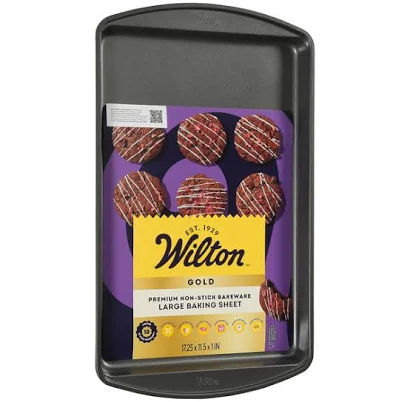
· Bakeware
Gold Non-Stick Bakeware Large Baking Sheet
Don't buy until the brand discloses coating composition.
Hasn't told you what's in their nonstick coating. You can't tell if it uses Teflon-type coating or other Teflon-family coating without that information.
The better-graded swap
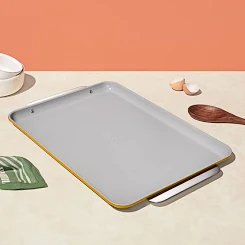
Caraway
Caraway Nonstick Ceramic Large Baking Sheet
90/100 safety
Same rubric that flunked this product. The swap earned Excellent.
Still want this one anyway? Check the price on Amazon. We’d swap it.
Material
Non-stick coating, unspecified type
Brand disclosure
Brand is silent on PFAS
Lab data
No public lab test
Is Gold Non-Stick Bakeware Large Baking Sheet non-toxic? What it is made of
The brand's 'Gold' non-stick bakeware uses an unspecified non-stick polymer coating on steel substrate. The coating composition is critical because non-stick chemistry determines leaching and fume risk, yet the brand does not publicly disclose whether this is Teflon-type coating-based (traditional Teflon), ceramic, or a proprietary alternative. Without this information, hazard assessment relies on general non-stick coating risks rather than product-specific data. The steel base itself is stable, but the coating longevity and thermal stability cannot be verified.
What’s concerning
Category baseline
The starting point for this type of product, before anything specific to this product is counted.
No PFAS disclosure
No public statement from the brand about PFAS in this product.
Non-stick, chemistry undisclosed
Marketed as non-stick without stating the coating chemistry.
Teflon-type coating fume risk (thermal decomposition)
If this product uses Teflon-type coating-based coating, heating above manufacturer specs or accidental overheating can release fluorinated polymer fumes. The brand has not disclosed coating type, so Teflon-type coating presence cannot be ruled out. Risk is manageable with temperature control and ventilation but requires user diligence.
Coating degradation and microflaking
All non-stick coatings degrade over time with use and thermal cycling. Flaking particles ingested with food present unknown toxicity; no long-term epidemiological data exists. Replacement every 3-5 years of regular use is prudent for any non-stick bakeware.
Coating composition disclosure gap (regulatory risk)
The brand's failure to disclose coating chemistry is increasingly unusual as competitors publish PFAS-free claims. This opacity limits informed choice and suggests the brand may not prioritize the transparency consumers now expect for non-stick cookware.
What’s reassuring
Aluminum leaching (if aluminum is present under coating)
Bakeware is steel-based, not aluminum, so aluminum leaching is not a concern for this product. Steel substrate provides a stable barrier between food and any coating layer.
Lead
Bakeware typically has a non-stick polymer coating rather than ceramic glaze; no lead or cadmium glaze layers are implied in this product's design. Steel substrates do not require toxic glazing agents.
Source, ATSDR ↗The full breakdown
The brand's record and disclosure
The brand has not published a public PFAS or non-stick coating disclosure statement for this product line. The brand maintains general cookware safety claims but does not specify coating chemistry or third-party testing results. No significant recalls specific to non-stick bakeware coating degradation are on public record, though this reflects absence of reported incidents rather than confirmed safety. The silence on coating composition is the primary barrier to confident evaluation.
How it compares in its category
Non-stick bakeware spans a wide spectrum, budget brands often use older Teflon-type coating coatings with higher fume risk, while premium brands increasingly disclose ceramic or water-based alternatives with lower PFAS profiles. The brand positions itself as mid-market, yet provides no competitive transparency. Bakers seeking documented PFAS-free options typically choose brands that explicitly certify ceramic or ceramic-hybrid coatings; The brand's silence leaves this product in an uncertain middle ground. Parchment paper or silicone mats offer non-stick function without coating chemistry risk.
If you buy it
Use at recommended temperatures only (typically under 500F for non-stick bakeware); overheating degrades coatings and increases fume risk. Inspect the surface before each use for scratches, peeling, or discoloration, which signal coating breakdown and warrant replacement. Hand wash only; avoid metal utensils and abrasive scrubbing that accelerate coating wear. If you smell chemical odors during preheating or baking, discontinue use immediately and ventilate the kitchen, as this may indicate polymer degradation.
What we don’t know
- Basis
- Model estimate, 35% confidence, not a lab result
- Lab test
- None on record for this exact product
- Brand statement
- has made none
Formulations change between production runs, so check the current label. How we grade.
Better-graded alternatives in Bakeware
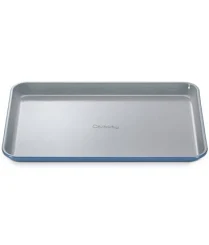
Caraway
Nonstick Ceramic Medium Baking Sheet
- ceramic nonstick coating
- A third party reports verifying it as PFAS-free
- Ceramic coating degradation over time
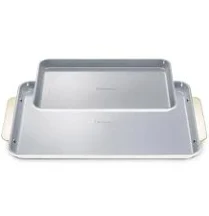
Caraway
Ceramic Nonstick Baking Sheet Duo
- ceramic nonstick coating
- A third party reports verifying it as PFAS-free
- Coating degradation and durability
2 hazards checked on this product. See all of them.
Caraway
Nonstick Ceramic Large Baking Sheet
- ceramic nonstick coating
- The brand calls it PFAS-free, which we have not verified
- Ceramic coating degradation and particle shedding
3 hazards checked on this product. See all of them.
More bakeware grades
How we score, every product runs through the same public 0-100 rubric based on materials, coatings, brand disclosure, lab findings, and recalls. See the full methodology → Spotted a mistake? Report an error.