· Bakeware
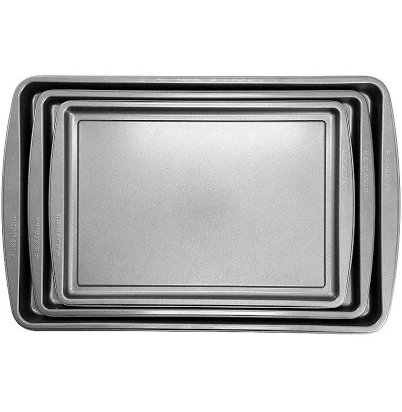
Nonstick Steel Jelly Roll Baking Sheet Set
Don't buy until you confirm the coating details with the maker.
Doesn't specify what nonstick coating covers this jelly roll sheet. Ask them directly whether the coating contains Teflon-type coating or other Teflon-family coating.
The better-graded swap
Caraway
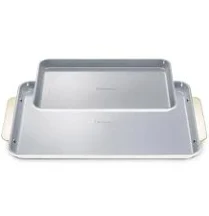
Caraway Ceramic Nonstick Baking Sheet Duo
100/100 safety
Same rubric that flunked this product. The swap earned Excellent.
Still want this one anyway? Check the price on Amazon. We’d swap it.
Material
Steel with unspecified nonstick coating
Brand disclosure
Brand is silent on PFAS
Lab data
No public lab test
Is Nonstick Steel Jelly Roll Baking Sheet Set non-toxic? What it is made of
This is a steel baking sheet with an applied nonstick coating of unspecified composition. Steel itself is inert and food-safe. The critical variable is the nonstick layer, if it is Teflon-type coating (Teflon) or Teflon-type coating-containing, it carries fume risk if overheated; if it is ceramic or silicone-based, the hazard profile is lower but durability may vary. The brand has not publicly disclosed the coating type for this product line, which is the core safety gap.
What’s concerning
Category baseline
The starting point for this type of product, before anything specific to this product is counted.
No PFAS disclosure
No public statement from the brand about PFAS in this product.
Non-stick, chemistry undisclosed
Marketed as non-stick without stating the coating chemistry.
Teflon-type coating fume risk (if coating composition)
If this sheet uses traditional Teflon-type coating nonstick, overheating (above 500°F) can release degradation fumes toxic to birds and potentially harmful to humans. The brand's silence on coating type means this cannot be ruled out; confirmation required before heavy oven use.
Coating degradation and flaking over time
Nonstick coatings on budget-tier steel sheets typically show visible wear within 2-3 years of regular use. Once flaking begins, coating particles may transfer to food; discontinuation is the lower concern response, though no acute toxicity data for ingested nonstick coatings in small quantities exists.
Steel oxidation if coating is breached
If the nonstick layer is damaged and the underlying steel is exposed, oxidation or corrosion may occur over time, particularly if the sheet is not promptly replaced. This is a durability rather than acute toxicity issue.
What’s reassuring
Aluminum leaching (if aluminum base layer present)
The brand lists this as steel; no aluminum core is indicated. If aluminum is present as a hidden layer, prolonged acidic food contact could theoretically mobilize trace aluminum, but no evidence of this in the brand's products.
Lead
No recalls or findings of heavy metal contamination in nonstick cookware are on record. Modern nonstick coatings do not routinely contain lead or cadmium, though independent testing would be required to confirm absence in this specific product.
Source, ATSDR ↗The full breakdown
The brand's record and disclosure
Manufactures mid-range cookware but maintains minimal public transparency on nonstick coating formulations. No major safety recalls specific to this product are on record, but the brand does not proactively publish PFAS-free certifications or detailed material safety data sheets for consumer cookware. This silence on coating chemistry is typical for the budget cookware segment and is not a red flag on its own, but it prevents confident safety assessment.
How it compares in its category
Steel jelly roll pans are more durable than aluminum alternatives and resist warping, but nonstick coating durability is the limiting factor for any brand in this price tier. Premium brands (GreenPan, Our Place) explicitly market ceramic or PFAS-free coatings; The brand does not. For the same price point, you may find comparable steel sheets from other manufacturers with clearer coating disclosures or from uncoated stainless steel specialists, which eliminate coating uncertainty entirely.
If you buy it
Before use, contact customer service to request the specific nonstick coating material and any PFAS content data. Store-dry and hand-wash only; dishwasher use can degrade nonstick coatings faster. Never heat empty above 400-500°F (check manufacturer guidance once you have coating details). Inspect the surface regularly for flaking or peeling; discontinue use if coating damage appears, as bare steel underneath may oxidize or coating particles may enter food. Replace every 3-5 years depending on use frequency, as nonstick durability degrades over time.
What we don’t know
- Basis
- Model estimate, 35% confidence, not a lab result
- Lab test
- None on record for this exact product
- Brand statement
- has made none
Formulations change between production runs, so check the current label. How we grade.
Better-graded alternatives in Bakeware
Caraway
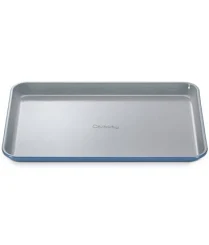
Nonstick Ceramic Medium Baking Sheet
- ceramic nonstick coating
- A third party reports verifying it as PFAS-free
- Ceramic coating degradation over time
Caraway
Ceramic Nonstick Baking Sheet Duo
- ceramic nonstick coating
- A third party reports verifying it as PFAS-free
- Coating degradation and durability
2 hazards checked on this product. See all of them.
Caraway
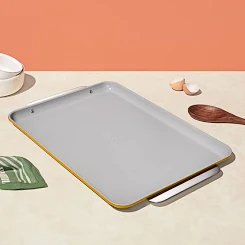
Nonstick Ceramic Large Baking Sheet
- ceramic nonstick coating
- The brand calls it PFAS-free, which we have not verified
- Ceramic coating degradation and particle shedding
3 hazards checked on this product. See all of them.
More bakeware grades
How we score, every product runs through the same public 0-100 rubric based on materials, coatings, brand disclosure, lab findings, and recalls. See the full methodology → Spotted a mistake? Report an error.