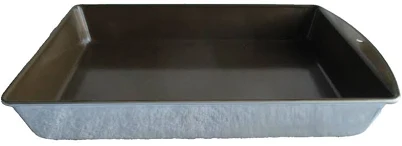
Vintage Mirro 13"x9"x2" Non-stick Bake Pan, Is It Non-Toxic?
Vintage cookware with unknown coating; PFAS risk unclear.
This vintage Mirro pan has an unnamed non-stick coating with no PFAS information from the brand. Older non-stick cookware frequently contained Teflon-type coating.
The better-graded swap
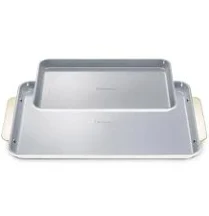
Caraway
Caraway Ceramic Nonstick Baking Sheet Duo
100/100 safety
Same rubric that flunked this product. The swap earned Excellent.
Still want this one anyway? Check the price on Amazon. We’d swap it.
Material
Aluminum with non-stick coating (unspecified type)
Brand disclosure
Brand is silent on PFAS
Lab data
No public lab test
You may also be interested in
Top-graded picks in the categories readers replace first, every one scored on the same rubric.

- polypropylene filter housing, carbon/sediment cartridge
- We found no PFAS statement from the brand
- Bacterial growth in spent cartridges
3 hazards checked on this product, all on its full breakdown.

Aquasure
Premier Series 75 GPD Under Sink Reverse Osmosis Water Filtration System
- RO membrane, carbon filters, stainless steel housing
- We found no PFAS statement from the brand
- Bacterial and microbial growth in housing and filters
4 hazards checked on this product, all on its full breakdown.

Avocado
Vegan Mattress
- organic cotton, natural latex, coconut coir, recycled steel coils
- The brand calls it PFAS-free, which we have not verified
- Heavy metals
2 hazards checked on this product, all on its full breakdown.
Is Vintage Mirro 13"x9"x2" Non-stick Bake Pan non-toxic? What it is made of
This is aluminum sheet metal with a factory-applied non-stick coating of unspecified chemistry. Mirro did not consistently label coating types on vintage bakeware, making it impossible to confirm whether it contains Teflon-type coating (Teflon-based) or an alternative. The aluminum substrate itself is chemically stable for baking but can leach small amounts of metal if the non-stick layer degrades or if acidic foods contact bare aluminum. The coating's age and condition are critical unknowns in a vintage piece.
What’s concerning
Category baseline
The starting point for this type of product, before anything specific to this product is counted.
No PFAS disclosure
No public statement from the brand about PFAS in this product.
Non-stick, chemistry undisclosed
Marketed as non-stick without stating the coating chemistry.
Teflon-type coating fume risk (thermal degradation)
If the coating is Teflon-type coating-based (unconfirmed), heating above 350-400°F can release fumes. Vintage non-stick cookware often has lower thermal stability than modern formulations, and this pan's age increases the likelihood of coating fragility.
Aluminum leaching
If the non-stick coating is worn or has begun to flake, direct contact between acidic or alkaline foods and bare aluminum can result in small amounts of aluminum transfer, particularly during long cooking times.
Coating degradation over time
As a vintage item, the non-stick layer has already undergone decades of thermal cycling and storage. Progressive peeling or release of coating particles into food is a real concern with age-worn bakeware.
Microplastics
Degraded non-stick coatings can fragment into food. While not technically 'microplastics' in the modern sense, ingestion of coating flakes is a physical contamination risk specific to aged non-stick cookware.
Source, EPA ↗What’s reassuring
Lead
Mirro aluminum bakeware typically does not use enamel topcoats; the non-stick finish is a separate applied layer. No public record of lead or cadmium contamination in Mirro bakeware exists.
Source, ATSDR ↗How is this PFAS grade calculated?
The brand's record and disclosure
Mirro (now owned by Groupe SEB) has maintained a largely silent public stance on PFAS in legacy products and does not appear to have published retrospective safety data for vintage cookware lines. Contemporary Mirro products marketed as PFAS-free exist, but this vintage pan predates modern labeling standards. No major recalls specific to Mirro non-stick bakeware toxicity are on public record, though the absence of recalls does not confirm safety, only that no widespread acute harm was formally documented.
How it compares in its category
Vintage aluminum non-stick bakeware (1990s, early 2000s era) sits at higher PFAS uncertainty than modern ceramic or silicone alternatives, which carry no PFAS chemistry. This pan is comparable in risk profile to other unlabeled vintage Teflon-coated cookware from that era. Modern stainless steel or cast iron baking sheets eliminate the non-stick chemical question entirely, though they require more maintenance and are heavier.
If you buy it
Inspect the non-stick surface closely for chips, peeling, or visible wear; discard immediately if coating is compromised. Use only at oven temperatures below 350°F to reduce any risk of thermal breakdown of the coating. Avoid storing acidic foods (tomato sauce, citrus) directly in the pan; transfer promptly after cooking. Hand wash gently with soft sponges; avoid metal utensils and dishwasher, which accelerate coating degradation. Consider this a supplementary pan with a limited remaining lifespan rather than a primary baking tool.
What is not known about PFAS in this product?
- Basis
- Model estimate, 35% confidence, not a lab result
- Lab test
- None on record for this exact product
- Brand statement
- Mirro has made none
Formulations change between production runs, so check the current label. How we grade.
What are the PFAS-free alternatives to Vintage Mirro 13"x9"x2" Non-stick Bake Pan?
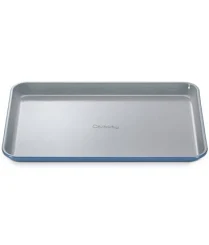
- ceramic nonstick coating
- A third party reports verifying it as PFAS-free
- Ceramic coating degradation over time
- ceramic nonstick coating
- A third party reports verifying it as PFAS-free
- Coating degradation and durability
2 hazards checked on this product, all on its full breakdown.
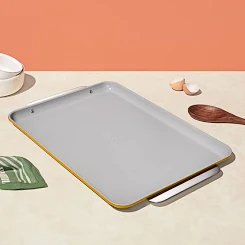
- ceramic nonstick coating
- The brand calls it PFAS-free, which we have not verified
- Ceramic coating degradation and particle shedding
3 hazards checked on this product, all on its full breakdown.
More bakeware grades
How we score, every product runs through the same public 0-100 rubric based on materials, coatings, brand disclosure, lab findings, and recalls. See the full methodology → Spotted a mistake? Report an error.