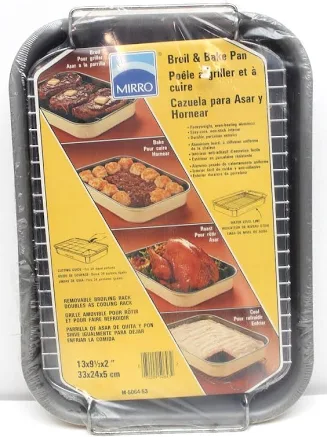
Vintage Mirro Aluminum Broil & Bake Pan M-5064-53 Non-stick 13" X 9.5"
Skip. Vintage non-stick cookware coating unknown, likely Teflon-type coating-based.
This vintage Mirro pan has an unspecified non-stick coating. Mid-century non-stick cookware typically used Teflon-type coating; no disclosure available to confirm or rule out PFAS.
The better-graded swap
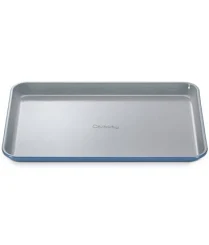
Caraway
Caraway Nonstick Ceramic Medium Baking Sheet
100/100 safety
Same rubric that flunked this product. The swap earned Excellent.
Still want this one anyway? Check the price on Amazon. We’d swap it.
Material
aluminum with unspecified non-stick coating
Brand disclosure
Brand is silent on PFAS
Lab data
No public lab test
Is Vintage Mirro Aluminum Broil & Bake Pan non-toxic? What it is made of
This Mirro M-5064-53 is aluminum sheet metal with an unspecified non-stick surface coating applied at manufacture. The coating chemistry is not disclosed by Mirro in available product literature, but vintage non-stick cookware from this era (M-series Mirro pans are decades old) almost universally used Teflon-type coating (Teflon) or similar Teflon-family coating. Aluminum conducts heat efficiently but is reactive to acidic foods; the non-stick layer is the primary barrier between food and the metal substrate.
What’s concerning
Non-stick, chemistry undisclosed
Marketed as non-stick without stating the coating chemistry.
Category baseline
The starting point for this type of product, before anything specific to this product is counted.
No PFAS disclosure
No public statement from the brand about PFAS in this product.
Teflon-type coating degradation and thermal fume release
Vintage non-stick coatings degrade over decades; heating above manufacturer limits (unknown for this model) or contact with high heat can release Teflon-type coating fumes. Age and lack of clear use guidelines increase this risk.
Aluminum leaching into food
Aluminum cookware can leach trace aluminum to acidic, salty, or prolonged-contact foods if the non-stick barrier is compromised or thin. Degraded vintage coating raises this concern.
Coating loss and flaking debris in food
Non-stick coatings on vintage cookware are prone to peeling and flaking with age and use. Ingestion of coating particles is a mechanical contamination hazard, particularly if the pan has been in storage or repeated use over many years.
Undisclosed coating composition
Mirro does not provide coating chemistry for this vintage model. Without third-party certification or manufacturer data, the presence of PFAS analogs or other non-stick chemicals beyond Teflon-type coating cannot be ruled out and cannot be verified.
What’s reassuring
Lead
No historical record of lead or cadmium contamination in Mirro aluminum non-stick cookware; however, vintage painted or enameled aluminum cookware sometimes contained these metals in decorative glazes, which is not applicable to this non-stick model.
Source, ATSDR ↗The full breakdown
The brand's record and disclosure
Mirro, now owned by Groupe SEB, has not publicly disclosed coating chemistry, PFAS-free reformulation timelines, or third-party testing results for vintage non-stick cookware lines. No independent recall or safety notice for this specific model (M-5064-53) is on record, but the age and unknown coating status mean historical performance data is limited. The brand's silence on PFAS in older products reflects general industry opacity prior to recent regulatory pressure.
How it compares in its category
Vintage aluminum non-stick pans pose higher uncertainty than modern ceramic-coated or stainless-steel alternatives because coating degradation accelerates with age and repeated heating cycles. Current market offerings from major brands often specify ceramic, water-based, or PFOA-free coatings. A 1970s-2000s era Mirro pan lacks the transparency and reformulation commitments of newer cookware, making risk assessment difficult.
If you buy it
Do not use this pan above 400-450°F; Teflon-type coating-based coatings can degrade and release fumes above 500°F. Inspect the non-stick surface monthly for peeling, scratches, or discoloration; discard if damage is visible. Hand wash only; avoid metal utensils and dishwasher use, which accelerate coating wear. Replace immediately if the coating shows white flaking or you notice a chemical smell during heating.
What we don’t know
- Basis
- Model estimate, 35% confidence, not a lab result
- Lab test
- None on record for this exact product
- Brand statement
- Mirro has made none
Formulations change between production runs, so check the current label. How we grade.
Better-graded alternatives in Bakeware
Caraway
Nonstick Ceramic Medium Baking Sheet
- ceramic nonstick coating
- A third party reports verifying it as PFAS-free
- Ceramic coating degradation over time
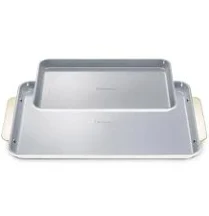
Caraway
Ceramic Nonstick Baking Sheet Duo
- ceramic nonstick coating
- A third party reports verifying it as PFAS-free
- Coating degradation and durability
2 hazards checked on this product. See all of them.
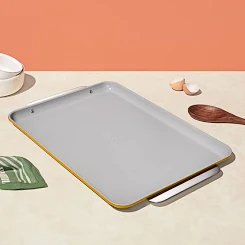
Caraway
Nonstick Ceramic Large Baking Sheet
- ceramic nonstick coating
- The brand calls it PFAS-free, which we have not verified
- Ceramic coating degradation and particle shedding
3 hazards checked on this product. See all of them.
More bakeware grades
How we score, every product runs through the same public 0-100 rubric based on materials, coatings, brand disclosure, lab findings, and recalls. See the full methodology → Spotted a mistake? Report an error.