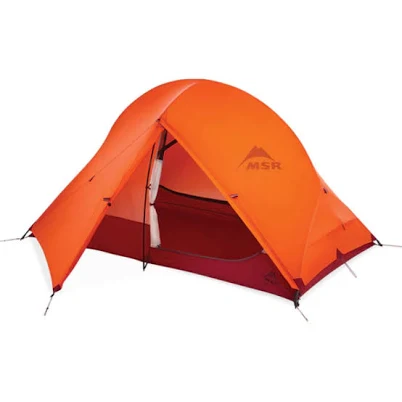
MSR Access 2 Ski Touring 2-Person 4-Season Tent
Avoid until MSR discloses its water-repellent coating chemistry; waterproofing is a common PFAS vector.
Ripstop nylon with a water-repellent treatment, but MSR does not disclose whether that water-repellent coating contains PFAS. Tent fabrics treated for waterproofing have historically relied on fluorochemicals.
Still want this one anyway? Check the price on Amazon. We’d swap it.
Material
Ripstop nylon with unspecified water-repellent coating (water-repellent coating) coating
Brand disclosure
Brand is silent on PFAS
Lab data
No public lab test
What MSR Access 2 Ski Touring 2-Person is made of, ingredients and materials
The Access 2 uses ripstop nylon (likely 20D or 30D) as primary fabric, which is durable, lightweight, and inherently non-toxic. The hazard lies in the water-repellent coating (water-repellent coating) coating applied to the nylon to shed water. MSR does not publicly disclose whether this coating contains PFAS (fluorochemicals like PFOA or GenX) or is PFAS-free, which is standard industry opacity. Non-PFAS water-repellent coating alternatives exist but are less common and require explicit labeling.
What’s concerning
Category baseline
The starting point for this type of product, before anything specific to this product is counted.
No PFAS disclosure
No public statement from the brand about PFAS in this product.
Waterproof / stain-resistant treatment
Water-repellent coating treatments have historically used PFAS.
PFAS
Ripstop nylon typically requires a hydrophobic coating to meet 4-season waterproofing standards. MSR does not disclose whether the Access 2's water-repellent coating contains fluorochemicals (PFAS), which are known to persist in the environment and bioaccumulate; this is graded separately but affects the overall safety tier.
Source, ATSDR ↗Coating degradation and microplastic shedding
As water-repellent coating coatings degrade over years of use, fine particles of nylon and coating can shed, especially during washing or in UV exposure. While the Access 2 itself does not off-gas VOCs like foam furniture, the degrading coating may contribute microplastics to wash water, though no field studies of this specific model are on record.
VOC off-gassing from new product
New nylon fabric and water-repellent coating coatings may release volatile organic compounds (VOCs) in the first few days of use, which can irritate respiratory systems in poorly ventilated spaces. Off-gassing is temporary and dissipates within a week of normal use and air exposure; store the tent assembled outdoors or in a well-ventilated area before first camping trip.
What’s reassuring
Formaldehyde / VOCs
Ripstop nylon used in tents does not typically undergo formaldehyde-releasing finishing treatments (those are common in cotton textiles), and no formaldehyde hazard is documented for MSR nylon tents. Risk is minimal in this material class.
Source, ATSDR ↗Heavy metals
Tent sealing tapes and adhesives used at seams are not known to contain lead or cadmium; this is a documented hazard class for ceramics and older painted surfaces, not modern outdoor fabric goods. No MSR products have been flagged for this issue.
Source, FDA ↗The full breakdown
The brand's record and disclosure
MSR is owned by Cascade Designs and has no public commitment to PFAS-free products or transparent coating disclosure. The brand has not released a chemical inventory or responded to PFAS disclosure requests from third-party certifiers or environmental groups on record. MSR does carry some products with eco-certifications (e.g., bluesign approved materials on some models) but the Access 2 line has no such certification listed, suggesting standard coatings of unspecified origin.
How it compares in its category
Four-season ski touring tents typically use ripstop nylon with water-repellent coating coatings because they must withstand wet, heavy snow and UV exposure. The Access 2 is mainstream in material choice but lacks the transparency of brands like Sierra Designs or Hyperlite Mountain Gear, some of which disclose PFAS-free or bluesign-compliant options. Most competitors in the 4-season category do not disclose, so the Access 2 is average in transparency, not exceptional or worse.
If you buy it
Store in a cool, dry place away from direct sunlight to slow water-repellent coating degradation (typical lifespan 3-5 years of use). Avoid machine washing; hand wash with mild soap and water only, as commercial detergents strip water-repellent coating. Periodic re-proofing with fluorocarbon-free products (e.g., silicone-based sprays) is possible if you want to avoid reapplying the original coating. Inspect seams and fabric annually for tears or coating wear, and replace the tent if the floor or lower panels show significant damage or water pooling, as repair kits do not restore full weatherproofing.
What we don’t know
- Basis
- Model estimate, 42% confidence, not a lab result
- Lab test
- None on record for this exact product
- Brand statement
- MSR has made none
Formulations change between production runs, so check the current label. How we grade.
More camping tents & tarps grades
How we score, every product runs through the same public 0-100 rubric based on materials, coatings, brand disclosure, lab findings, and recalls. See the full methodology → Spotted a mistake? Report an error.