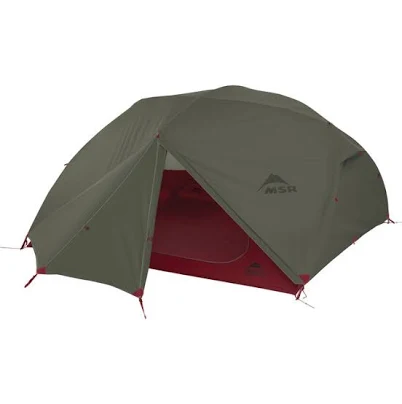
MSR Elixir 4 Tent
Avoid until MSR discloses or eliminates PFAS-based water-repellent coating treatments.
The Elixir 4 uses a water-repellent coating typical of modern tents, but MSR provides no public disclosure about PFAS in their fabric treatments. Historically, many tent makers have relied on PFAS-based water-repellent coating finishes.
Still want this one anyway? Check the price on Amazon. We’d swap it.
Material
polyester ripstop with water-repellent coating (type unspecified)
Brand disclosure
Brand is silent on PFAS
Lab data
No public lab test
What MSR Elixir 4 Tent is made of, ingredients and materials
The Elixir 4 uses polyester ripstop fabric, a synthetic weave designed to resist tearing while remaining lightweight. MSR applies a water-repellent coating (water-repellent coating) coating to the exterior and an unspecified waterproof backing (likely polyurethane or similar polymer) to the interior. The specific chemistry of the water-repellent coating treatment is not disclosed on product labels or MSR's website, which is the critical gap, water-repellent coating coatings on outdoor gear have historically relied on PFAS (PFAS "forever chemicals") to achieve water shedding performance. Without confirmation of a fluorine-free alternative, the coating's composition remains unknown.
What’s concerning
Category baseline
The starting point for this type of product, before anything specific to this product is counted.
No PFAS disclosure
No public statement from the brand about PFAS in this product.
Waterproof / stain-resistant treatment
Water-repellent coating treatments have historically used PFAS.
Polyurethane/synthetic backing degradation and flaking
Interior waterproof backings on tents can delaminate or flake with age, UV exposure, and temperature cycling, potentially releasing microparticles. No recalls recorded for MSR Elixir 4, but long-term storage in direct sunlight or near heat sources accelerates breakdown.
Volatile organic compounds (VOCs) from adhesives and coatings
Seam sealing, fabric glues, and synthetic coatings on new tents commonly off-gas volatile compounds during initial use or storage in warm conditions. Airing the tent outdoors before first camp use reduces exposure; smell typically dissipates within days.
Mold and bacterial growth in interior backing
If stored wet or in damp conditions, polyurethane backings create an environment favorable to fungal and bacterial colonization, which can produce mycotoxins and odors. Proper drying between trips is essential.
What’s reassuring
Heavy metals
Polyester fabric dyes in outdoor gear have not been a documented hazard for MSR products or this category in general use; risk is negligible under normal camping conditions.
Source, FDA ↗Flame retardants
No reports of flame retardant additives or antimony (used in some polyester fibers) in MSR tent construction; this is not a common issue for backpacking tents unless deliberately treated for fire resistance.
Source, EPA ↗The full breakdown
The brand's record and disclosure
MSR (owned by Cascade Designs Inc.) does not publicly list a PFAS phase-out policy or certifications such as Bluesign or similar textile standards that would indicate fluorine-free water-repellent coating use. Competitor brands like Big Agnes and some Decathlon tents have begun disclosing water-repellent coating treatments or switching to PFAS-free alternatives; MSR's silence suggests either continued use of conventional (PFAS-based) water-repellent coating or a lack of transparency around the switch. Contacting MSR directly for water-repellent coating chemistry confirmation is necessary before purchase if PFAS avoidance is a priority.
How it compares in its category
The Elixir 4 is a mid-range, three-season backpacking tent in a crowded market. Many competitors (REI Co-op tents, some Marmot models) have begun labeling water-repellent coating as PFAS-free or using newer fluorine-free water repellents. MSR's lack of disclosure puts it behind the transparency curve for environmentally conscious buyers, even if the tent's construction quality and weight-to-livability ratio are solid. Other four-season tents in the same price range offer similar durability without the ambiguity.
If you buy it
Confirm water-repellent coating composition with MSR customer service before purchase. If used, avoid storing in humid conditions where mold and mildew can degrade backing seals; inspect seams and floor annually for wear. Polyester ripstop itself is chemically stable in normal use; the main durability concern is UV degradation and micro-abrasion over years of use, not leaching. Wash sparingly with mild soap if needed; avoid heat sources and direct flames near the fabric, as polyester can melt and backings can delaminate under sustained heat.
What we don’t know
- Basis
- Model estimate, 45% confidence, not a lab result
- Lab test
- None on record for this exact product
- Brand statement
- MSR has made none
Formulations change between production runs, so check the current label. How we grade.
More camping tents & tarps grades
How we score, every product runs through the same public 0-100 rubric based on materials, coatings, brand disclosure, lab findings, and recalls. See the full methodology → Spotted a mistake? Report an error.