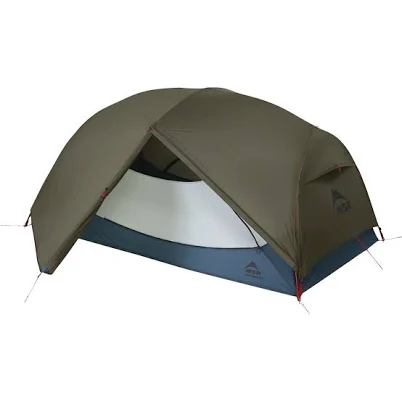
MSR Hubba HD 2-Person Backpacking Tent
Avoid until MSR discloses its water-repellent coating formula or provides PFAS-free certification.
MSR Hubba HD uses a waterproof-treated nylon tent fabric typical of backpacking tents, which commonly employ fluorinated water-repellent coating coatings for weather resistance. MSR does not disclose whether its water-repellent coating treatment contains PFAS.
Still want this one anyway? Check the price on Amazon. We’d swap it.
Material
Nylon ripstop fabric with water-repellent coating (water-repellent coating) coating
Brand disclosure
Brand is silent on PFAS
Lab data
No public lab test
What MSR Hubba HD 2-Person Backpacking Tent is made of, ingredients and materials
The Hubba HD uses nylon ripstop as the primary fabric, a lightweight polyamide chosen for strength-to-weight ratio in backpacking. The critical component is the water-repellent coating (water-repellent coating) coating applied to the nylon, which repels water without pooling. water-repellent coating coatings historically relied on long-chain PFAS (fluorochemicals), though many brands have begun transitioning to shorter-chain or non-fluorine alternatives. MSR has not publicly disclosed whether their water-repellent coating is fluorine-based or alternative chemistry, making the actual PFAS exposure profile unclear.
What’s concerning
Category baseline
The starting point for this type of product, before anything specific to this product is counted.
No PFAS disclosure
No public statement from the brand about PFAS in this product.
Waterproof / stain-resistant treatment
Water-repellent coating treatments have historically used PFAS.
Volatile Organic Compounds (VOCs) from fabric finish
New nylon ripstop and water-repellent coating coatings may off-gas odors for the first few uses. This is not acutely toxic but can be irritating in enclosed spaces; air out the tent in sunlight for 24-48 hours before first use in an enclosed area.
water-repellent coating degradation and re-treatment hazards
As the water-repellent coating wears, users may apply third-party re-treatments; some commercial water-repellent coating products contain PFAS or other problematic chemicals. Choose silicone-based or explicitly PFAS-free re-treatments if re-coating is needed.
Nylon thermal degradation (melting/fume release)
Direct exposure to open flame or high heat (above 150-160°C) can melt nylon and release acrid fumes; camping stoves should never be operated inside a tent without engineered ventilation systems.
What’s reassuring
Mold and mildew growth if stored wet
Nylon itself is mold-resistant, but trapped moisture can support microbial growth. This is a use/storage issue rather than an inherent material hazard; proper drying and ventilation eliminate risk.
The full breakdown
The brand's record and disclosure
MSR (owned by Cascade Designs, a subsidiary of Helen of Troy) maintains a reputation for outdoor safety and durability but has not issued public statements about PFAS phase-out commitments or water-repellent coating chemistry specifics for this model. No recalls or safety controversies related to this tent are on record. The brand's silence on fluorochemical disclosure is notable given industry pressure and competitor moves toward transparency; this suggests either continued reliance on legacy PFAS chemistry or lack of prioritized public communication on the issue.
How it compares in its category
Most mainstream backpacking tents (Big Agnes, REI Co-op, Coleman, Kelty) use similar nylon ripstop with water-repellent coating coatings and face the same disclosure gap. Some brands (notably Patagonia suppliers) have begun explicitly stating non-fluorine water-repellent coating alternatives, but this remains uncommon in the budget-to-midrange segment. The Hubba HD is competitively positioned on weight and durability; the safety profile is typical for the category rather than leading or lagging on chemical transparency.
If you buy it
Avoid high heat near the tent interior (do not use a stove inside without proper ventilation); nylon can melt if exposed to direct flame or high temperature. water-repellent coating coatings degrade with washing and UV exposure, typically lasting 3-5 seasons of heavy use; when water starts pooling instead of beading, consider re-treating with a water-repellent coating product of known chemistry (seek PFAS-free alternatives like silicone-based treatments) or replacing the tent. Store dry and ventilated to prevent mold, which is a direct health hazard unrelated to the material itself. Hand wash the exterior gently; avoid harsh detergents that strip the water-repellent coating prematurely.
What we don’t know
- Basis
- Model estimate, 45% confidence, not a lab result
- Lab test
- None on record for this exact product
- Brand statement
- MSR has made none
Formulations change between production runs, so check the current label. How we grade.
More camping tents & tarps grades
How we score, every product runs through the same public 0-100 rubric based on materials, coatings, brand disclosure, lab findings, and recalls. See the full methodology → Spotted a mistake? Report an error.