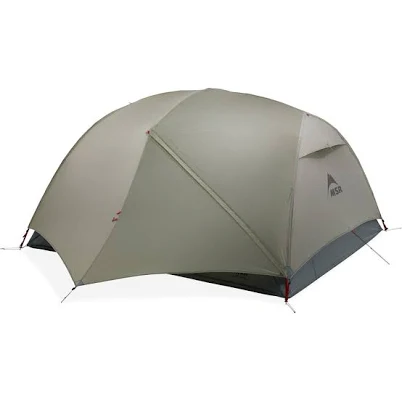
MSR Hubba Hubba LT 3-Person Backpacking Tent
High PFAS risk from standard water-repellent coating treatment; MSR provides no coating-chemistry transparency.
Nylon ripstop with a standard water-repellent coating for backpacking tents. MSR does not disclose the water-repellent coating chemistry or make any PFAS-free claims.
Still want this one anyway? Check the price on Amazon. We’d swap it.
Material
Nylon ripstop fabric with water-repellent coating (water-repellent coating) coating
Brand disclosure
Brand is silent on PFAS
Lab data
No public lab test
What MSR Hubba Hubba LT 3-Person Backpacking is made of, ingredients and materials
The Hubba Hubba LT uses nylon ripstop fabric treated with a water-repellent coating (water-repellent coating) coating to shed water without pooling. Nylon itself is a synthetic polymer with low inherent toxicity in finished form. However, the water-repellent coating treatment is the critical variable, most outdoor apparel and tent manufacturers use fluorochemical coatings (typically Teflon-type coating-based or polyfluoroalkyl compounds) because they are extremely effective and durable. These coatings persist through washing and weathering, which is why consumers buy them, but that same persistence means the chemicals remain in the fabric for the product's lifetime.
What’s concerning
Category baseline
The starting point for this type of product, before anything specific to this product is counted.
No PFAS disclosure
No public statement from the brand about PFAS in this product.
Waterproof / stain-resistant treatment
Water-repellent coating treatments have historically used PFAS.
PFAS
Standard for MSR's product class; fluorochemical water-repellent coating coatings are assumed present unless stated otherwise. No third-party testing on file for this specific model. The coating does not off-gas significantly in normal use but may leach if fabric is submerged in water or washed repeatedly over years.
Source, ATSDR ↗Nylon degradation and microparticle shedding
Nylon ripstop fabrics can shed microscopic fibers when abraded (e.g., tent pole contact, foot traffic during pitching, weathering). This is inherent to synthetic fabrics but is not specific to MSR. Shedding increases if the water-repellent coating cracks and the underlying nylon fibrillates.
Volatile organic compound (VOC) off-gassing from new product
New nylon tents can emit low levels of volatile organic compounds from fabric finishing and adhesives, particularly when stored in warm conditions. This is typical for the category and diminishes within days to weeks of airing. No specific testing for the Hubba Hubba LT has been published.
What’s reassuring
Adhesive and seam-sealing chemistry
MSR does not disclose the chemistry of adhesives used in seam sealing or coating application. Residual solvents are typically off-gassed during factory curing, but third-party testing data is not publicly available for this product.
Flame retardants
Backpacking tents are not typically treated with added flame retardants because nylon itself has moderate inherent flame resistance. No flame retardant additives are on record for this product, but MSR does not provide a full material specification sheet.
Source, EPA ↗The full breakdown
The brand's record and disclosure
MSR (owned by Cascade Designs) does not publicly disclose the specific water-repellent coating chemistry used on the Hubba Hubba LT or provide third-party testing data on PFAS content. The company has not signed the ZDHC (Zero Discharge of Hazardous Chemicals) gateway, earned bluesign certification, or committed to PFAS-free transitions like some premium outdoor brands (e.g., Patagonia, Arc'teryx). This silence is notable in a category where transparency is increasingly expected and where fluorine-free water-repellent coating alternatives with lower PFAS concern now exist commercially.
How it compares in its category
The Hubba Hubba LT is a mid-to-premium 3-season backpacking tent in a crowded segment. Most tents at this price point (USD 300-400) and performance level still use fluorochemical water-repellent coating coatings because they outperform newer hydrophobic alternatives in durability and water-shedding efficiency. Brands like Big Agnes and REI Co-op use similar standard chemistries. A small number of brands (notably Hyperlite and some cottage manufacturers) now offer fluorine-free water-repellent coating options, though durability claims are still being validated in the field after multiple seasons.
If you buy it
Minimize direct skin contact during setup and takedown; wash hands after handling, especially before eating. Store the tent dry and uncompressed to reduce off-gassing and extend coating durability. Do not machine wash or dry clean, as this can accelerate water-repellent coating breakdown and release particles; spot-clean with water and mild soap only. Plan to retire the tent when the waterproof coating visibly degrades (seams leak, water beads unevenly) rather than attempting re-treatment with new water-repellent coating products, which may introduce additional chemical exposure.
What we don’t know
- Basis
- Model estimate, 45% confidence, not a lab result
- Lab test
- None on record for this exact product
- Brand statement
- MSR has made none
Formulations change between production runs, so check the current label. How we grade.
More camping tents & tarps grades
How we score, every product runs through the same public 0-100 rubric based on materials, coatings, brand disclosure, lab findings, and recalls. See the full methodology → Spotted a mistake? Report an error.