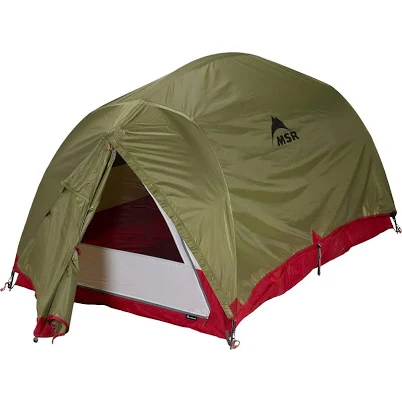
MSR Thunder Ridge Tent
Avoid or contact MSR for PFAS disclosure before purchasing.
The Thunder Ridge Tent uses a water-repellent coating-treated fabric typical of outdoor tents, which historically relied on PFOA and PFAS-based chemistry. MSR makes no public PFAS disclosure or third-party certification.
Still want this one anyway? Check the price on Amazon. We’d swap it.
Material
Nylon/polyester with water-repellent coating (water-repellent coating) coating
Brand disclosure
Brand is silent on PFAS
Lab data
No public lab test
What MSR Thunder Ridge Tent is made of, ingredients and materials
The Thunder Ridge uses nylon and polyester fabrics with a water-repellent coating (water-repellent coating) coating applied to shed water without relying on heavy plastic laminates. water-repellent coating coatings are the primary chemical concern in modern tents, historically formulated with long-chain PFOA or PFOS (now phased out in many regions), newer formulations often use shorter-chain PFAS or fluorine-free alternatives, but MSR does not publicly specify which. The fabric itself (nylon/polyester) is inert under normal camping conditions and poses no leaching risk to users.
What’s concerning
Category baseline
The starting point for this type of product, before anything specific to this product is counted.
No PFAS disclosure
No public statement from the brand about PFAS in this product.
Waterproof / stain-resistant treatment
Water-repellent coating treatments have historically used PFAS.
PFAS
MSR does not disclose whether the water-repellent coating uses legacy long-chain PFAS, next-gen short-chain PFAS, or fluorine-free chemistry. Skin contact with wet tent fabric is minimal, but some PFAS can migrate into moisture or sweat in prolonged contact; uncertainty on formulation prevents full risk assessment.
Source, ATSDR ↗Mildew and microbial growth
If stored wet or in high humidity, the fabric can support mold and mildew growth; this is a practical maintenance issue rather than a chemical hazard, but prolongs exposure to moisture and organic contaminants.
What’s reassuring
Nylon/polyester thermal degradation
Nylon and polyester fabrics are stable under normal camping temperatures (up to 60-80 degrees Celsius). No risk of toxic fume release or monomer leaching during typical use.
Flame retardants
No flame retardants are typically applied to nylon/polyester backpacking tents, as they are not required by safety standards for camping gear. No hazard reported or suspected.
Source, EPA ↗Heavy metals
MSR does not disclose dye chemistry, but nylon and polyester are not typically dyed with heavy-metal-containing azo dyes in industrial outdoor textile production. No contamination incidents on record for this brand.
Source, FDA ↗The full breakdown
The brand's record and disclosure
MSR (owned by Cascade Designs) is a respected outdoor equipment maker with no known safety recalls or contamination incidents on record. However, MSR provides no public PFAS disclosure, certification (such as OEKO-TEX), or transparency on water-repellent coating chemistry for any tent model. This silence is typical across the camping gear industry but leaves consumers unable to assess fluorochemical exposure. Direct inquiry to MSR customer service remains the only way to confirm whether this tent uses legacy PFAS, next-gen PFAS, or fluorine-free water-repellent coating.
How it compares in its category
Most three-season backpacking tents in this performance class use some form of water-repellent coating; the Thunder Ridge is middle-of-the-road in terms of disclosure. Brands like Hyperlite Mountain Gear have begun offering PFAS-free options, while many traditional makers (Big Agnes, Marmot, Sierra Designs) remain silent on PFAS. If PFAS avoidance is a priority, seek tents explicitly marketed as fluorine-free or contact manufacturers directly; the Thunder Ridge offers no such distinction.
If you buy it
Store the tent dry and well-ventilated indoors to prevent mildew; do not store it wet for extended periods. Wash with cool water and mild soap if heavily soiled; avoid machine drying and heat. The water-repellent coating degrades with use and will need reapplication after 1-3 seasons depending on UV and weathering; many users apply fluorine-free water-repellent coating refresh sprays or bars when performance wanes. If chemical sensitivity or PFAS concern is a priority, contact MSR before purchase to request specific water-repellent coating composition or consider alternative brands with published transparency.
What we don’t know
- Basis
- Model estimate, 45% confidence, not a lab result
- Lab test
- None on record for this exact product
- Brand statement
- MSR has made none
Formulations change between production runs, so check the current label. How we grade.
More camping tents & tarps grades
How we score, every product runs through the same public 0-100 rubric based on materials, coatings, brand disclosure, lab findings, and recalls. See the full methodology → Spotted a mistake? Report an error.