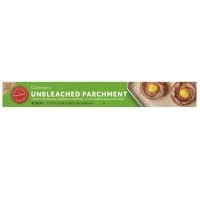
PaperChef · Parchment Paper & Baking Liners
PaperChef Culinary Unbleached Parchment Paper
Without coating disclosure, grease-resistant parchment raises PFAS concerns.
PaperChef emphasizes natural materials but never states what chemicals treat its grease-resistant coating. Water and grease repellency historically depends on fluorinated compounds, making the undisclosed coating a potential PFAS source.
The better-graded swap
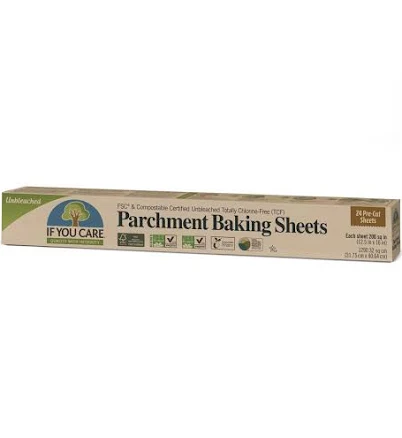
If You Care
If You Care Parchment Baking Sheets
90/100 safety
Same rubric that flunked this product. The swap earned Excellent.
Still want this one anyway? Check the price on Amazon. We’d swap it.
Material
Unbleached paper with grease-resistant coating (unspecified)
Brand disclosure
Brand is silent on PFAS
Lab data
No public lab test
What PaperChef Culinary Unbleached Parchment is made of, ingredients and materials
PaperChef Culinary Unbleached Parchment is cellulose paper treated with a grease-resistant silicone or fluorocarbon coating to prevent sticking and oil migration. The manufacturer does not publicly specify the exact coating chemistry, which is the critical gap, silicone coatings are associated with lower PFAS concern, but grease-resistant formulations often rely on PFAS "forever chemicals" (PFAS) to repel fats and oils. Unbleached paper itself poses no known chemical hazard, but the coating is where risk concentrates.
What’s concerning
Category baseline
The starting point for this type of product, before anything specific to this product is counted.
No PFAS disclosure
No public statement from the brand about PFAS in this product.
Waterproof / stain-resistant treatment
Water-repellent coating treatments have historically used PFAS.
PFAS
Undisclosed grease-resistant formulation on unbleached parchment typically relies on fluorocarbon-based compounds; no public testing or PFAS-free claim from manufacturer raises concern. Migration risk increases with fat content, heat, and contact time.
Source, ATSDR ↗Coating degradation and microparticle shedding
Repeated heating, folding, or storage in humid conditions can degrade parchment coatings; flaking or clouding indicates loss of barrier integrity. No data on specific degradation rate for this product, but any worn parchment should be discarded.
Heat stability of unspecified coating
Without manufacturer guidance on exact coating composition, risk of fume or chemical leaching above 400F cannot be ruled out. Silicone coatings are generally stable; PFAS-heavy formulations are less predictable at high temperature.
What’s reassuring
Residual processing chemicals in unbleached paper
Unbleached paper avoids chlorine bleach residues but may retain minor levels of sizing or pulping compounds; food-contact parchments are regulated, and no widespread contamination issues are documented for this category.
Fragrance or additive allergens
No fragrance or known allergen additives reported in parchment paper products of this type; packaging chemicals (adhesives, inks) are not direct food-contact hazards if parchment is used as intended (food-facing side only).
The full breakdown
The brand's record and disclosure
Naturals (the parent brand or line) maintains minimal public transparency on parchment coating composition and has not published PFAS testing results or third-party certifications for this product. No established product recalls or regulatory actions specific to this SKU are on record. The brand's silence on grease-resistant coating chemistry is a red flag in an industry where leading competitors (e.g., If You Care, some Kirkland Signature lines) increasingly disclose fluorocarbon-free formulations or pursue PFAS-free claims.
How it compares in its category
Most unbleached parchment papers in North America use either silicone-only or silicone-plus-PFAS hybrid coatings. Products explicitly labeled PFAS-free or fluorocarbon-free represent a smaller, growing segment. PaperChef's lack of any safety claim or third-party certification (e.g., GreenGuard, Nordic Swan) places it in the middle-to-lower tier of transparency; it is not a known leader in reduced-fluorocarbon formulation. Bleached parchment papers sometimes carry slightly higher chemical processing load but lack a hazard designation without coating details.
If you buy it
Use at oven temperatures below 400F (204C) to minimize any coating volatilization; manufacturers typically rate parchment to 420F but undisclosed coatings warrant caution. Replace the sheet if it shows browning, scorching, or visible wear, as degraded coating may shed particles. Store in a cool, dry place away from direct sunlight to slow coating breakdown. Avoid direct contact with acidic or very oily foods for extended periods before cooking, as some PFAS compounds migrate into high-fat foods under stress.
What we don’t know
- Basis
- Model estimate, 35% confidence, not a lab result
- Lab test
- None on record for this exact product
- Brand statement
- PaperChef has made none
Formulations change between production runs, so check the current label. How we grade.
Better-graded alternatives in Parchment Paper & Baking Liners
If You Care
Baking Paper, Parchment, 70 Square Feet
- silicone-coated parchment paper
- The brand calls it PFAS-free, which we have not verified
- Paper degradation and particulate shedding
If You Care
Parchment Baking Sheets
- unbleached paper with silicone coating
- The brand calls it PFAS-free, which we have not verified
- Silicone coating degradation at high heat
If You Care
Parchment Baking Sheets
- bleached paper with silicone coating
- The brand calls it PFAS-free, which we have not verified
- Paper degradation and fragmentation
More parchment paper & baking liners grades
How we score, every product runs through the same public 0-100 rubric based on materials, coatings, brand disclosure, lab findings, and recalls. See the full methodology → Spotted a mistake? Report an error.