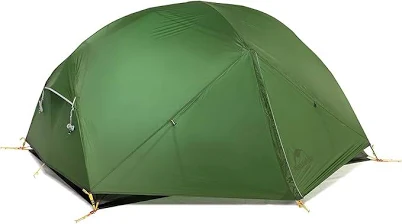
Naturehike · Camping Tents & Tarps
Mongar 2-Person Ultralight Backpacking Tent
Skip until the brand discloses water-repellent coating chemistry or provides third-party testing.
This tent uses polyester with water-repellent finish standard for backpacking tents. The brand won't disclose coating type or PFAS content; most budget brands have historically used PFAS-based water-repellent coating.
Still want this one anyway? Check the price on Amazon. We’d swap it.
Material
Polyester fabric with water-repellent coating (type unspecified)
Brand disclosure
Brand is silent on PFAS
Lab data
No public lab test
What Mongar 2-Person Ultralight Backpacking is made of, ingredients and materials
The Mongar tent uses polyester fabric, a petroleum-derived synthetic polymer that is chemically stable and does not leach monomers under normal camping use. The critical unknown is the water-repellent (water-repellent coating) coating applied to this polyester. Many tent manufacturers use legacy PFAS-based durable water repellents (such as C8 or C6 fluorocarbons), though some have shifted to fluorine-free alternatives. Without disclosure from Naturehike, the water-repellent coating chemistry remains a black box. Polyester itself is not known to off-gas volatile organic compounds at the temperatures encountered in outdoor camping.
What’s concerning
Category baseline
The starting point for this type of product, before anything specific to this product is counted.
No PFAS disclosure
No public statement from the brand about PFAS in this product.
Waterproof / stain-resistant treatment
Water-repellent coating treatments have historically used PFAS.
PFAS
The tent fabric has an unspecified water-repellent coating. No disclosure of water-repellent coating chemistry from Naturehike. PFAS-based repellents are still common in this category; fluorine-free alternatives exist but are not confirmed here. Graded separately at 20/100; this assessment notes the absence of transparency as a material concern.
Source, ATSDR ↗What’s reassuring
Polyester fabric degradation and microplastic shedding
Polyester in tents is mechanically stable under camping use and does not shed microplastics into water or food under normal conditions. Abrasion against rocks or ground can cause fiber breakage, but this is not a chemical safety hazard and is not documented as a health concern for tent users.
Formaldehyde / VOCs
Polyester fabrics sometimes receive formaldehyde-based finishes for wrinkle resistance or durability. No recall or test report documents formaldehyde in Naturehike tents. Outdoor exposure and airing during use further reduce any residual formaldehyde vapor.
Source, ATSDR ↗Heavy metals
Polyester camping tents are typically dyed with synthetic azo dyes or acid dyes that do not contain intentional heavy metals. No reports of cadmium or lead contamination in Naturehike tent fabrics exist in public records.
Source, FDA ↗Off-gassing of volatile organic compounds (VOCs)
New polyester tents may have a mild chemical odor from residual manufacturing solvents or sizing agents, which dissipates within hours to days of airing. This is typical across the category and does not indicate a safety hazard at camping exposure levels.
The full breakdown
The brand's record and disclosure
Naturehike is a Chinese outdoor-gear manufacturer with limited public transparency on chemical inputs and testing. The brand has not published a water-repellent coating chemistry statement, PFAS-free certification, or third-party testing for this product line. No recalls or safety controversies specific to Naturehike tents have been documented in consumer safety databases. The absence of disclosure, rather than a positive record, is the distinguishing issue.
How it compares in its category
Most ultralight backpacking tents in this price range use polyester with either PFAS-based or unspecified water-repellent coating coatings. Higher-end brands like Big Agnes and MSR increasingly disclose fluorine-free water-repellent coating use or offer PFAS-free product lines, though not universally. Budget and mid-range manufacturers (including other Chinese-sourced models) rarely publish coating chemistry. The Mongar is typical in this category in terms of opaqueness rather than an outlier.
If you buy it
Store the tent dry in a cool, dark place; avoid prolonged direct sunlight, which can degrade polyester over years but does not create acute chemical release. Do not machine-wash or use solvents; rinse with plain water and air-dry. The water-repellent coating will degrade after approximately 2-4 years of regular use and weather exposure; reapplication with a spray-on fluorine-free product is an option if you want to avoid recoating with PFAS. If Naturehike discloses the water-repellent coating chemistry or offers proof of fluorine-free treatment, reassess your tolerance for any remaining uncertainty.
What we don’t know
- Basis
- Model estimate, 35% confidence, not a lab result
- Lab test
- None on record for this exact product
- Brand statement
- Naturehike has made none
Formulations change between production runs, so check the current label. How we grade.
More camping tents & tarps grades
How we score, every product runs through the same public 0-100 rubric based on materials, coatings, brand disclosure, lab findings, and recalls. See the full methodology → Spotted a mistake? Report an error.