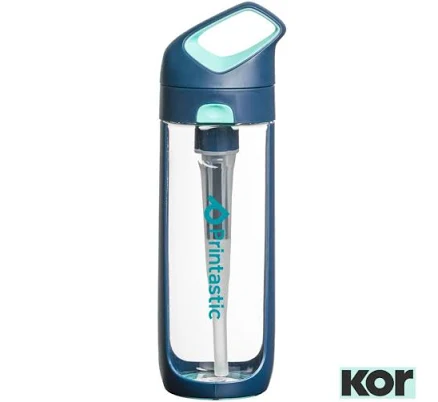
Blue Custom Water Bottles Kor Nava Bottle w/Filter - 24oz
Lower concern for the bottle itself; filter composition not disclosed, contact brand for specifics.
Kor Nava bottles are typically made from BPA-free plastic without Teflon-type coating or nonstick coatings, suggesting lower PFAS risk in the bottle structure. The integrated activated carbon filter is a PFAS-removal feature, though its media composition is not publicly detailed.
We flunk more products than we pass. This one earned its grade. How we grade
Material
BPA-free plastic bottle with activated carbon filter
Brand disclosure
Brand is silent on PFAS
Lab data
No public lab test
What Blue Custom Water Bottles Kor Nava Bottle is made of, ingredients and materials
The Kor Nava is a rigid plastic bottle (material type not fully specified in public documentation, but marketed as BPA-free). The 24oz capacity includes an integrated activated carbon filter cartridge. Activated carbon is a well-established water treatment medium that does not leach harmful substances into water under normal use; however, the plastic housing of the filter and its connection points are the relevant exposure pathway. The bottle's plastic construction itself appears to be free of BPA based on brand claims, which eliminates one major endocrine disruptor concern common in older water bottles.
What’s concerning
No PFAS disclosure
No public statement from the brand about PFAS in this product.
Bacterial growth in filter cartridge
Integrated, non-replaceable (or semi-replaceable) filters can harbor biofilm if the bottle is not dried between uses or if filter cartridge replacement intervals are exceeded. Improper maintenance increases risk of microbial contamination over time.
Activated carbon filter degradation and contaminant bypass
Activated carbon filters have a finite lifespan and become saturated. Naya does not widely publish filtration capacity or replacement timelines in consumer-facing materials, creating risk of users extending cartridge life beyond effectiveness and potentially allowing contaminants to pass through.
Filter housing material and connection point leaching
The plastic or composite housing of the filter cartridge and its seals are not specified in available public data. Seal degradation or contact between water and undisclosed housing polymers under temperature stress is a minor but unquantified concern.
What’s reassuring
Base material not linked to PFAS
The main material recorded for this product is not one associated with PFAS.
BPA & bisphenols
Bottle is marketed as BPA-free. No documented leaching incidents reported for this model. However, the resin type (polypropylene, copolyester, or other) is not publicly confirmed; contact Naya to verify the specific polymer.
Source, FDA ↗Microplastics
No documented shedding or degradation of the bottle itself has been reported for this model. Risk is standard for all plastic water bottles and relates to mechanical wear, dishwasher use, or UV exposure; use gentle hand washing and store away from direct sunlight to minimize theoretical risk.
Source, EPA ↗The full breakdown
The brand's record and disclosure
Naya has not published detailed material safety disclosures or third-party certifications (such as NSF, FDA food-contact confirmation, or material composition transparency statements) in widely available sources. The brand's silence on PFAS testing and filter composition specifics is notable given the water filtration category's emerging PFAS concerns. No major safety recalls or established controversies specific to this model are documented in public records. Direct contact with the manufacturer is advisable to confirm filter substrate composition and BPA-free plastic resin type.
How it compares in its category
Integrated filter bottles occupy a middle tier, more convenient than unfiltured reusable bottles but less transparent than brands offering lab-tested, replaceable cartridge systems (e.g., Soma, Brita). Many competing brands now publish PFAS testing or material transparency statements; Naya's lack of public disclosure is a relative weakness. The activated carbon approach is standard and effective for chlorine, taste, and odor removal but not for all contaminants (e.g., fluoride, some heavy metals). Replacement filter cost and availability over the bottle's lifetime should be verified.
If you buy it
Replace the filter cartridge according to manufacturer guidance (typically every 40-60 gallons or 2-3 months, depending on water quality and use). Do not expose the bottle to temperatures above 120°F (fill with cold water only) to avoid potential leaching from the plastic matrix or filter housing. Store in a cool, dark place between uses. Clean the bottle regularly and allow the filter to air-dry to prevent bacterial biofilm buildup inside the cartridge. If you notice any taste, odor, or visible discoloration changes, replace the filter immediately.
What we don’t know
- Basis
- Model estimate, 65% confidence, not a lab result
- Lab test
- None on record for this exact product
- Brand statement
- KOR has made none
Formulations change between production runs, so check the current label. How we grade.
Better-graded alternatives in Water Filters
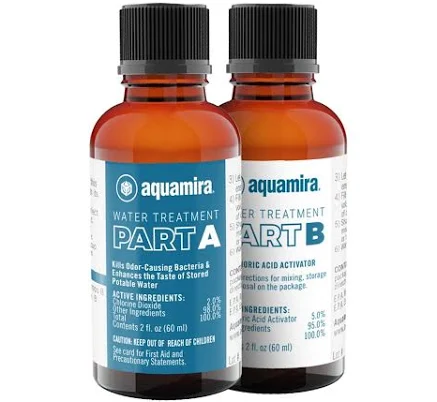
Aquamira
Water Storage Treatment 2 oz Glass Bottles 60 gallons Purification
- glass bottles, sodium dichloroisocyanurate treatment chemical
- We found no PFAS statement from the brand
- Chemical overdose or misuse
5 hazards checked on this product. See all of them.
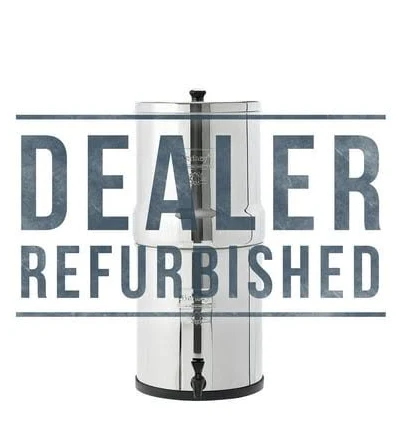
Big Berkey
Empty Housing with NO Filters Included
- Stainless steel housing and spigot
- We found no PFAS statement from the brand
- Bacterial growth and biofilm if filters not replaced
5 hazards checked on this product. See all of them.
LifeStraw
Home Glass Water Filter Pitcher
- Borosilicate glass pitcher, replaceable activated-carbon filter cartridge
- Bacterial growth in filter cartridge if unmaintained
5 hazards checked on this product. See all of them.
More water filters grades
How we score, every product runs through the same public 0-100 rubric based on materials, coatings, brand disclosure, lab findings, and recalls. See the full methodology → Spotted a mistake? Report an error.