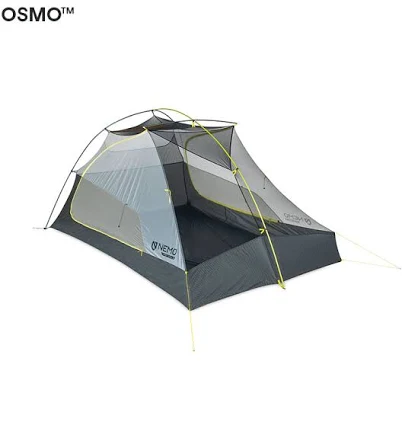
Nemo Equipment · Camping Tents & Tarps
Hornet OSMO 1P Ultralight Backpacking Tent
Skip until brand reveals water-repellent coating chemistry, ultralight tents frequently use PFAS-based coatings.
Ultralight nylon ripstop with undisclosed water-resistant finish. Fluorinated coatings are common in ultralight tents for performance, yet Nemo Equipment provides no material transparency or independent verification.
Still want this one anyway? Check the price on Amazon. We’d swap it.
Material
Nylon ripstop fabric with unspecified water-resistant finish
Brand disclosure
Brand is silent on PFAS
Lab data
No public lab test
What Hornet OSMO 1P Ultralight Backpacking Tent is made of, ingredients and materials
The Hornet OSMO 1P uses nylon ripstop fabric, a lightweight polyamide weave chosen for strength-to-weight ratio in ultralight backpacking. Nylon itself is chemically stable and does not off-gas formaldehyde or release volatile organics under normal use. The critical unknown is the water-resistant finish (water-repellent coating) applied to the fabric; Nemo does not publicly specify whether this uses PFAS-based Teflon-family coating or PFAS-free alternatives, which is the primary chemical concern for this product.
What’s concerning
Category baseline
The starting point for this type of product, before anything specific to this product is counted.
No PFAS disclosure
No public statement from the brand about PFAS in this product.
Waterproof / stain-resistant treatment
Water-repellent coating treatments have historically used PFAS.
PFAS
Nemo does not disclose whether the water-resistant finish is PFAS-based Teflon-family coating (common in ultralight nylon) or PFAS-free alternative. This is graded separately but is the dominant chemical hazard concern for this product.
Source, ATSDR ↗Mold and bacterial colonization in damp storage
Any nylon tent stored damp or in humid conditions can develop mold in fabric folds, seams, and adhesive joints. This is a maintenance risk, not a manufacturing hazard, but common in backpacking gear and easily preventable with dry storage.
What’s reassuring
Nylon degradation and microplastic shedding under UV/mechanical stress
No recalls or field reports of excess microplastic release from Hornet OSMO tents. Nylon ripstop is durable under normal backpacking use; shedding occurs mainly after years of UV exposure or damage to the weave, not during typical setup or storage.
Formaldehyde / VOCs
Commercial nylon ripstop fabric does not typically contain formaldehyde-release resins; formaldehyde risk is standard in polyester and cotton textiles but minimal in nylon unless a finish additive is used, which Nemo has not disclosed.
Source, ATSDR ↗Seam sealing compounds and adhesive off-gassing
Nemo manufactures seam-sealed tents using polyurethane tape adhesives. No public reports of odor, VOC off-gassing, or off-gassing-related respiratory irritation from Hornet OSMO units; typical curing period is 24-48 hours before use.
The full breakdown
The brand's record and disclosure
Nemo Equipment has not published a public PFAS disclosure or commitment to phasing out fluorinated water-repellent coating treatments as of available records. The brand does not advertise use of PFAS-free alternatives like wax or silicone-based water repellents. This silence is notable in the ultralight tent sector, where several competitors (Big Agnes, MSR) have begun voluntary PFAS reduction or disclosure. Without direct contact with Nemo, the water-resistant chemistry remains a black box.
How it compares in its category
Most ultralight nylon tents under 1.5 pounds historically use PFAS-based water-repellent coating because Teflon-family coating provide maximum water repellency with minimal weight penalty. Competitors using confirmed PFAS-free alternatives (wax, silicone, or acrylate-based) are increasingly available but often cost more or sacrifice water beading performance. Nemo's lack of transparency places this tent in the middle of the pack regarding consumer chemical disclosure standards; it is neither an environmental leader nor a known violator.
If you buy it
Contact Nemo directly to request the water-repellent coating product name or PFAS status before purchasing. Store the tent dry and well-ventilated indoors to prevent mold and bacterial growth in seams and fabric joints. Do not machine wash or expose to prolonged heat sources. Replace the tent if seams delaminate, coatings flake visibly, or if you later confirm the water-repellent coating is PFAS-based and wish to avoid the chemical class.
What we don’t know
- Basis
- Model estimate, 45% confidence, not a lab result
- Lab test
- None on record for this exact product
- Brand statement
- Nemo Equipment has made none
Formulations change between production runs, so check the current label. How we grade.
More camping tents & tarps grades
How we score, every product runs through the same public 0-100 rubric based on materials, coatings, brand disclosure, lab findings, and recalls. See the full methodology → Spotted a mistake? Report an error.