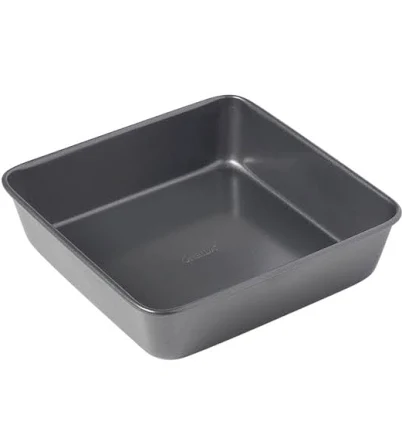
Oneida Bliss 8 Inch Square Cake Pan, Is It Non-Toxic?
Coating type unclear; brand does not disclose PFAS information.
This Oneida Bliss pan has nonstick coating without brand disclosure of whether it contains Teflon-type coating or Teflon-family coating. You cannot assess your PFAS exposure from the information provided.
The better-graded swap
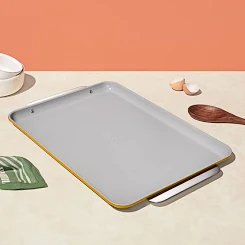
Caraway
Caraway Nonstick Ceramic Large Baking Sheet
90/100 safety
Same rubric that flunked this product. The swap earned Excellent.
Still want this one anyway? Check the price on Amazon. We’d swap it.
Material
Steel with nonstick coating (unspecified type)
Brand disclosure
Brand is silent on PFAS
Lab data
No public lab test
You may also be interested in
Top-graded picks in the categories readers replace first, every one scored on the same rubric.

- polypropylene filter housing, carbon/sediment cartridge
- We found no PFAS statement from the brand
- Bacterial growth in spent cartridges
3 hazards checked on this product, all on its full breakdown.

Aquasure
Premier Series 75 GPD Under Sink Reverse Osmosis Water Filtration System
- RO membrane, carbon filters, stainless steel housing
- We found no PFAS statement from the brand
- Bacterial and microbial growth in housing and filters
4 hazards checked on this product, all on its full breakdown.

Avocado
Vegan Mattress
- organic cotton, natural latex, coconut coir, recycled steel coils
- The brand calls it PFAS-free, which we have not verified
- Heavy metals
2 hazards checked on this product, all on its full breakdown.
Is Oneida Bliss 8 Inch Square Cake Pan non-toxic? What it is made of
Oneida Bliss uses steel as the substrate, which is chemically inert and stable at typical baking temperatures. The critical unknown is the nonstick coating formulation, the brand does not publicly specify whether it uses Teflon-type coating (Teflon), ceramic, silicone, or another polymer. Without this disclosure, the risk profile cannot be precisely assessed. Steel itself does not leach; the hazard depends entirely on coating integrity and composition.
What’s concerning
Category baseline
The starting point for this type of product, before anything specific to this product is counted.
No PFAS disclosure
No public statement from the brand about PFAS in this product.
Non-stick, chemistry undisclosed
Marketed as non-stick without stating the coating chemistry.
Teflon-type coating thermal decomposition fumes
If the coating is Teflon-type coating-based (unconfirmed), overheating above 500F can release toxic perfluorooctanoic acid (PFOA) precursors. Oneida does not specify, so risk cannot be ruled out; standard use below 500F mitigates this significantly.
Coating degradation and flaking
Nonstick coatings on steel cake pans are inherently less durable than on thicker aluminum. Dishwasher use and metal utensils accelerate peeling; ingestion of small flakes is low-risk but aesthetically poor and signals replacement need.
Unspecified coating composition
The primary hazard is information absence, without knowing whether the coating is Teflon-type coating, ceramic, silicone, or hybrid, consumers cannot make informed choices about PFAS exposure, temperature safety, or durability expectations. This lack of transparency is the core concern.
What’s reassuring
Steel substrate corrosion
Steel does not corrode from acidic foods (tomato, lemon) during baking if the nonstick coating remains intact. Once coating integrity is compromised, rust can develop; this is a use-life issue rather than a safety hazard for normal baking.
Lead
Modern commercial nonstick coatings do not intentionally contain lead or cadmium. No recalls or test results flagging these metals in Oneida Bliss pans have been published.
Source, ATSDR ↗How is this PFAS grade calculated?
The brand's record and disclosure
Oneida (owned by Groupe SEB) has not made public statements about PFAS-free commitments or coating specifications for this product line. The brand does not provide ingredient transparency on its cookware product pages. No recalls or safety complaints tied to this specific model are documented in public records. This silence contrasts with competitors who explicitly market PFAS-free or ceramic alternatives, leaving consumers without assurance.
How it compares in its category
Square cake pans in this price range typically use either Teflon-type coating nonstick or ceramic coatings. Teflon-type coating-coated options dominate the market and present lower concern below 500F; ceramic alternatives are not a material linked to PFAS but degrade faster and can chip. Oneida's refusal to specify coating type places it in a middle ground of uncertainty compared to brands that openly disclose (GreenPan, Our Place, Caraway) or use bare steel or cast iron.
If you buy it
Never exceed 500F; nonstick coatings degrade and release fumes above this threshold. Use only silicone or wood utensils to avoid scratching the coating. Hand wash instead of dishwashing to extend coating life. Replace the pan immediately if you notice flaking, discoloration, or visible wear on the nonstick surface. Avoid preheating an empty pan, as this accelerates coating degradation.
What is not known about PFAS in this product?
- Basis
- Model estimate, 45% confidence, not a lab result
- Lab test
- None on record for this exact product
- Brand statement
- Oneida has made none
Formulations change between production runs, so check the current label. How we grade.
What are the PFAS-free alternatives to Oneida Bliss 8 Inch Square Cake Pan?
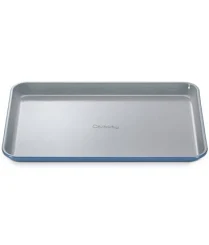
- ceramic nonstick coating
- A third party reports verifying it as PFAS-free
- Ceramic coating degradation over time
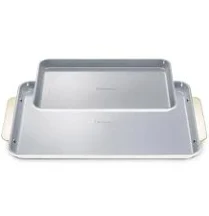
- ceramic nonstick coating
- A third party reports verifying it as PFAS-free
- Coating degradation and durability
2 hazards checked on this product, all on its full breakdown.
- ceramic nonstick coating
- The brand calls it PFAS-free, which we have not verified
- Ceramic coating degradation and particle shedding
3 hazards checked on this product, all on its full breakdown.
More bakeware grades
How we score, every product runs through the same public 0-100 rubric based on materials, coatings, brand disclosure, lab findings, and recalls. See the full methodology → Spotted a mistake? Report an error.