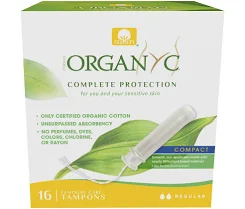
Organyc Tampons Compact Applicator Regular 16 Pieces
Skip until brand discloses applicator coating or confirms no PFAS treatment.
Organyc makes organic cotton tampons and cardboard applicators, materials with lower PFAS concern. The brand does not disclose whether any water-resistant or antimicrobial coatings are applied to the applicator.
We flunk more products than we pass. This one earned its grade. How we grade
Material
organic cotton, cardboard applicator
Brand disclosure
Brand is silent on PFAS
Lab data
No public lab test
You may also be interested in
Top-graded picks in the categories readers replace first, every one scored on the same rubric.

Aqua Pure
3M Aqua-Pure AP802B Whole House Filter Housing
- polypropylene filter housing, carbon/sediment cartridge
- We found no PFAS statement from the brand
- Bacterial growth in spent cartridges
3 hazards checked on this product. See all of them.

Aquasure
Premier Series 75 GPD Under Sink Reverse Osmosis Water Filtration System
- RO membrane, carbon filters, stainless steel housing
- We found no PFAS statement from the brand
- Bacterial and microbial growth in housing and filters
4 hazards checked on this product. See all of them.

Avocado
Vegan Mattress
- organic cotton, natural latex, coconut coir, recycled steel coils
- The brand calls it PFAS-free, which we have not verified
- Heavy metals
2 hazards checked on this product. See all of them.
What Organyc Tampons Compact Applicator is made of, ingredients and materials
The tampon core is certified organic cotton, which means it was grown without synthetic pesticides, herbicides, or GMO seeds; this reduces residual agrochemical contamination versus conventional cotton. The applicator is cardboard, a natural fiber product. However, cardboard used in food and personal care contact applications is often coated or treated for moisture resistance and structural integrity; the specific coating composition on this applicator is not disclosed publicly.
What’s concerning
Category baseline
The starting point for this type of product, before anything specific to this product is counted.
No PFAS disclosure
No public statement from the brand about PFAS in this product.
Undisclosed applicator coating or water-repellent treatment
Cardboard applicators in period care products are routinely treated for water resistance; Organyc does not publicly name the specific coating agent used, raising the possibility of PFAS or other fluorinated compounds not independently verified.
Formaldehyde / VOCs
Cardboard bonding and moisture-resistance treatments in personal care applicators can contain formaldehyde-based resins; no disclosure or testing data for this brand's applicators is publicly available.
Source, ATSDR ↗What’s reassuring
Base material not linked to PFAS
The main material recorded for this product is not one associated with PFAS.
Residual agrochemicals in non-organic cotton alternative (not present in this product)
This product uses certified organic cotton, which eliminates this hazard class relative to conventional cotton tampons.
Dioxins or chlorine-related impurities from bleaching
No record of dioxin contamination in Organyc products. Organic certification typically includes standards on bleach processing, but specific methods are not detailed by the brand.
Allergens or irritants from synthetic fragrance or additives in the cotton
Organyc markets the product as fragrance-free and additive-free; no reported contact dermatitis cases linked to this product are documented publicly.
The full breakdown
The brand's record and disclosure
Organyc markets itself on organic and natural positioning and holds organic certification for the cotton fiber. The brand does not publicly disclose applicator coating materials, water-repellency treatments, or whether PFAS-based water-repellents are used. No independent safety recalls or violations specific to this product line are on record. Transparency around processing aids and applicator treatments remains limited.
How it compares in its category
Organic cotton tampons occupy a mid-premium segment. Most mainstream brands do not disclose applicator coating either, making this product typical in that regard. Versus plastic applicators, cardboard carries lower microplastic risk but leaves coating chemistry opaque. Versus applicator-free designs, this product offers convenience at the cost of added material complexity.
If you buy it
Store in a dry environment; cardboard is moisture-sensitive and degradation can affect structural integrity and applicator function. Follow standard tampon safety practices, change every 4-8 hours to reduce toxic shock syndrome risk. Do not reuse applicators. If applicator crumbles, splinters, or feels unusually sticky during insertion, discontinue and contact the brand for batch information.
What we don’t know
- Basis
- Model estimate, 72% confidence, not a lab result
- Lab test
- None on record for this exact product
- Brand statement
- Organyc has made none
Formulations change between production runs, so check the current label. How we grade.
Better-graded alternatives in Tampons
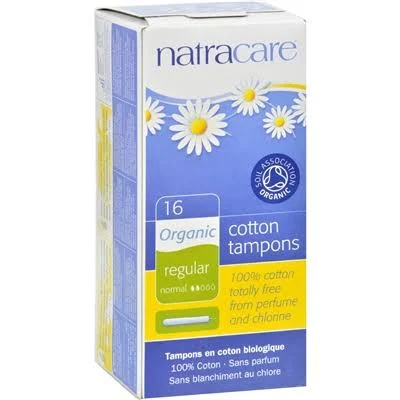
Natracare
100% Organic Cotton Tampons
- 100% organic cotton
- A third party reports verifying it as PFAS-free
- Heavy metals
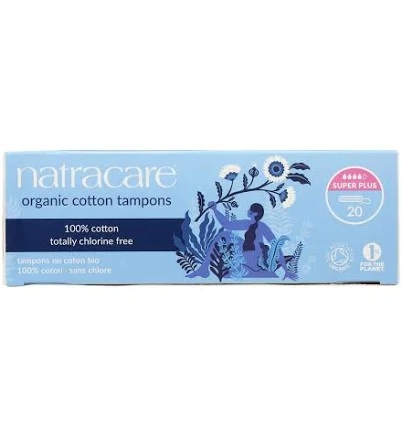
Natracare
Organic Super Plus Tampons, 3 x 20 ct
- organic cotton, cardboard applicator
- The brand calls it PFAS-free, which we have not verified
- Dioxins from bleaching
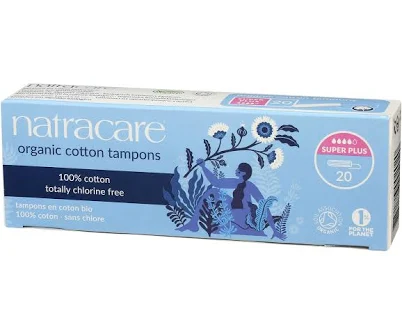
Natracare
Organic Cotton Super Plus Tampons
- organic cotton, no added fluorochemicals
- The brand calls it PFAS-free, which we have not verified
- Verified PFAS-free by a third party
More tampons grades
How we score, every product runs through the same public 0-100 rubric based on materials, coatings, brand disclosure, lab findings, and recalls. See the full methodology → Spotted a mistake? Report an error.