Outdoor Research · Rain Jackets
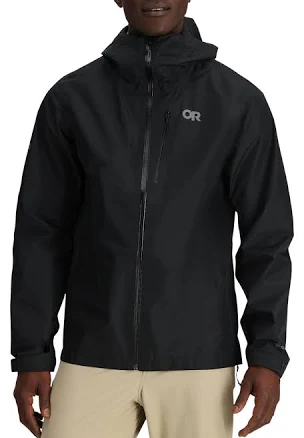
Outdoor Research Men's Foray II Jacket
water-repellent coating treatment likely contains PFAS; brand discloses nothing.
Outdoor Research does not publicly disclose PFAS use or absence in this jacket's water-repellent coating. Standard water-repellent coating finishes typically contain PFAS compounds.
Still want this one anyway? Check the price on Amazon. We’d swap it.
Material
Nylon with water-repellent coating finish
Brand disclosure
Brand is silent on PFAS
Lab data
No public lab test
You may also be interested in
Top-graded picks in the categories readers replace first, every one scored on the same rubric.

Aqua Pure
3M Aqua-Pure AP802B Whole House Filter Housing
- polypropylene filter housing, carbon/sediment cartridge
- We found no PFAS statement from the brand
- Bacterial growth in spent cartridges
3 hazards checked on this product. See all of them.

Aquasure
Premier Series 75 GPD Under Sink Reverse Osmosis Water Filtration System
- RO membrane, carbon filters, stainless steel housing
- We found no PFAS statement from the brand
- Bacterial and microbial growth in housing and filters
4 hazards checked on this product. See all of them.

Avocado
Vegan Mattress
- organic cotton, natural latex, coconut coir, recycled steel coils
- The brand calls it PFAS-free, which we have not verified
- Heavy metals
2 hazards checked on this product. See all of them.
What Outdoor Research Men's Foray II Jacket is made of, ingredients and materials
The Foray II is constructed from nylon, a synthetic polymer known for durability and water resistance. Outdoor Research applies a water-repellent coating (water-repellent coating) finish to the exterior, which in industry practice typically relies on fluorinated compounds (PFAS family) to achieve long-lasting water beading. Nylon itself is chemically stable during wear; the hazard profile centers on the surface treatment and its persistence in the environment after garment disposal.
What’s concerning
Waterproof / stain-resistant treatment
Water-repellent coating treatments have historically used PFAS.
Category baseline
The starting point for this type of product, before anything specific to this product is counted.
No PFAS disclosure
No public statement from the brand about PFAS in this product.
VOC off-gassing and coating degradation over time
Water-repellent coating-treated nylon may release trace volatile organics during initial use and storage, particularly if stored in warm enclosed spaces. Fluorinated water-repellent coating coatings are designed to persist through washing, but microscopic coating degradation during wear may contribute low-level environmental release; no acute health hazard to wearer is established, but long-term environmental fate of PFAS in the coating
What’s reassuring
Formaldehyde / VOCs
Nylon base material does not inherently require formaldehyde-based finish resins. No formaldehyde contamination has been reported for Outdoor Research outerwear in public safety records; standard nylon production in ISO-aligned facilities typically avoids excess formaldehyde.
Source, ATSDR ↗Azo dyes (carcinogenic dye precursors)
The Foray II's dark-colored nylon may use azo dyes, but no specific contamination or hazardous azo breakdown product (aniline derivatives) has been documented for this brand. Outdoor Research does not publicly disclose dye sourcing; assume standard chemical compliance without evidence of violation.
Antimony in polyester (if present as a byproduct)
This jacket is nylon, not polyester, so antimony catalyst residues are not a relevant concern. Nylon production does not use antimony as a polymerization catalyst.
Flame retardants
Outdoor apparel is not subject to mandatory flame-retardant standards (unlike furniture or children's sleepwear). No evidence that Outdoor Research applies brominated or chlorinated flame retardants to the Foray II; nylon's inherent char resistance meets voluntary safety expectations.
Source, EPA ↗The full breakdown
The brand's record and disclosure
Outdoor Research has not published detailed ingredient transparency for water-repellent coating treatments or committed to PFAS-free alternatives on their website or product labels as of available public records. The brand does not advertise third-party certifications (like Bluesign or OEKO-TEX) for this jacket model, which would signal independent chemical screening. No major recalls or contamination incidents specific to this model are documented in consumer safety databases.
How it compares in its category
Most mid-to-premium hardshell jackets use fluorinated water-repellent coating finishes; PFAS-treated outerwear is the industry norm, not an outlier. Competitors like Patagonia and Arc'teryx have begun phasing toward fluorine-free water-repellent coating alternatives, though at higher price points and with some trade-offs in durability and water-shedding performance. The Foray II occupies a mainstream position, effective waterproofing without public commitment to chemical reduction.
If you buy it
Wash infrequently to extend water-repellent coating life and avoid repeated chemical release into wastewater; use cool water and mild detergent, never hot water or bleach, which can degrade coatings. Store in a dry place; do not dry-clean, as solvents may compromise the jacket's laminated layers. Plan for 3-5 years of typical use before water-repellent coating renewal or replacement becomes necessary. After use, hanging to air-dry is preferable to machine drying, which accelerates coating breakdown.
What we don’t know
- Basis
- Model estimate, 45% confidence, not a lab result
- Lab test
- None on record for this exact product
- Brand statement
- Outdoor Research has made none
Formulations change between production runs, so check the current label. How we grade.
More rain jackets grades
How we score, every product runs through the same public 0-100 rubric based on materials, coatings, brand disclosure, lab findings, and recalls. See the full methodology → Spotted a mistake? Report an error.