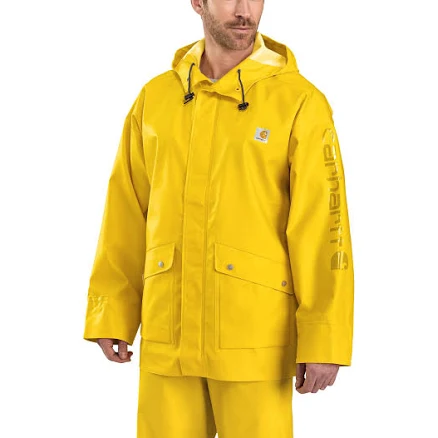
Carhartt Men's Midweight Waterproof Rainstorm Jacket
Waterproof jacket with unknown water-repellent coating; PFAS risk unclear without disclosure.
Carhartt does not publicly disclose PFAS use in this jacket's waterproofing treatment. Traditional water-repellent coating coatings often contain PFAS, but without brand transparency or testing data, risk cannot be confirmed.
Still want this one anyway? Check the price on Amazon. We’d swap it.
Material
cotton/polyester blend with waterproof coating
Brand disclosure
Brand is silent on PFAS
Lab data
No public lab test
You may also be interested in
Top-graded picks in the categories readers replace first, every one scored on the same rubric.

- polypropylene filter housing, carbon/sediment cartridge
- We found no PFAS statement from the brand
- Bacterial growth in spent cartridges
3 hazards checked on this product, all on its full breakdown.

Aquasure
Premier Series 75 GPD Under Sink Reverse Osmosis Water Filtration System
- RO membrane, carbon filters, stainless steel housing
- We found no PFAS statement from the brand
- Bacterial and microbial growth in housing and filters
4 hazards checked on this product, all on its full breakdown.

Avocado
Vegan Mattress
- organic cotton, natural latex, coconut coir, recycled steel coils
- The brand calls it PFAS-free, which we have not verified
- Heavy metals
2 hazards checked on this product, all on its full breakdown.
What Carhartt Men's Midweight Rainstorm Jacket is made of, ingredients and materials
This jacket combines cotton and polyester with a waterproof coating applied to the exterior. The polyester component itself poses minimal chemical risk, but the waterproof durability treatment (water-repellent coating) applied to make it water-resistant is the critical unknown. Carhartt has not publicly disclosed whether their water-repellent coating uses PFAS-free chemistry or traditional PFAS compounds, which is the primary safety concern for this product type.
What’s concerning
Waterproof / stain-resistant treatment
Water-repellent coating treatments have historically used PFAS.
Category baseline
The starting point for this type of product, before anything specific to this product is counted.
No PFAS disclosure
No public statement from the brand about PFAS in this product.
PFAS
Waterproof textile coatings historically rely on PFAS chemistry. Carhartt's lack of public water-repellent coating disclosure means PFAS presence cannot be ruled out and should be assumed possible until confirmed otherwise by the manufacturer.
Source, ATSDR ↗Coating degradation and microplastic shedding
As the waterproof layer breaks down over time (especially with heat exposure or aggressive washing), micro-particles of both coating and underlying fabric may shed. This is a wear hazard common to all coated textiles, not specific to Carhartt, but unavoidable with this product type.
What’s reassuring
Formaldehyde / VOCs
No specific formaldehyde contamination has been reported in Carhartt workwear. Cotton-polyester blends may contain trace formaldehyde from dyes or wrinkle-resistant finishes, but contemporary textile manufacturing standards make high levels unlikely in this price category.
Source, ATSDR ↗Heavy metals
No documented issues with Carhartt's dye chemistry or heavy metal content in this product line. Standard compliance with textile color regulations in North America makes this a low concern for branded workwear.
Source, FDA ↗Antimony in polyester fiber
Polyester production may involve antimony as a catalyst, but residual antimony in finished fabric is negligible and not a public health concern at consumer use levels.
How is this PFAS grade calculated?
The brand's record and disclosure
Carhartt does not maintain a public commitment to PFAS elimination or sustainable chemistry standards comparable to outdoor brands like Patagonia or Arc'teryx. The company has not issued material ingredient transparency reports or third-party certifications for waterproof coatings. No major recalls or chemical controversies specific to Carhartt raingear have been documented in public record, but silence on water-repellent coating composition is a transparency gap rather than proof of safety.
How it compares in its category
Workwear-focused brands like Carhartt typically prioritize durability and cost over chemical disclosure. This places them below premium outdoor brands in transparency but in line with most mainstream workwear. Alternatives with certified PFAS-free water-repellent coating (such as some offerings from Fjallraven or Columbia under specific product lines) exist at comparable or slightly higher price points and offer clearer chemical accountability.
If you buy it
Wash separately in cold water to reduce microfiber shedding and coating degradation; avoid fabric softeners and bleach, which can compromise the waterproof layer. Do not dry-clean or tumble dry on high heat, as this accelerates coating breakdown and potential chemical off-gassing. Replace when water no longer beads on the surface, typically after 3-5 years of regular use. Before purchase, contact Carhartt directly to request the specific water-repellent coating chemical used; their response will clarify whether PFAS is present.
What is not known about PFAS in this product?
- Basis
- Model estimate, 45% confidence, not a lab result
- Lab test
- None on record for this exact product
- Brand statement
- Carhartt has made none
Formulations change between production runs, so check the current label. How we grade.
More rain jackets grades
How we score, every product runs through the same public 0-100 rubric based on materials, coatings, brand disclosure, lab findings, and recalls. See the full methodology → Spotted a mistake? Report an error.