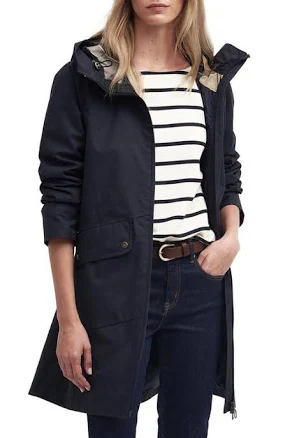
Barbour Women's Heron Waterproof Jacket
Barbour waterproofing method unclear; contact brand for PFAS transparency.
Barbour's traditional waxed jackets may use PFAS-based water-repellent coating coatings, but the brand does not disclose treatment specifics. Request materials information directly from Barbour before purchase if PFAS avoidance is a priority.
Still want this one anyway? Check the price on Amazon. We’d swap it.
Material
Waxed cotton with water-repellent coating treatment
Brand disclosure
Brand is silent on PFAS
Lab data
No public lab test
What Barbour Women's Heron Waterproof Jacket is made of, ingredients and materials
This jacket is waxed cotton with a water-repellent coating (water-repellent coating) finish. Waxed cotton is inherently water-resistant and typically uses paraffin or beeswax blends, which carry minimal toxicity risk. The water-repellent coating treatment applied on top is the concern, most water-repellent coating finishes on mid-market outdoor clothing use PFAS-based chemistry (perfluorinated compounds), though Barbour has not publicly disclosed their specific waterproofing method. Without transparency, you cannot confirm whether PFAS-free alternatives like wax-only or silicone-based water-repellent coating were used.
What’s concerning
Waterproof / stain-resistant treatment
Water-repellent coating treatments have historically used PFAS.
Category baseline
The starting point for this type of product, before anything specific to this product is counted.
No PFAS disclosure
No public statement from the brand about PFAS in this product.
PFAS
Standard water-repellent coating finishes on waxed cotton jackets historically use PFAS; Barbour has not disclosed their formulation. You should assume PFAS presence unless confirmed otherwise by the brand.
Source, ATSDR ↗Azo dyes (toxic colorants)
The cotton is dyed before waxing; if not certified organic or OEKO-TEX, azo dyes may be present in dark or saturated colors. Barbour does not list dye certifications, so direct skin contact risk is low (fabric layer isolation) but manufacturing exposure is uncontrolled.
What’s reassuring
Formaldehyde / VOCs
Waxed cotton and simple water-repellent coating treatments do not typically require formaldehyde-based chemistry. No public records of formaldehyde issues in Barbour waxed jackets.
Source, ATSDR ↗Wax degradation and leaching over time
Paraffin and beeswax used in traditional waxed cotton do not leach harmful substances. However, if water-repellent coating is applied on top and later degrades (after multiple washes or age), polymer breakdown products could be released; no reported incidents in Barbour jackets.
Flame retardants
Waxed cotton and simple water-repellent coating do not require added flame retardants. This product class carries no known flame-retardant burden.
Source, EPA ↗The full breakdown
The brand's record and disclosure
Barbour is a heritage British brand founded in 1894 with a strong reputation for durability, but has published no public statement on PFAS use or avoidance in their waterproofing. They do not list certifications like OEKO-TEX or bluesign that would indicate restricted chemical profiles. This silence is noteworthy in an era when competitors (e.g.Some brands (like Patagonia and some Arc'teryx lines) openly commit to avoiding PFAS in waterproofing. Contacting Barbour directly before purchase is the only way to verify their water-repellent coating chemistry.
How it compares in its category
Waxed cotton jackets are a middle ground between untreated natural fabrics and fully synthetic waterproof shells. Compared to polyester or nylon jackets with water-repellent coating, waxed cotton reduces microplastic shedding risk but typically offers less waterproofing durability and breathability. Many premium outdoor brands now offer PFAS-free water-repellent coating options on similar waxed-cotton styles; Barbour's lack of disclosure suggests they have not upgraded to those alternatives. This product sits in a category where lower-concern chemical options exist but are not guaranteed here.
If you buy it
Care for the jacket by rewaxing or refreshing water-repellent coating every 1-2 seasons, depending on wash frequency and water exposure. Wash in cool water with mild soap; avoid dry cleaning and high heat, which can degrade the wax and water-repellent coating layers. Do not tumble dry. If you purchase, email Barbour's customer service before receiving the item to request their waterproofing specification sheet; use their response to inform your keep-or-return decision. Store dry and unfolded or loosely rolled to maintain coating integrity.
What we don’t know
- Basis
- Model estimate, 45% confidence, not a lab result
- Lab test
- None on record for this exact product
- Brand statement
- Barbour has made none
Formulations change between production runs, so check the current label. How we grade.
More rain jackets grades
How we score, every product runs through the same public 0-100 rubric based on materials, coatings, brand disclosure, lab findings, and recalls. See the full methodology → Spotted a mistake? Report an error.