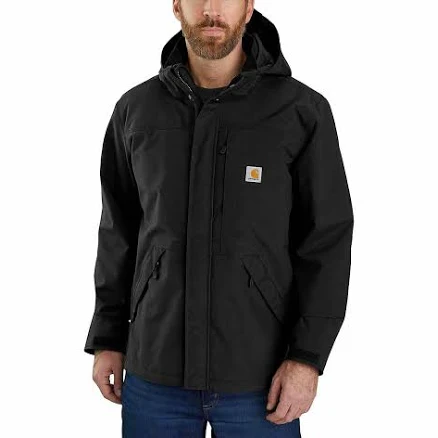
Carhartt Men's Storm Defender Shoreline Jacket
Popular outdoor brand does not disclose water-repellent coating chemistry; PFAS risk unconfirmed.
Carhartt's Storm Defender uses water-repellent coating but does not specify chemical composition or PFAS status. No third-party verification available for this model.
Still want this one anyway? Check the price on Amazon. We’d swap it.
Material
polyester with water-repellent coating water-resistant coating
Brand disclosure
Brand is silent on PFAS
Lab data
No public lab test
You may also be interested in
Top-graded picks in the categories readers replace first, every one scored on the same rubric.

- polypropylene filter housing, carbon/sediment cartridge
- We found no PFAS statement from the brand
- Bacterial growth in spent cartridges
3 hazards checked on this product, all on its full breakdown.

Aquasure
Premier Series 75 GPD Under Sink Reverse Osmosis Water Filtration System
- RO membrane, carbon filters, stainless steel housing
- We found no PFAS statement from the brand
- Bacterial and microbial growth in housing and filters
4 hazards checked on this product, all on its full breakdown.

Avocado
Vegan Mattress
- organic cotton, natural latex, coconut coir, recycled steel coils
- The brand calls it PFAS-free, which we have not verified
- Heavy metals
2 hazards checked on this product, all on its full breakdown.
What Carhartt Men's Storm Shoreline Jacket is made of, ingredients and materials
The Storm Defender Shoreline is primarily polyester with a water-repellent coating (water-repellent coating) finish applied to the outer shell. Polyester itself is a stable synthetic polymer with no known leaching hazards under normal wear. The water-repellent coating is the critical unknown, Carhartt does not publicly specify whether this uses PFAS-based chemistry (such as fluorocarbon compounds) or newer PFAS-free alternatives. water-repellent coating durability and water shedding performance often correlate with fluorinated compounds, though non-fluorinated options exist.
What’s concerning
Waterproof / stain-resistant treatment
Water-repellent coating treatments have historically used PFAS.
Category baseline
The starting point for this type of product, before anything specific to this product is counted.
No PFAS disclosure
No public statement from the brand about PFAS in this product.
water-repellent coating (water-repellent coating) coating composition
Carhartt does not disclose whether the Storm Defender water-repellent coating uses PFAS-based fluorocarbon chemistry or alternative formulations. Risk of PFAS exposure from the coating is unconfirmed but plausible given industry norms; graded separately at 20/100.
What’s reassuring
Polyester fiber degradation and microfiber shedding
No documented hazard or contamination specific to Carhartt polyester jackets. Microfiber shedding occurs with any polyester garment during washing but poses no direct health risk to the wearer; environmental impact remains under study.
Formaldehyde / VOCs
No public record of formaldehyde-based finishing agents in Carhartt outerwear. Polyester typically does not require formaldehyde resins for wrinkle or shrink resistance as cotton does, making this hazard class unlikely but unconfirmed by brand testing data.
Source, ATSDR ↗Heavy metals
No recalls or reports of azo dye or heavy metal contamination in Carhartt polyester jackets. Brand does not publish dyeing process transparency, but black or dark colorways used in workwear are routinely tested by retailers for compliance with textile safety standards.
Source, FDA ↗Flame retardants
No evidence that this jacket has been treated with flame retardant additives. Polyester is inherently less flammable than cellulose fibers, and workwear-grade polyester typically does not require additional flame retardant coatings unless marketed for fire-protective use.
Source, EPA ↗How is this PFAS grade calculated?
The brand's record and disclosure
Carhartt has not published transparency reports on water-repellent coating chemistry or committed to PFAS phase-out timelines as of available public records. The brand does not appear on lists of retailers with formal PFAS disclosure policies or third-party certifications (such as Bluesign or GOTS). This silence is typical of many workwear manufacturers but represents a gap in consumer information. No recalls or regulatory actions specific to Carhartt outerwear coatings are documented in public databases.
How it compares in its category
Most mainstream outdoor and workwear jackets at this price point use either PFAS-based water-repellent coating or untested proprietary formulations; transparent water-repellent coating disclosure remains uncommon in the category. Brands like Patagonia and some technical manufacturers have begun phasing to PFAS-free alternatives, but Carhartt's approach is unremarkable and not notably better or worse than market average. The polyester base is standard and poses no greater risk than competitor jackets in terms of base material hazards.
If you buy it
Wash in cool water and avoid excessive machine drying, as high heat can degrade both polyester and water-repellent coating coatings over time. Do not iron at high temperatures. The water-repellent coating will degrade gradually with washing and weather exposure (typically 50-100 wash cycles); re-treatment with commercial water-repellent coating sprays may prolong water shedding, though the chemistry of aftermarket products varies. If water-repellent coating begins flaking or peeling, discontinue use of that garment.
What is not known about PFAS in this product?
- Basis
- Model estimate, 45% confidence, not a lab result
- Lab test
- None on record for this exact product
- Brand statement
- Carhartt has made none
Formulations change between production runs, so check the current label. How we grade.
More rain jackets grades
How we score, every product runs through the same public 0-100 rubric based on materials, coatings, brand disclosure, lab findings, and recalls. See the full methodology → Spotted a mistake? Report an error.