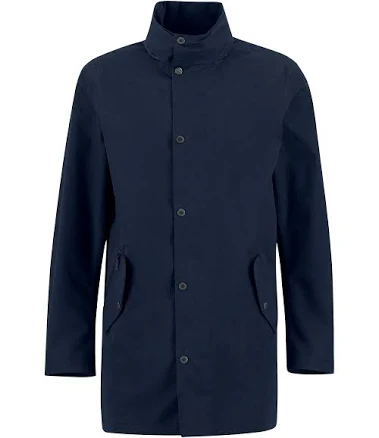
Barbour Chelsea Waterproof Jacket Mens
Traditional waxed cotton jacket; PFAS status unclear from brand.
Barbour's classic Chelsea uses waxed cotton for water resistance, a heritage approach predating modern PFAS treatments. Brand provides no public disclosure on PFAS content or water-repellent coating chemistry used.
Still want this one anyway? Check the price on Amazon. We’d swap it.
Material
Waxed cotton blend with water-repellent coating finish
Brand disclosure
Brand is silent on PFAS
Lab data
No public lab test
What Barbour Chelsea Waterproof Jacket Mens is made of, ingredients and materials
This jacket is waxed cotton blend treated with a water-repellent coating (water-repellent coating) finish. The wax coating itself is typically paraffin or beeswax-based and poses minimal chemical concern. The water-repellent coating finish is the critical unknown, traditional water repellents were PFAS-based, but some brands have shifted to fluorine-free alternatives. Barbour does not specify which is used on the Chelsea model, leaving the chemical profile ambiguous.
What’s concerning
Waterproof / stain-resistant treatment
Water-repellent coating treatments have historically used PFAS.
Category baseline
The starting point for this type of product, before anything specific to this product is counted.
No PFAS disclosure
No public statement from the brand about PFAS in this product.
water-repellent coating finish (fluorochemical origin unclear)
Traditional water-repellent coating finishes on waxed cotton were PFAS-based. Barbour does not disclose whether the Chelsea model uses PFAS or fluorine-free alternatives. Risk level depends on finish formulation, which is not publicly specified.
Wax coating degradation and skin contact
Waxed cotton sheds small amounts of wax particles with wear and laundering. Ingestion risk is minimal, but prolonged skin contact with degraded or flaking wax is not a documented hazard; avoid wearing on raw or broken skin and ensure thorough drying after washing.
What’s reassuring
Formaldehyde / VOCs
No recall, safety alert, or complaint on record for formaldehyde contamination in Barbour waxed cotton jackets. Cotton typically requires minimal formaldehyde resin treatment, and Barbour's heritage construction suggests traditional methods, but brand does not publish test data.
Source, ATSDR ↗Heavy metals
No documented safety issue with azo dyes in Barbour Chelsea jackets. Natural wax dyeing and earth-tone color palette may reduce reliance on synthetic azo dyes, but brand does not certify to OEKO-TEX or similar standards.
Source, FDA ↗Flame retardants
No flame retardant treatment is typical for waxed cotton outerwear unless explicitly stated. Barbour does not advertise flame resistance for this model, so chemical flame retardants are not expected.
Source, EPA ↗The full breakdown
The brand's record and disclosure
Barbour has not published a PFAS policy or chemical disclosure statement publicly available for consumer review. The brand does not list certifications such as OEKO-TEX or bluesign that would signal third-party chemical vetting. This silence is notable for a heritage brand positioning premium durability; it suggests no transparent supply-chain pressure or voluntary reduction program is documented.
How it compares in its category
Waxed cotton jackets are considered lower-risk for volatile off-gassing compared to synthetic technical fabrics heavy in coatings and dyes. However, many competitors now disclose PFAS-free water-repellent coating treatments (Patagonia, Arc'teryx, Rab). Barbour's silence on this standard baseline makes it harder to assess relative position; transparency itself is becoming table-stakes in this market segment.
If you buy it
Wash according to Barbour's care label; do not dry-clean, as solvents can degrade the wax and potentially mobilize any finish residues. Air-dry away from direct heat or sunlight. Re-wax or treat with water-repellent coating refresher products every 1-2 seasons if water beads stop forming. Before purchase, contact Barbour directly to confirm whether the water-repellent coating finish is PFAS-free or PFAS-based; if they cannot answer, that itself is a data point for your decision.
What we don’t know
- Basis
- Model estimate, 45% confidence, not a lab result
- Lab test
- None on record for this exact product
- Brand statement
- Barbour has made none
Formulations change between production runs, so check the current label. How we grade.
More rain jackets grades
How we score, every product runs through the same public 0-100 rubric based on materials, coatings, brand disclosure, lab findings, and recalls. See the full methodology → Spotted a mistake? Report an error.