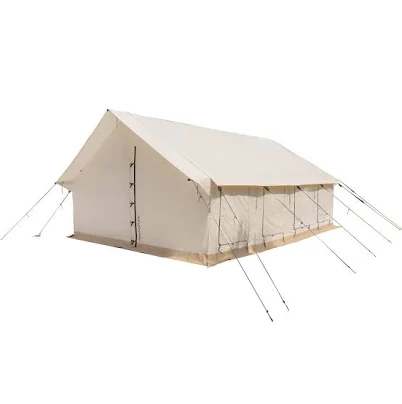
White Duck Outdoors · Camping Tents & Tarps
White Duck Outdoors Alpha Pro Wall Tent
High uncertainty; contact manufacturer before buying.
This canvas wall tent's waterproofing formula is unknown and unconfirmed. Traditional canvas waterproofing often uses water-repellent treatments containing PFAS.
Still want this one anyway? Check the price on Amazon. We’d swap it.
Material
Canvas/cotton blend with waterproof coating (type unspecified)
Brand disclosure
Brand is silent on PFAS
Lab data
No public lab test
What White Duck Outdoors Alpha Pro Wall Tent is made of, ingredients and materials
White Duck Outdoors Alpha Pro uses a canvas or cotton-blend fabric base, which is inherently breathable and durable for outdoor use. The critical unknown is the waterproof coating applied to this canvas. Wall tents typically use either PFAS-based water-repellent coating (water-repellent coating) coatings like polyurethane with fluorocarbon treatments, or older paraffin/wax-based systems. Without manufacturer disclosure, the coating composition cannot be confirmed, meaning you may be purchasing a tent with persistent chemical exposure during storage and use.
What’s concerning
Category baseline
The starting point for this type of product, before anything specific to this product is counted.
No PFAS disclosure
No public statement from the brand about PFAS in this product.
Waterproof / stain-resistant treatment
Water-repellent coating treatments have historically used PFAS.
PFAS
Canvas wall tents commonly use PFAS-based water-repellent coating coatings for durability and water repellency. Manufacturer has not disclosed or denied PFAS use, creating high uncertainty. Chronic low-level exposure may occur during setup, storage, and use.
Source, ATSDR ↗Coating degradation and microparticle shedding
All coated fabrics shed particles as UV and mechanical wear break down the polymer matrix over 5-10 years. Canvas tents exposed to sunlight and weather will release coating fragments; composition of these particles depends on the coating chemistry (PFAS-based coatings release fluorinated particles).
Off-gassing from waterproof coating
Polyurethane and fluorocarbon-based coatings can off-gas volatile organic compounds (VOCs) during manufacturing, shipping, and early use. New tent smell is often attributed to this process. Levels typically decline after airing out, but baseline composition is unknown without coating specification.
Mold and bacterial growth in storage
Cotton-blend canvas retains moisture if stored damp or in high-humidity conditions, creating an environment for mold and mildew growth. These are not direct chemical hazards but can trigger respiratory issues. Coating type does not eliminate this risk; maintenance is the control.
What’s reassuring
Formaldehyde / VOCs
Cotton canvas may have been treated with formaldehyde-based resins for shrinkage control or water-resistance during manufacturing. No testing or recalls are documented for White Duck Outdoors tents, but this is a known hazard in untreated canvas products. Off-airing upon purchase reduces residual levels.
Source, ATSDR ↗The full breakdown
The brand's record and disclosure
White Duck Outdoors (Outfitter brand) has not publicly disclosed coating chemistry or PFAS-free commitment in available product literature or sustainability statements. The brand's silence on this material question is significant for a premium product category where transparency is increasingly expected. No independent testing results or third-party certifications (e.g., bluesign, OEKO-TEX) are documented for this model. This lack of transparency is the primary risk driver for this product.
How it compares in its category
Canvas wall tents occupy a higher-durability, higher-cost segment than synthetic polyester tents, and traditionally relied on PFAS coatings for longevity. Some competitors (e.g., Seek Outside, certain Elk Outfitters models) have begun disclosing non-fluorinated or alternative coatings in response to PFAS concerns. The Alpha Pro's price point and lack of stated coating innovation suggest it may use conventional PFAS-based waterproofing rather than emerging alternatives. This positions it in the middle of the market for both performance and chemical risk.
If you buy it
Contact the manufacturer directly to confirm the waterproof coating type before purchase; ask specifically for PFAS-free or fluorocarbon-free certification. Store the tent dry and well-ventilated to minimize off-gassing exposure, particularly in enclosed spaces or vehicles. Plan to replace or re-coat the tent every 5-8 years depending on UV exposure, as coatings degrade and may shed microparticles. Inspect seams and coating annually for tears or separation, which expose the canvas base and indicate replacement is approaching.
What we don’t know
- Basis
- Model estimate, 35% confidence, not a lab result
- Lab test
- None on record for this exact product
- Brand statement
- White Duck Outdoors has made none
Formulations change between production runs, so check the current label. How we grade.
More camping tents & tarps grades
How we score, every product runs through the same public 0-100 rubric based on materials, coatings, brand disclosure, lab findings, and recalls. See the full methodology → Spotted a mistake? Report an error.