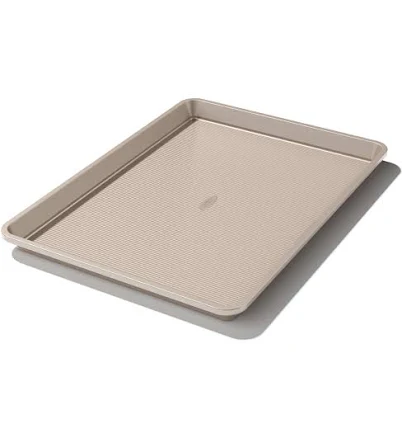
Good Grips Non-Stick Pro Half Sheet Jelly Roll Pan
Don't buy until OXO reveals the nonstick coating type.
OXO doesn't reveal what chemical makes the nonstick coating on this pan work, and most nonstick cookware historically used Teflon-type coating or Teflon-family coating containing PFAS. Without brand confirmation or testing, you can't know the PFAS status.
The better-graded swap
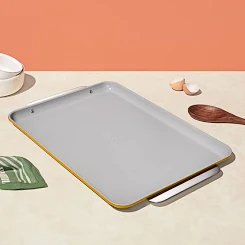
Caraway
Caraway Nonstick Ceramic Large Baking Sheet
90/100 safety
Same rubric that flunked this product. The swap earned Excellent.
Still want this one anyway? Check the price on Amazon. We’d swap it.
Material
Hard-anodized aluminum with non-stick coating (unspecified type)
Lab data
No public lab test
Is Good Grips Non-Stick Pro Half Sheet Jelly non-toxic? What it is made of
This pan uses hard-anodized aluminum as its core, a process that creates a dense oxide layer that resists corrosion and leaching better than bare aluminum. The non-stick coating type is not specified in OXO's public materials, which is the critical gap, Teflon-type coating-based coatings (Teflon) can emit toxic fumes above 500°F, while newer alternatives like ceramic or silicone have different risk profiles. Hard-anodizing itself does not leach aluminum at normal pH or temperatures, but degradation of any coating over time can expose the base metal.
What’s concerning
Category baseline
The starting point for this type of product, before anything specific to this product is counted.
No PFAS disclosure
No public statement from the brand about PFAS in this product.
Non-stick, chemistry undisclosed
Marketed as non-stick without stating the coating chemistry.
Teflon-type coating fume risk (thermal degradation)
If the non-stick coating is Teflon-type coating-based, heating above 500°F can emit polymer fume fever; OXO's silence on coating type prevents confirmation. Home ovens commonly reach 400-450°F during baking, which is below typical Teflon-type coating degradation onset but near threshold for long-duration exposure.
Aluminum leaching from coating degradation
Hard-anodized aluminum itself has low leaching risk, but if the non-stick coating degrades, peeling, or scratches, the underlying anodized layer becomes exposed. Acidic foods or prolonged contact with scratched areas could increase aluminum migration, though absolute dietary risk remains low for occasional exposure.
Coating degradation and microparticle shedding
Non-stick coatings on cookware are documented to shed microparticles with use, especially with metal utensils or abrasive cleaning. OXO's hard-anodized surface is more scratch-prone than some alternatives, increasing the likelihood of visible wear and potential coating flaking.
PFAS
OXO does not disclose whether the coating is Teflon-type coating, Teflon-type coating-free ceramic, silicone, or another chemistry. This opacity prevents assessment of PFAS exposure or safer-chemistry confirmation and is the primary reason for the care-tier rating.
Source, ATSDR ↗What’s reassuring
Lead
This product uses hard-anodized aluminum and a non-stick coating; there is no ceramic glaze or enamel component listed. Traditional ceramic or enamel bakeware carries heavy-metal risks; this design avoids that hazard class.
Source, ATSDR ↗The full breakdown
The brand's record and disclosure
OXO has not publicly disclosed the non-stick coating chemistry for this model despite multiple product lines in their cookware range. The company does not appear on major PFAS-free certifications (Green Guard, MADE SAFE, etc.). OXO's website and retail listings consistently omit coating-type specifics, treating it as proprietary. This lack of transparency prevents independent assessment of PFAS presence or safer-chemistry alternatives within OXO's own lineup.
How it compares in its category
Hard-anodized aluminum bakeware is mid-range in the non-stick category, more durable than soft-anodized, but less transparent about chemistry than brands explicitly marketing Teflon-type coating-free or ceramic coatings (e.g., GreenPan, Our Place, Caraway). Stainless steel half-sheet pans avoid non-stick coatings entirely and carry no fume risk, though they require oil or parchment for non-stick function. Cast iron and glass alternatives eliminate coating hazards but are heavier and slower to heat.
If you buy it
Do not exceed 400°F; OXO typically rates hard-anodized cookware to 400-500°F, but coating stability above that is coating-dependent and unknown here. Hand-wash or use low-heat dishwasher cycles to extend coating life; hard-anodized surfaces scratch more readily than bare stainless, exposing the aluminum. Replace the pan if the non-stick coating shows visible flaking, peeling, or significant wear; once compromised, coating fragments may shed into food. Contact OXO directly before purchase to request the specific non-stick chemistry; their silence on this detail is a red flag for informed choice.
What we don’t know
- Basis
- Model estimate, 35% confidence, not a lab result
- Lab test
- None on record for this exact product
- Brand statement
- OXO has made a specific claim
Formulations change between production runs, so check the current label. How we grade.
Better-graded alternatives in Bakeware
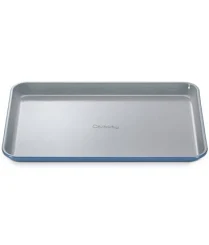
Caraway
Nonstick Ceramic Medium Baking Sheet
- ceramic nonstick coating
- A third party reports verifying it as PFAS-free
- Ceramic coating degradation over time
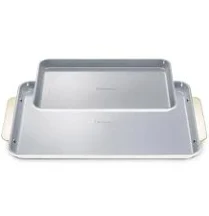
Caraway
Ceramic Nonstick Baking Sheet Duo
- ceramic nonstick coating
- A third party reports verifying it as PFAS-free
- Coating degradation and durability
2 hazards checked on this product. See all of them.
Caraway
Nonstick Ceramic Large Baking Sheet
- ceramic nonstick coating
- The brand calls it PFAS-free, which we have not verified
- Ceramic coating degradation and particle shedding
3 hazards checked on this product. See all of them.
More bakeware grades
How we score, every product runs through the same public 0-100 rubric based on materials, coatings, brand disclosure, lab findings, and recalls. See the full methodology → Spotted a mistake? Report an error.