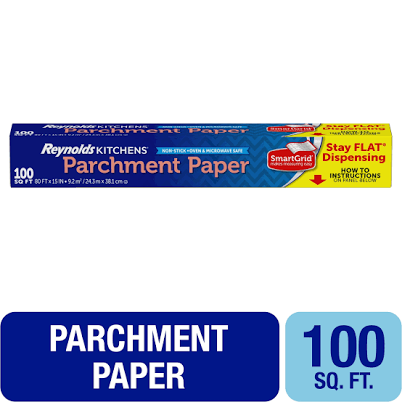
Reynolds · Parchment Paper & Baking Liners
Reynolds Kitchens Stay Flat Parchment Paper
Lower risk. Standard parchment with no confirmed PFAS disclosure.
Parchment paper with silicone coating and no PFAS claims from brand. Silicone generally presents lower PFAS risk than Teflon-family coating coatings, but manufacturer stays silent on specifics.
The better-graded swap
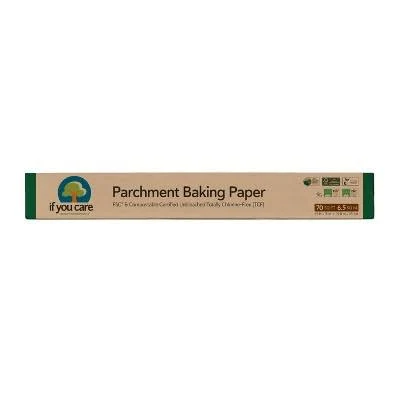
If You Care
If You Care Parchment Baking Paper
90/100 safety
Same rubric that flunked this product. The swap earned Excellent.
Still want this one anyway? Check the price on Amazon. We’d swap it.
Material
Parchment paper with silicone coating
Lab data
No public lab test
What Reynolds Kitchens Stay Flat Parchment is made of, ingredients and materials
Reynolds Stay Flat is cellulose-based parchment paper coated with food-grade silicone to prevent sticking. The silicone coating is the functional layer; it withstands moderate oven heat (typically up to 420-450°F depending on formulation) without degrading or leaching into food. Parchment is not plastic, so it does not contain BPA, BPS, or phthalates inherent to the material itself. The 'Stay Flat' design adds processing to reduce curling but does not introduce known chemical hazards beyond standard parchment manufacture.
What’s concerning
Category baseline
The starting point for this type of product, before anything specific to this product is counted.
No PFAS disclosure
No public statement from the brand about PFAS in this product.
Waterproof / stain-resistant treatment
Water-repellent coating treatments have historically used PFAS.
Silicone coating degradation at high heat
Silicone can degrade or flake if exposed to temperatures above the manufacturer's stated limit (typically 450°F). No established toxicity from silicone ingestion at home-cooking levels, but physical separation of coating from paper may occur.
What’s reassuring
Bleaching residue (chlorine/dioxin)
Bleached parchment undergoes chlorine whitening during manufacture. No documented dioxin carryover to food at food-contact levels in commercial parchment meeting FDA standards; Reynolds products comply with FDA food-contact regulations.
Microplastic or microfiber shedding
Parchment is cellulose, not plastic, so microplastic generation is not a hazard class for this product. Minor cellulose fiber shedding is possible but no documented health concern at typical food-contact exposure.
Contamination from recycled fiber feedstock
Most commercial parchment (including Reynolds) uses virgin or well-controlled recycled cellulose. No recalls or hazard alerts for contaminant carryover in parchment paper are on record.
Formaldehyde / VOCs
Parchment paper does not use formaldehyde-releasing resins like some textiles or furniture coatings do. Off-gassing at normal use temperatures is not documented.
Source, ATSDR ↗The full breakdown
The brand's record and disclosure
Reynolds Kitchens (owned by Alcoa) is a legacy cookware and baking product brand with established FDA food-contact compliance in the US market. The company does not publicly disclose PFAS testing or certification on this product line; silence on PFAS is common across parchment brands. No major safety recalls or health complaints specific to Reynolds parchment paper are on public record. Albertsons' private-label version carries the same formulation but lacks independent transparency data.
How it compares in its category
Parchment paper presents lower concern than uncoated aluminum foil (which can leach aluminum into acidic foods) and lower concern than non-stick plastics that may off-gas at high heat. Bleached parchment (most commercial brands, including Reynolds) undergoes chlorine-based whitening; no dioxin carryover to food has been documented at food-contact levels. Unbleached and compostable alternatives exist but offer no documented safety advantage for typical home baking. Reynolds is a mainstream, price-competitive option with no worse hazard profile than competitor brands like If You Care or Bakers & Chefs.
If you buy it
Use at stated heat limits (check package guidance, typically 420-450°F); do not use directly on open flame or under a broiler. Replace sheets visibly if the paper browns heavily or the silicone coating appears damaged or flaking. Store in a cool, dry place away from direct heat to preserve coating integrity. For repeated-use concern, parchment is disposable and single-use by design; reusing the same sheet multiple times increases microscopic coating wear and potential for food contact with bare cellulose.
What we don’t know
- Basis
- Model estimate, 62% confidence, not a lab result
- Lab test
- None on record for this exact product
- Brand statement
- Reynolds has made a specific claim
Formulations change between production runs, so check the current label. How we grade.
Better-graded alternatives in Parchment Paper & Baking Liners
If You Care
Baking Paper, Parchment, 70 Square Feet
- silicone-coated parchment paper
- The brand calls it PFAS-free, which we have not verified
- Paper degradation and particulate shedding
If You Care
Parchment Baking Sheets
- unbleached paper with silicone coating
- The brand calls it PFAS-free, which we have not verified
- Silicone coating degradation at high heat
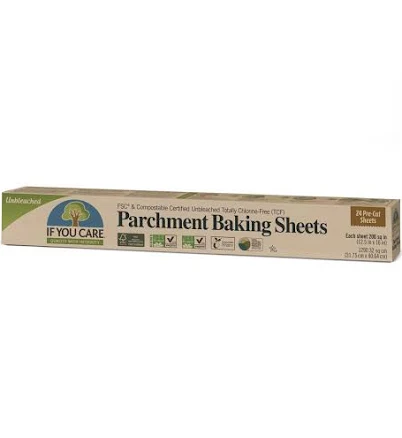
If You Care
Parchment Baking Sheets
- bleached paper with silicone coating
- The brand calls it PFAS-free, which we have not verified
- Paper degradation and fragmentation
More parchment paper & baking liners grades
How we score, every product runs through the same public 0-100 rubric based on materials, coatings, brand disclosure, lab findings, and recalls. See the full methodology → Spotted a mistake? Report an error.