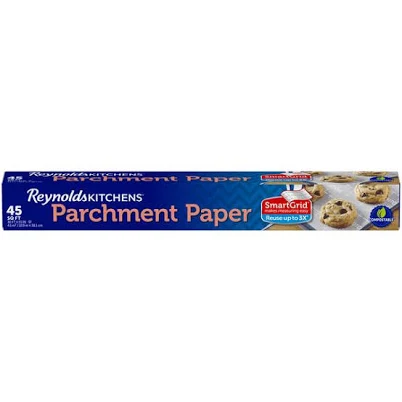
Reynolds · Parchment Paper & Baking Liners
Reynolds Kitchens Parchment Paper
Skip. Grease-resistant coating probably contains PFAS.
Parchment paper typically uses silicone or wax coatings. Market Pantry makes no PFAS statement. Grease-resistant food packaging frequently contains PFAS; uncoated parchment alternatives are available.
The better-graded swap
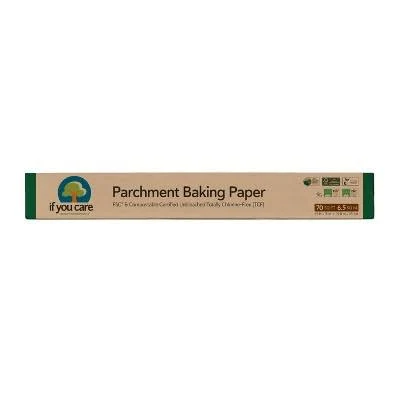
If You Care
If You Care Parchment Baking Paper
90/100 safety
Same rubric that flunked this product. The swap earned Excellent.
Still want this one anyway? Check the price on Amazon. We’d swap it.
Material
bleached paper with non-stick silicone coating
Lab data
No public lab test
What Reynolds Kitchens Parchment Paper is made of, ingredients and materials
Reynolds Kitchens Parchment Paper (and Market Pantry variant) is bleached paper with a heat-resistant silicone non-stick coating. Silicone coatings on food-contact parchment are standard industry practice and provide the non-stick function, but the formulation process often involves PFAS compounds to achieve water and grease resistance. The bleaching process itself is not a safety concern at modern standards, but the coating composition is the critical unknown here.
What’s concerning
Category baseline
The starting point for this type of product, before anything specific to this product is counted.
No PFAS disclosure
No public statement from the brand about PFAS in this product.
Waterproof / stain-resistant treatment
Water-repellent coating treatments have historically used PFAS.
PFAS
Silicone non-stick coatings on food-contact parchment commonly use PFAS as a manufacturing or performance aid. No public testing or declaration from Reynolds or Market Pantry confirms absence.
Source, ATSDR ↗Coating degradation and microparticulate release
Silicone coatings can degrade under sustained high heat (above 450F) or mechanical abrasion (cutting, folding). Microscopic particle release into food has not been documented for this product but is a material class concern.
Adhesion loss or coating flaking
Repeated use, mechanical damage, or high moisture can weaken the silicone-to-paper bond over time. Visual inspection before use is the primary control.
What’s reassuring
Bleaching residues
Chlorine-based bleaching used in modern parchment production is rinsed and does not leave actionable residues on food-contact surfaces at regulatory levels.
Thermal stability at typical cooking temperatures
Below 420F, silicone coatings on parchment are stable and do not release volatile compounds into food. No recalls or reported harm for normal oven use below this threshold.
The full breakdown
The brand's record and disclosure
Reynolds and Market Pantry (a Roundy's private label) do not publicly disclose coating chemistry or PFAS content for their parchment products. Neither brand has published certifications such as FDA Microwave Safe declarations specific to PFAS avoidance, nor have they responded to consumer PFAS inquiries in published statements. This silence on a well-documented industry concern is a transparency gap.
How it compares in its category
Most conventional parchment papers (including Reynolds and store brands) use silicone coatings that may contain PFAS; alternatives like uncoated greaseproof paper or silicone-free options exist but are less common in mainstream retail. Some specialty brands (e.g., If You Care) explicitly market PFAS-free formulations, making this product's silence more notable. Parchment has lower concern than plastic wrap for most cooking but carries this coating uncertainty.
If you buy it
Use at temperatures below 420F (the typical silicone stability threshold); do not use under direct broiler flame or in prolonged oven duty above 450F, as coating degradation risk rises. Replace sheets if you notice discoloration, flaking, or odor. For acidic or fatty foods (tomato sauce, cheese), minimize contact time to reduce any microscopic coating contact. Consider rotating to parchment with verified lower PFAS concern for frequent or high-heat cooking.
What we don’t know
- Basis
- Model estimate, 45% confidence, not a lab result
- Lab test
- None on record for this exact product
- Brand statement
- Reynolds has made a specific claim
Formulations change between production runs, so check the current label. How we grade.
Better-graded alternatives in Parchment Paper & Baking Liners
If You Care
Baking Paper, Parchment, 70 Square Feet
- silicone-coated parchment paper
- The brand calls it PFAS-free, which we have not verified
- Paper degradation and particulate shedding
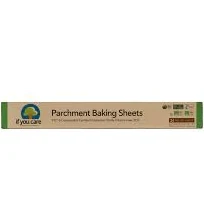
If You Care
Parchment Baking Sheets
- unbleached paper with silicone coating
- The brand calls it PFAS-free, which we have not verified
- Silicone coating degradation at high heat
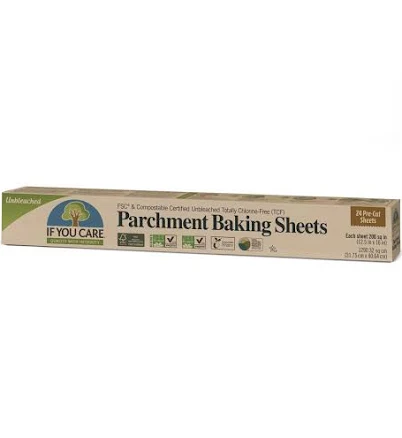
If You Care
Parchment Baking Sheets
- bleached paper with silicone coating
- The brand calls it PFAS-free, which we have not verified
- Paper degradation and fragmentation
More parchment paper & baking liners grades
How we score, every product runs through the same public 0-100 rubric based on materials, coatings, brand disclosure, lab findings, and recalls. See the full methodology → Spotted a mistake? Report an error.