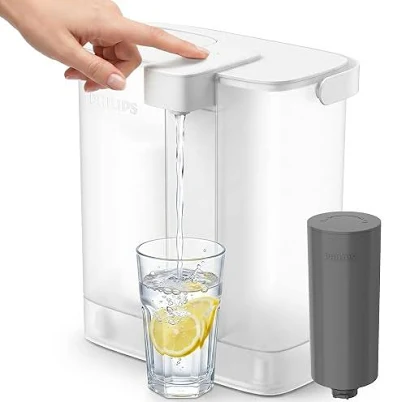
Philips GoZero Next-gen Instant Water Filter Pitcher
Plastic pitcher with activated carbon filter, no PFAS-related coatings on record.
Material as recorded is plastic pitcher with activated carbon filter cartridge. No water-repellent finish on record. Philips has no PFAS statement on record, and no third-party certification is listed.
We flunk more products than we pass. This one earned its grade. How we grade
Material
Plastic pitcher with activated carbon filter cartridge
Brand disclosure
Brand is silent on PFAS
Lab data
No public lab test
You may also be interested in
Top-graded picks in the categories readers replace first, every one scored on the same rubric.

Aqua Pure
3M Aqua-Pure AP802B Whole House Filter Housing
- polypropylene filter housing, carbon/sediment cartridge
- We found no PFAS statement from the brand
- Bacterial growth in spent cartridges
3 hazards checked on this product. See all of them.

Aquasure
Premier Series 75 GPD Under Sink Reverse Osmosis Water Filtration System
- RO membrane, carbon filters, stainless steel housing
- We found no PFAS statement from the brand
- Bacterial and microbial growth in housing and filters
4 hazards checked on this product. See all of them.

Avocado
Vegan Mattress
- organic cotton, natural latex, coconut coir, recycled steel coils
- The brand calls it PFAS-free, which we have not verified
- Heavy metals
2 hazards checked on this product. See all of them.
What Philips GoZero Next-gen Instant Water is made of, ingredients and materials
The GoZero Next-gen uses a plastic pitcher (likely polypropylene or copolyester) paired with an activated carbon filter cartridge. Activated carbon is chemically inert and does not leach contaminants into water under normal use. The plastic housing can contact water continuously, so leachable chemicals in the resin or any coatings are the main concern. Philips does not publicly disclose the specific polymer grade or whether virgin versus recycled resin was used.
What’s concerning
No PFAS disclosure
No public statement from the brand about PFAS in this product.
BPA & bisphenols
Philips does not disclose whether the pitcher resin contains BPA, BPS, or structurally similar bisphenols. Polypropylene and copolyesters used in pitchers are generally considered lower-leach alternatives, but confirmation from the manufacturer is absent.
Source, FDA ↗Bacterial or microbial growth in cartridge or housing
Water pitcher filters can harbor bacteria if cartridges are not replaced on schedule or if the housing is not dried between uses. This is a use-and-maintenance issue, not a defect in the GoZero specifically, but affects all passive pitcher filters equally.
Activated carbon cartridge degradation or dust release
Carbon cartridges can shed fine particles if cracked or mishandled. No specific failure data for GoZero cartridges is available, but proper insertion and handling during replacement minimizes this risk.
Off-gassing or odors from new pitcher
New plastic pitchers may emit mild plastic odors (volatile organic compounds from resin curing or releasing agents). This typically dissipates after rinsing and airing. Philips does not publish off-gassing profiles.
What’s reassuring
Base material not linked to PFAS
The main material recorded for this product is not one associated with PFAS.
Heavy metals
Activated carbon effectively removes many metals, but efficacy depends on cartridge age and water chemistry. No evidence of GoZero cartridges failing to meet advertised removal rates; however, independent testing is sparse.
Source, FDA ↗The full breakdown
The brand's record and disclosure
Philips has not issued a public statement on PFAS presence or absence in the GoZero line or its cartridge materials. No product-specific safety recalls for this model appear in FDA, CPSC, or Health Canada databases as of the latest available record. Philips does hold ISO 13485 certification (medical devices) but does not voluntarily certify water pitchers for heavy metals or endocrine-active chemicals. Transparency on material composition remains limited.
How it compares in its category
Most pitcher filters (Brita, ZeroWater, PUR) use similar plastic housings and carbon cartridges with equally sparse public hazard data. The GoZero's activated carbon design is industry standard and carries no known elevated risk versus competitors. Differentiation lies in cartridge lifespan and claimed contaminant removal rates, not material safety. Like all pitcher filters, effectiveness depends on proper maintenance and cartridge replacement schedules, which are often ignored by consumers.
If you buy it
Store the pitcher at room temperature away from direct sunlight to minimize plastic degradation. Do not boil or heat water in the pitcher itself; use filtered water in a kettle if hot water is needed. Replace cartridges on schedule (typically every 2-3 months or 40 gallons) because carbon saturation reduces effectiveness and can allow bacterial regrowth. Rinse the pitcher and cartridge weekly with clean water and allow to air-dry to prevent mold or biofilm buildup in the housing.
What we don’t know
- Basis
- Model estimate, 62% confidence, not a lab result
- Lab test
- None on record for this exact product
- Brand statement
- Philips has made none
Formulations change between production runs, so check the current label. How we grade.
Better-graded alternatives in Water Filters

Aquamira
Water Storage Treatment 2 oz Glass Bottles 60 gallons Purification
- glass bottles, sodium dichloroisocyanurate treatment chemical
- We found no PFAS statement from the brand
- Chemical overdose or misuse
5 hazards checked on this product. See all of them.

Big Berkey
Empty Housing with NO Filters Included
- Stainless steel housing and spigot
- We found no PFAS statement from the brand
- Bacterial growth and biofilm if filters not replaced
5 hazards checked on this product. See all of them.

LifeStraw
Home Glass Water Filter Pitcher
- Borosilicate glass pitcher, replaceable activated-carbon filter cartridge
- Bacterial growth in filter cartridge if unmaintained
5 hazards checked on this product. See all of them.
More water filters grades
How we score, every product runs through the same public 0-100 rubric based on materials, coatings, brand disclosure, lab findings, and recalls. See the full methodology → Spotted a mistake? Report an error.