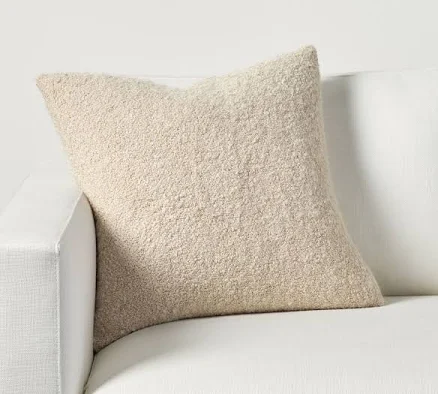
Pottery Barn Boucle Pillow Cover
Minimal concern; uncoated boucle carries low PFAS risk unless special finishes applied.
Standard wool-polyester boucle with no disclosed water-resistant or stain-resistant finish. Uncoated texture fabric carries low PFAS risk without surface treatments.
We flunk more products than we pass. This one earned its grade. How we grade
Material
Boucle textile (wool/polyester blend, uncoated)
Lab data
No public lab test
You may also be interested in
Top-graded picks in the categories readers replace first, every one scored on the same rubric.

- polypropylene filter housing, carbon/sediment cartridge
- We found no PFAS statement from the brand
- Bacterial growth in spent cartridges
3 hazards checked on this product, all on its full breakdown.

Aquasure
Premier Series 75 GPD Under Sink Reverse Osmosis Water Filtration System
- RO membrane, carbon filters, stainless steel housing
- We found no PFAS statement from the brand
- Bacterial and microbial growth in housing and filters
4 hazards checked on this product, all on its full breakdown.

Avocado
Vegan Mattress
- organic cotton, natural latex, coconut coir, recycled steel coils
- The brand calls it PFAS-free, which we have not verified
- Heavy metals
2 hazards checked on this product, all on its full breakdown.
What Pottery Barn Boucle Pillow Cover is made of, ingredients and materials
Boucle pillow covers are typically wool and polyester blend yarns woven into a textured, looped fabric without applied coatings or finishes. The uncoated construction means no adhesives, water repellents, or flame retardant topcoats are present to leach or off-gas. Polyester content raises theoretical concerns about antimony (a processing catalyst), but migration into skin contact is negligible in an unwashed, room-temperature textile.
What’s concerning
Category baseline
The starting point for this type of product, before anything specific to this product is counted.
No PFAS disclosure
No public statement from the brand about PFAS in this product.
Azo dyes and synthetic colorants
Boucle textiles use acid and disperse dyes typical of wool-polyester blends. No specific test data exists for this Pottery Barn product line, but azo dyes are standard in the industry and generally considered low-migration risk on non-skin-contact furnishings.
Volatile organic compounds (VOC) off-gassing
New boucle textiles may emit minor VOCs from residual spinning oils or dye solvents for the first few days. Airing the pillow cover outdoors or in a well-ventilated space before use minimizes exposure; this is a routine precaution, not an established safety issue for this brand.
What’s reassuring
Base material not linked to PFAS
The main material recorded for this product is not one associated with PFAS.
Formaldehyde / VOCs
Uncoated boucle does not require wrinkle-resistance or crease-set resins. No formaldehyde release has been reported for Pottery Barn boucle pillow covers, and the lack of applied finish makes this hazard unlikely.
Source, ATSDR ↗Antimony residues in polyester
Antimony is a catalyst in polyester polymerization but binds tightly to the polymer chain during synthesis. Leaching into skin or indoor air from a finished textile pillow cover is not documented in published safety literature.
Flame retardants
Pottery Barn's uncoated boucles are not marketed as flame-resistant and do not carry applied flame retardant coatings. Standard untreated wool-polyester blends are not treated with brominated or phosphorus-based additives.
Source, EPA ↗How is this PFAS grade calculated?
The brand's record and disclosure
Pottery Barn does not publicly disclose material testing data, chemical certifications (Global Organic Textile Standard, Oeko-Tex), or formaldehyde-resin use statements for home textiles. The brand has faced no documented recalls or regulatory actions specific to chemical hazards in pillow covers. Absence of disclosure is not unusual for mass-market home furnishings but limits independent verification of dye safety or finishing processes.
How it compares in its category
Uncoated natural-blend boucles occupy the mid-to-lower risk tier of throw pillow covers compared to vinyl-coated, flame-retardant-treated, or heavily synthetic alternatives. Wool-polyester blends avoid the extreme off-gassing profiles of 100% polyester or acrylic textiles. Certified organic or Oeko-Tex labeled boucles (available from specialty retailers) offer higher chemical assurance if that is a priority.
If you buy it
Wash the cover in cool water before first use to remove any residual dyes or processing agents. Store in a dry environment away from heat sources; polyester loses integrity above 130°C (264°F), though normal indoor conditions pose no risk. Replace if visible pilling, tears, or odor suggests degradation. Routine vacuuming or brushing maintains the boucle texture and removes dust.
What is not known about PFAS in this product?
- Basis
- Model estimate, 78% confidence, not a lab result
- Lab test
- None on record for this exact product
- Brand statement
- Pottery Barn has made a specific claim
Formulations change between production runs, so check the current label. How we grade.
More throw pillows grades
How we score, every product runs through the same public 0-100 rubric based on materials, coatings, brand disclosure, lab findings, and recalls. See the full methodology → Spotted a mistake? Report an error.