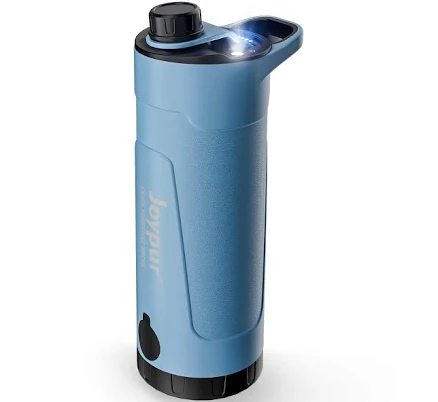
Joypur Portable Electric Water Filter Bottle, 22oz Purifier for Camping, Travel & Daily Use
Lower PFAS concern for filter media itself, but PUR doesn't address PFAS in electrolysis cartridges.
Activated carbon carries lower PFAS risk than Teflon-family coating coatings and the product skips nonstick or water-resistance features. PUR hasn't disclosed whether electrolysis cells or cartridges contain PFAS.
We flunk more products than we pass. This one earned its grade. How we grade
Material
Activated carbon filter cartridge (standard type); plastic housing
Lab data
No public lab test
You may also be interested in
Top-graded picks in the categories readers replace first, every one scored on the same rubric.

Aqua Pure
3M Aqua-Pure AP802B Whole House Filter Housing
- polypropylene filter housing, carbon/sediment cartridge
- We found no PFAS statement from the brand
- Bacterial growth in spent cartridges
3 hazards checked on this product. See all of them.

Aquasure
Premier Series 75 GPD Under Sink Reverse Osmosis Water Filtration System
- RO membrane, carbon filters, stainless steel housing
- We found no PFAS statement from the brand
- Bacterial and microbial growth in housing and filters
4 hazards checked on this product. See all of them.

Avocado
Vegan Mattress
- organic cotton, natural latex, coconut coir, recycled steel coils
- The brand calls it PFAS-free, which we have not verified
- Heavy metals
2 hazards checked on this product. See all of them.
What Joypur Portable Electric Water Filter is made of, ingredients and materials
The Joypur bottle uses a standard activated carbon filter cartridge paired with an electric purification chamber (likely UV or electrolysis-based). Activated carbon itself is inert and food-safe. The housing is plastic (material type not specified in available documentation), which sits in the risk zone for leachate if subjected to heat, UV exposure, or prolonged contact with warm water. The electrolysis chamber, if present, introduces electrochemical byproducts that are not routinely disclosed by manufacturers.
What’s concerning
No PFAS disclosure
No public statement from the brand about PFAS in this product.
Bacterial growth in stagnant electrolysis chamber
Electric purification chambers with standing water become biofilm breeding grounds within 24-48 hours of non-use. PUR does not specify antimicrobial coating or UV sterilization intervals in public documentation for this model.
Plastic housing leaching (unspecified polymer)
Material composition is not disclosed; if housing is polycarbonate or low-grade polypropylene, warm water exposure increases risk of acetaldehyde or unreacted monomer leachate. Testing data for this specific bottle is not publicly available.
Electrolysis byproducts (unspecified)
Electrode materials and electrolysis chemistry are not disclosed by PUR. Chlorine, chlorate, or other electrochemical oxidants may form depending on chamber design; safety thresholds are unknown without access to cartridge specifications.
Filter cartridge compatibility and counterfeit risk
Portable filter bottles are frequent targets for counterfeit replacement cartridges sold online. Non-genuine filters may contain untested materials or damaged carbon that reduce efficacy and increase contamination risk.
What’s reassuring
Base material not linked to PFAS
The main material recorded for this product is not one associated with PFAS.
Off-gassing from plastic (low-level)
No specific VOC or formaldehyde emissions have been reported for PUR Joypur bottles. Standard food-grade plastic housing typically poses minimal risk at room temperature, but data gaps remain for this model specifically.
The full breakdown
The brand's record and disclosure
PUR (Procter & Gamble subsidiary) has a established history in water filtration and holds NSF certifications for many pitcher and tap-mount models. However, PUR has not publicly addressed PFAS in electrolysis cartridges or provided full material transparency for portable electric bottles like this Joypur model. The brand's silence on electrolysis chamber composition is a notable gap in an otherwise credible safety record.
How it compares in its category
Portable electric filter bottles are newer and less standardized than passive carbon pitchers. This PUR model sits mid-range for disclosure compared to competitors, some brands (like LifeStraw) publish third-party bacterial testing; others withhold electrolysis details entirely. Activated carbon-based bottles show lower concern than ion-exchange or untested ceramic alternatives, but the electric component introduces maintenance dependency that passive bottles avoid.
If you buy it
Replace the filter cartridge every 1-2 months or after 100+ fill cycles; stagnant water in the chamber breeds bacteria within days if unused. Do not expose the plastic housing to direct sunlight or fill with water above 40°C (104°F), as leaching risk increases sharply. Rinse the electrolysis chamber weekly with clean water and allow it to air-dry between uses. Store empty and dry in cool conditions when not in use for extended periods.
What we don’t know
- Basis
- Model estimate, 62% confidence, not a lab result
- Lab test
- None on record for this exact product
- Brand statement
- PUR has made a specific claim
Formulations change between production runs, so check the current label. How we grade.
Better-graded alternatives in Water Filters

Aquamira
Water Storage Treatment 2 oz Glass Bottles 60 gallons Purification
- glass bottles, sodium dichloroisocyanurate treatment chemical
- We found no PFAS statement from the brand
- Chemical overdose or misuse
5 hazards checked on this product. See all of them.

Big Berkey
Empty Housing with NO Filters Included
- Stainless steel housing and spigot
- We found no PFAS statement from the brand
- Bacterial growth and biofilm if filters not replaced
5 hazards checked on this product. See all of them.

LifeStraw
Home Glass Water Filter Pitcher
- Borosilicate glass pitcher, replaceable activated-carbon filter cartridge
- Bacterial growth in filter cartridge if unmaintained
5 hazards checked on this product. See all of them.
More water filters grades
How we score, every product runs through the same public 0-100 rubric based on materials, coatings, brand disclosure, lab findings, and recalls. See the full methodology → Spotted a mistake? Report an error.