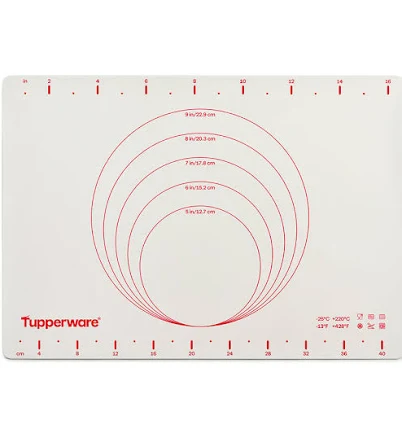
Tupperware · Silicone Cutting & Prep Boards
Tupperware Wonder Mat, Is It Non-Toxic?
Silicone with no coating described, and no PFAS statement from the brand.
The product information we reviewed describes silicone baking mat, with no applied coating named. Silicone releases food on its own, so a non-stick claim on a silicone product describes the material rather than a coating. The brand has published no PFAS statement for it.
The better-graded swap
Fiskars
Functional Form Cutting Board Set, 3-Piece
85/100 safety
Same rubric that flunked this product. The swap earned Excellent.
Still want this one anyway? Check the price on Amazon. We’d swap it.
Material
Silicone baking mat
Brand disclosure
Brand is silent on PFAS
Lab data
No public lab test
You may also be interested in
Top-graded picks in the categories readers replace first, every one scored on the same rubric.

- polypropylene filter housing, carbon/sediment cartridge
- We found no PFAS statement from the brand
- Bacterial growth in spent cartridges
3 hazards checked on this product, all on its full breakdown.

Aquasure
Premier Series 75 GPD Under Sink Reverse Osmosis Water Filtration System
- RO membrane, carbon filters, stainless steel housing
- We found no PFAS statement from the brand
- Bacterial and microbial growth in housing and filters
4 hazards checked on this product, all on its full breakdown.

Avocado
Vegan Mattress
- organic cotton, natural latex, coconut coir, recycled steel coils
- The brand calls it PFAS-free, which we have not verified
- Heavy metals
2 hazards checked on this product, all on its full breakdown.
Is Tupperware Wonder Mat non-toxic? What it is made of
The Wonder Mat is a silicone baking mat, a polymer-based sheet designed for non-stick food prep and baking. Silicone is chemically inert at normal cooking temperatures (up to around 400-450°F depending on formulation) and does not leach monomers like BPA or phthalates because it has no phthalate plasticizers or bisphenol compounds in its backbone. The primary concern with silicone products is the quality of cross-linking during manufacture; poorly cured silicone can shed oligomers (short-chain fragments), though food-grade silicone is engineered to minimize this.
What’s concerning
Category baseline
The starting point for this type of product, before anything specific to this product is counted.
No PFAS disclosure
No public statement from the brand about PFAS in this product.
Silicone oligomer leaching
Food-grade silicone products can shed short-chain oligomers at high heat or with prolonged contact with fatty/acidic foods; the extent depends on cure quality, which Tupperware does not publicly disclose for this product.
Thermal degradation and breakdown
Repeated use at or near the heat limit (350-450°F range) can cause silicone to become sticky or discolored over 2-5 years, indicating polymer cross-link failure; replacement is advisable at that point.
Microparticle shedding from wear
Any polymer surface can degrade under mechanical stress (cutting, scraping, abrasion); silicone mats are designed to resist this better than plastics, but visible wear warrants replacement to avoid ingestion of fragments.
Bacterial biofilm if not dried thoroughly
Silicone is porous at the microscopic level; if left damp or stored wet, it can harbor mold or bacteria; air-dry completely and store in a dry environment.
What’s reassuring
Base material not linked to PFAS
The main material recorded for this product is not one associated with PFAS.
Heavy metals
No recalls or reports of cadmium or lead in Tupperware silicone mats; modern food-grade silicone formulations use stable colorants, but Tupperware provides no independent testing data.
Source, FDA ↗How is this PFAS grade calculated?
The brand's record and disclosure
Tupperware has not published specific PFAS statements or third-party certifications (e.g., FDA food-contact clearance details) for the Wonder Mat in publicly available materials. The brand has faced scrutiny in recent years over corporate governance and financial stability but has not faced major product safety recalls specific to this mat. Tupperware's general reputation in the kitchen products space is moderate; they do not market heavy certification for this category compared to specialty silicone makers like OXO or Lekue.
How it compares in its category
Silicone baking mats are associated with lower chemical leaching risk than plastic cutting boards or non-stick coated metal pans. The Wonder Mat is a generic silicone offering; specialty brands often publish more granular safety data and certifications (NSF, FDA clearance numbers). Price and durability are comparable to mid-range alternatives; no independent test data publicly distinguishes this mat from other Tupperware or store-brand silicone mats.
If you buy it
Hand wash in lukewarm soapy water; avoid abrasive scrubbers and dishwasher cycles that exceed 140°F, as repeated high-heat exposure can degrade silicone elasticity over years. Do not exceed the manufacturer's stated heat limit (typically 350-400°F; confirm on packaging). Replace if the mat becomes sticky, discolored, or torn, as these signal breakdown of the polymer network. Store flat or loosely rolled in a cool, dry place away from direct sunlight.
What is not known about PFAS in this product?
- Basis
- Model estimate, 42% confidence, not a lab result
- Lab test
- None on record for this exact product
- Brand statement
- Tupperware has made none
Formulations change between production runs, so check the current label. How we grade.
What are the PFAS-free alternatives to Tupperware Wonder Mat?
- Polypropylene or similar plastic; no nonstick or waterproof coating disclosed
- We found no PFAS statement from the brand
- Microplastic shedding from cutting action
4 hazards checked on this product, all on its full breakdown.
More silicone cutting & prep boards grades
How we score, every product runs through the same public 0-100 rubric based on materials, coatings, brand disclosure, lab findings, and recalls. See the full methodology → Spotted a mistake? Report an error.