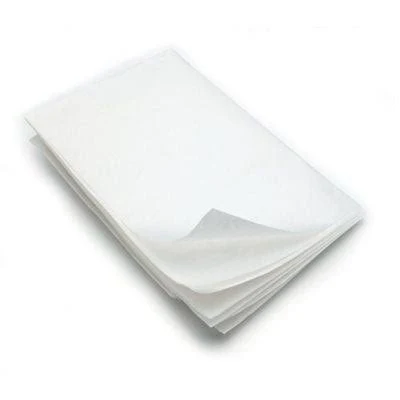
Regency · Parchment Paper & Baking Liners
Natural Parchment Paper Sheets 12 x 16 Inch Pack of 6
Coating chemistry is not stated. Higher concern due to water-resistant treatment.
This parchment paper has a water-resistant coating, but Regency has not disclosed whether it contains PFAS. The brand has no PFAS statement on record.
The better-graded swap
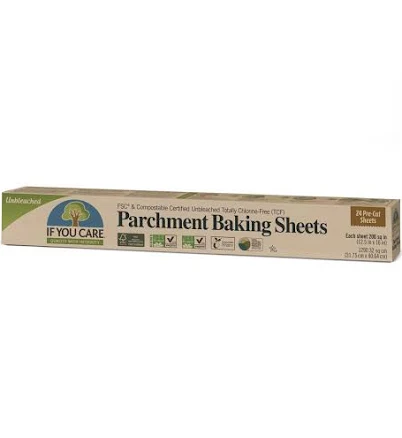
If You Care
If You Care Parchment Baking Sheets
90/100 safety
Same rubric that flunked this product. The swap earned Excellent.
Still want this one anyway? Check the price on Amazon. We’d swap it.
Material
Cellulose paper with undisclosed silicone or Teflon-family coating
Brand disclosure
Brand is silent on PFAS
Lab data
No public lab test
What Natural Parchment Paper Sheets 12 x 16 is made of, ingredients and materials
Regency's parchment sheets are cellulose paper (wood pulp), which is chemically inert and food-safe at normal baking temperatures. The functional coating (silicone or Teflon-family coating) prevents sticking and grease transfer. The problem is Regency does not publicly disclose which specific coating chemistry they use, making it impossible to assess PFAS content or thermal stability. Cellulose itself poses no established food-safety hazard, but the mystery coating is the critical unknown.
What’s concerning
Category baseline
The starting point for this type of product, before anything specific to this product is counted.
No PFAS disclosure
No public statement from the brand about PFAS in this product.
Waterproof / stain-resistant treatment
Water-repellent coating treatments have historically used PFAS.
PFAS
Without coating specification, risk of food contact with unidentified polymers at elevated temperature cannot be ruled out. Degradation of coating under repeated heating or acidic conditions may release microparticles or oligomers.
Source, ATSDR ↗Thermal stability of coating at high baking temperatures.
If coating is Teflon-family coating-based, lower temperature stability concern typically exists under 400-500 degrees F. Regency does not publish heat-tolerance specs; exceeding unlisted thresholds risks smoke generation or coating breakdown.
Microplastic or coating particle migration into food.
Repeated creasing, high heat, or abrasion can cause coating flaking or microparticle shedding. Brand does not address this risk or recommend replacement intervals, leaving user guessing about safe service life.
What’s reassuring
Bleaching or chlorine residues in cellulose base.
Cellulose parchment is typically oxygen-bleached or chlorine-bleached during manufacture. No specific contamination recalls or testing results for Regency are on record; standard food-contact regulation compliance is assumed but not verified.
The full breakdown
The brand's record and disclosure
Regency does not publish ingredient transparency or coating specifications for this product. No third-party PFAS testing results are publicly available for this brand's parchment line. The company has not issued statements on PFAS avoidance or certification claims (e.g., PFOA-free labeling). This silence is a red flag in a category where competitors like If You Care and some store brands explicitly state fluorine-free or silicone-only formulations.
How it compares in its category
Most parchment papers use either silicone (generally lower PFAS risk) or Teflon-family coating (higher PFAS risk); some brands now offer uncoated cellulose or plant-based wax alternatives. Regency's refusal to specify puts it in the murky middle of the market. Brands with transparent coating chemistry or third-party certifications offer more assurance for routine household baking. This product sits at a disadvantage in a category where disclosure has become standard among safety-conscious competitors.
If you buy it
Use only for moderate-heat baking (under 400 degrees F); avoid prolonged contact with acidic or oily foods if possible, as this can accelerate coating breakdown and potential leaching. Do not reuse sheets excessively; discard if creasing, browning, or peeling is visible. Replace every 5-10 uses depending on wear. If you bake frequently or have young children, strongly consider switching to a brand with published coating data to reduce uncertainty about non-PFAS fluorine exposure.
What we don’t know
- Basis
- Model estimate, 45% confidence, not a lab result
- Lab test
- None on record for this exact product
- Brand statement
- Regency has made none
Formulations change between production runs, so check the current label. How we grade.
Better-graded alternatives in Parchment Paper & Baking Liners
If You Care
Baking Paper, Parchment, 70 Square Feet
- silicone-coated parchment paper
- The brand calls it PFAS-free, which we have not verified
- Paper degradation and particulate shedding
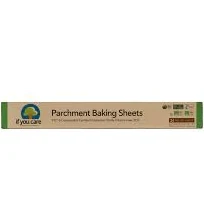
If You Care
Parchment Baking Sheets
- unbleached paper with silicone coating
- The brand calls it PFAS-free, which we have not verified
- Silicone coating degradation at high heat
If You Care
Parchment Baking Sheets
- bleached paper with silicone coating
- The brand calls it PFAS-free, which we have not verified
- Paper degradation and fragmentation
More parchment paper & baking liners grades
How we score, every product runs through the same public 0-100 rubric based on materials, coatings, brand disclosure, lab findings, and recalls. See the full methodology → Spotted a mistake? Report an error.