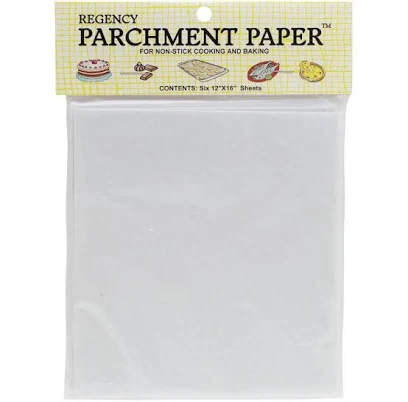
Regency · Parchment Paper & Baking Liners
Regency Parchment Sheets
Skip until brand clarifies coating composition; parchment's grease-resistant treatment is a PFAS red flag.
Parchment sheets are typically treated with silicone or water- and grease-resistant coatings for food contact. Regency hasn't publicly disclosed the chemical composition of their coating or PFAS presence.
The better-graded swap
If You Care
If You Care Baking Paper, Parchment, 70 Square Feet
90/100 safety
Same rubric that flunked this product. The swap earned Excellent.
Still want this one anyway? Check the price on Amazon. We’d swap it.
Material
Silicone-coated parchment paper
Brand disclosure
Brand is silent on PFAS
Lab data
No public lab test
What Regency Parchment Sheets is made of, ingredients and materials
Regency Parchment Sheets are silicone-coated parchment paper, meaning a thin layer of silicone polymer is bonded to wood-pulp base. Silicone itself is chemically inert at typical baking temperatures (up to 420-450°F), but the grease-resistant and non-stick properties that make parchment useful are historically achieved via fluorochemical coatings (PFAS). Regency has not publicly disclosed whether their silicone coating contains fluorinated compounds or relies on other treatment methods, creating ambiguity about what chemicals are actually present.
What’s concerning
Category baseline
The starting point for this type of product, before anything specific to this product is counted.
No PFAS disclosure
No public statement from the brand about PFAS in this product.
Waterproof / stain-resistant treatment
Water-repellent coating treatments have historically used PFAS.
PFAS
Silicone's non-stick property at high heat often requires fluorochemical treatment; Regency's silence on composition and lack of third-party testing suggest unverified presence. Release into food is possible during high-heat cooking.
Source, ATSDR ↗Silicone coating degradation and migration
Repeated heating above 420°F or mechanical abrasion (crumpling, folding) can degrade silicone layer integrity, potentially releasing fine silicone particles or bound chemicals into food or oven environment.
Chlorine bleaching residues in base paper
Most conventional parchment is chlorine-bleached wood pulp; small amounts of dioxins or chlorine-based compounds may remain. No disclosure from Regency about bleaching method limits assessment.
Microplastic shedding from coating
Heavy use or high temperatures may cause microscopic silicone particles to detach from the substrate and enter food, particularly fatty foods that interact strongly with the coating.
What’s reassuring
Heat-induced off-gassing of silicone polymers
Silicone itself is considered thermally stable and does not off-gas volatile compounds at normal baking temperatures, but any bound chemical additives in the coating formulation are not publicly documented.
The full breakdown
The brand's record and disclosure
Regency (a private label owned by various retailers) has no publicly available statements about PFAS content, manufacturing standards, or third-party certifications for this product. The brand has not responded to industry pressure on fluorochemical use in baking liners, nor are there published lab tests or recalls specific to Regency Parchment Sheets. This silence is noteworthy because major competitors (Kirkland, If You Care) have begun disclosing PFAS-free claims.
How it compares in its category
Silicone-coated parchment is standard across brands, but transparency varies sharply. Unbleached parchment options (If You Care, Katbite) explicitly market PFAS-free status and use plant-based release agents. Regency's lack of disclosure places it in a middle-risk category where competitors either certify compliance or use alternatives with lower concern. Price positioning suggests commodity production with minimal proprietary safety investment.
If you buy it
Use only up to the product's rated temperature (typically 420°F). Do not reuse sheets if coating shows visible wear, browning, or peeling, as degradation may increase leachable particle transfer. Store in a cool, dry place to prevent silicone adhesion breakdown. Consider switching to verified PFAS-free brands if you bake regularly, especially if children consume food prepared on it.
What we don’t know
- Basis
- Model estimate, 45% confidence, not a lab result
- Lab test
- None on record for this exact product
- Brand statement
- Regency has made none
Formulations change between production runs, so check the current label. How we grade.
Better-graded alternatives in Parchment Paper & Baking Liners
If You Care
Baking Paper, Parchment, 70 Square Feet
- silicone-coated parchment paper
- The brand calls it PFAS-free, which we have not verified
- Paper degradation and particulate shedding
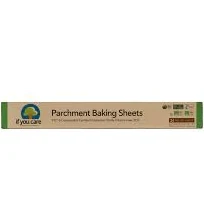
If You Care
Parchment Baking Sheets
- unbleached paper with silicone coating
- The brand calls it PFAS-free, which we have not verified
- Silicone coating degradation at high heat
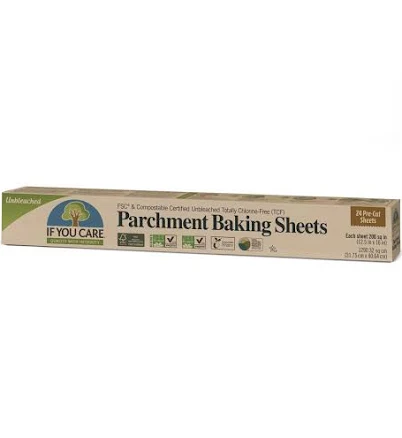
If You Care
Parchment Baking Sheets
- bleached paper with silicone coating
- The brand calls it PFAS-free, which we have not verified
- Paper degradation and fragmentation
More parchment paper & baking liners grades
How we score, every product runs through the same public 0-100 rubric based on materials, coatings, brand disclosure, lab findings, and recalls. See the full methodology → Spotted a mistake? Report an error.