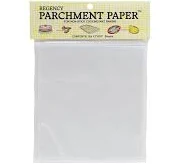
Regency · Parchment Paper & Baking Liners
Regency Parchment Sheets Set of 6
Caution; parchment paper often uses fluorinated coatings for grease resistance; Regency discloses nothing.
Parchment sheets are typically coated with silicone or fluorinated compounds for water and grease resistance. No public PFAS claim or third-party verification is available from the brand.
The better-graded swap
If You Care
If You Care Baking Paper, Parchment, 70 Square Feet
90/100 safety
Same rubric that flunked this product. The swap earned Excellent.
Still want this one anyway? Check the price on Amazon. We’d swap it.
Material
parchment paper (cellulose with silicone coating)
Brand disclosure
Brand is silent on PFAS
Lab data
No public lab test
What Regency Parchment Sheets Set of 6 is made of, ingredients and materials
Regency Parchment Sheets are cellulose paper coated with silicone (and likely fluorinated compounds for grease resistance, though Regency does not specify). The silicone layer prevents sticking and allows reuse across multiple bakes. Parchment's primary safety risk stems from the coating chemistry, silicone itself is stable at normal baking temperatures, but fluorinated additives used to enhance grease resistance are the source of concern.
What’s concerning
Category baseline
The starting point for this type of product, before anything specific to this product is counted.
No PFAS disclosure
No public statement from the brand about PFAS in this product.
Waterproof / stain-resistant treatment
Water-repellent coating treatments have historically used PFAS.
PFAS
Parchment papers commonly use fluorinated compounds for grease resistance. Regency discloses no coating formulation; fluorine migration into fatty foods at elevated temperatures is a documented mechanism. Frequency and level unknown without testing.
Source, ATSDR ↗Silicone coating degradation and microparticle release
Repeated heating and mechanical wear can degrade silicone layers, potentially releasing microscopic silicone particles into food. No recalls or studies specific to Regency sheets are on record, but this is a general risk for reusable parchment paper.
Thermal breakdown of coating at high temperatures
Parchment coatings (both silicone and fluorinated components) can begin to degrade above 420-450°F. At extreme heat, volatile organic compounds or silicone fumes may be released. Regency does not specify safe upper temperature limits on packaging.
Chlorine residues from bleaching process
Conventional parchment is typically bleached with chlorine compounds. Most residues are removed during processing, but trace chlorine compounds can remain. Regency does not specify bleaching method or chlorine-free status.
Coating adhesion loss and food contact
Over time or with improper storage, the silicone and fluorinated coating layers can separate or flake from the cellulose base. If small flakes enter food, ingestion risk is low but not zero. No documented incidents specific to Regency are on record.
The full breakdown
The brand's record and disclosure
Regency provides no public statement on PFAS use, fluorination status, or third-party testing for this product line. The brand has not published sustainability or chemical safety certifications (e.g., GOTS, Cradle to Cradle, or PFAS-free claims). This silence is typical of conventional parchment manufacturers but contrasts with brands that explicitly market PFAS-free or fluorine-free alternatives.
How it compares in its category
Most mass-market parchment papers (including Regency's tier) use fluorinated coatings as standard practice for durability and grease repellency. Premium or eco-focused brands (e.g., If You Care, Unbleached Parchment) explicitly avoid PFAS and use silicone-only or plant-based coatings. Regency's product sits in the conventional middle, cheaper and more durable than some alternatives, but without the transparency or low-fluorine guarantee of premium options.
If you buy it
Keep oven temperatures below 400-420°F to avoid thermal breakdown of silicone and coatings. Replace sheets after 4-6 uses or if coating becomes visibly damaged, worn, or discolored. Do not use on broiler elements or under direct flame. Store in a cool, dry place to prevent coating degradation. Consider PFAS-free brands if you bake frequently or are pregnant/nursing.
What we don’t know
- Basis
- Model estimate, 45% confidence, not a lab result
- Lab test
- None on record for this exact product
- Brand statement
- Regency has made none
Formulations change between production runs, so check the current label. How we grade.
Better-graded alternatives in Parchment Paper & Baking Liners
If You Care
Baking Paper, Parchment, 70 Square Feet
- silicone-coated parchment paper
- The brand calls it PFAS-free, which we have not verified
- Paper degradation and particulate shedding
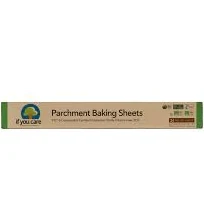
If You Care
Parchment Baking Sheets
- unbleached paper with silicone coating
- The brand calls it PFAS-free, which we have not verified
- Silicone coating degradation at high heat
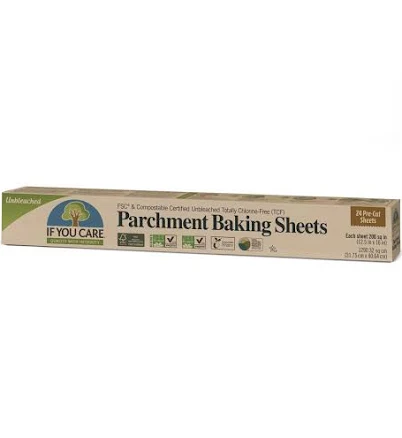
If You Care
Parchment Baking Sheets
- bleached paper with silicone coating
- The brand calls it PFAS-free, which we have not verified
- Paper degradation and fragmentation
More parchment paper & baking liners grades
How we score, every product runs through the same public 0-100 rubric based on materials, coatings, brand disclosure, lab findings, and recalls. See the full methodology → Spotted a mistake? Report an error.