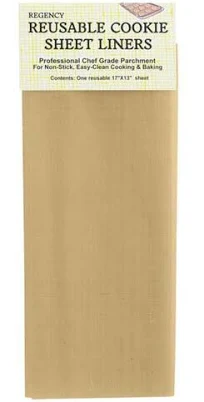
Regency · Parchment Paper & Baking Liners
Regency Professional Parchment, 13 x 17 in.
Parchment paper typically uses silicone or wax; lower PFAS risk than grease-resistant packaging; coating composition rarely disclosed.
Standard food-service parchment paper typically uses silicone or wax coatings rather than fluorinated grease-resistant treatments, making it lower concern for PFAS. Regency doesn't disclose coating chemistry.
The better-graded swap
If You Care
If You Care Baking Paper, Parchment, 70 Square Feet
90/100 safety
Same rubric that flunked this product. The swap earned Excellent.
Still want this one anyway? Check the price on Amazon. We’d swap it.
Material
bleached paper with unspecified coating/sizing
Brand disclosure
Brand is silent on PFAS
Lab data
No public lab test
What Regency Professional Parchment, 13 x 17 is made of, ingredients and materials
Regency Professional Parchment is bleached paper with a non-stick coating or sizing layer; the specific coating composition (silicone, wax, or synthetic resin blend) is not disclosed on packaging or company literature. Bleaching can introduce residual chlorine compounds, though food-contact paper is regulated to lower concern levels in most jurisdictions. The coating's thermal stability and migration potential into food depend on its chemical identity, which Regency does not publicly specify.
What’s concerning
Category baseline
The starting point for this type of product, before anything specific to this product is counted.
No PFAS disclosure
No public statement from the brand about PFAS in this product.
Waterproof / stain-resistant treatment
Water-repellent coating treatments have historically used PFAS.
Coating migration (unidentified polymer/wax)
Regency does not specify whether coating is food-grade silicone, natural wax, or synthetic resin. Unidentified coatings may leach oligomers or plasticizers into fatty foods, especially above 400°F. Risk is modest if used below 420°F but cannot be fully assessed without composition disclosure.
Thermal degradation of coating
At temperatures above 420°F, synthetic coatings on parchment can degrade, darken, and potentially release volatile compounds or monomers. Regency does not specify the maximum safe temperature, creating uncertainty for high-heat baking (e.g., pizza stones, broiler use).
What’s reassuring
Bleaching residues (chlorine compounds)
Bleached paper is regulated for food contact in the US (CFR 176.170) and EU, and residual chlorine is typically within regulated limits. No specific testing or recalls for Regency parchment suggest problems, but brand does not publish third-party verification.
Microplastic or particle shedding
Intact parchment paper does not shed microplastics under normal baking use. Risk of flaking or particle contamination is only present if coating degrades or is damaged; user inspection (see 'If you buy it') mitigates this.
Mineral or processing contaminants in bleached pulp
Industrial paper bleaching and sizing can introduce trace metals (e.g., boron, residual heavy metals) if quality control is poor. Regency does not publish heavy-metals testing; no public incidents suggest concern, but absence of disclosure is a gap.
The full breakdown
The brand's record and disclosure
Regency does not publicly disclose ingredient composition, manufacturing standards beyond general food-contact compliance, or PFAS testing results for this product. No independent certifications (e.g., NSF, Cradle-to-Cradle, or GOTS) are advertised. No recalls or safety controversies specific to Regency parchment paper have been widely reported, but the brand's silence on coating chemistry is a transparency gap typical of mid-market baking-supply brands.
How it compares in its category
Standard parchment paper carries lower PFAS risk than grease-resistant food packaging because it is not formulated for oil/moisture barriers; however, non-silicone coatings (e.g., synthetic wax blends) may migrate at high heat. Regency's lack of disclosed composition makes direct comparison difficult. Brands with certified GFSI (Global Food Safety Initiative) or explicit silicone-only declarations are easier to assess; Regency provides neither.
If you buy it
Use only at temperatures below 420°F (215°C); most parchment papers degrade and release compounds above this range. Replace sheets if they show darkening, brittleness, or visible coating flaking. Store in cool, dry conditions away from direct sunlight to prevent coating oxidation. Do not reuse sheets for greasy foods or repeated baking; discard after 3-5 uses per sheet. If odor or browning occurs during use, discontinue and switch brands.
What we don’t know
- Basis
- Model estimate, 35% confidence, not a lab result
- Lab test
- None on record for this exact product
- Brand statement
- Regency has made none
Formulations change between production runs, so check the current label. How we grade.
Better-graded alternatives in Parchment Paper & Baking Liners
If You Care
Baking Paper, Parchment, 70 Square Feet
- silicone-coated parchment paper
- The brand calls it PFAS-free, which we have not verified
- Paper degradation and particulate shedding
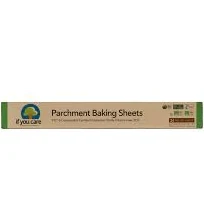
If You Care
Parchment Baking Sheets
- unbleached paper with silicone coating
- The brand calls it PFAS-free, which we have not verified
- Silicone coating degradation at high heat
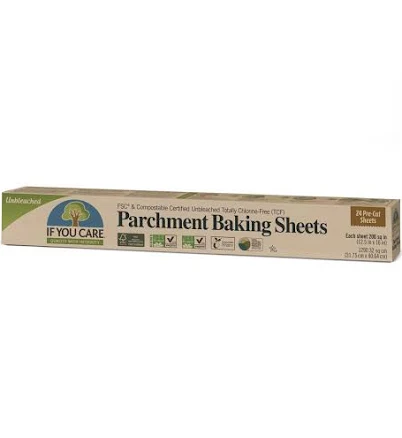
If You Care
Parchment Baking Sheets
- bleached paper with silicone coating
- The brand calls it PFAS-free, which we have not verified
- Paper degradation and fragmentation
More parchment paper & baking liners grades
How we score, every product runs through the same public 0-100 rubric based on materials, coatings, brand disclosure, lab findings, and recalls. See the full methodology → Spotted a mistake? Report an error.