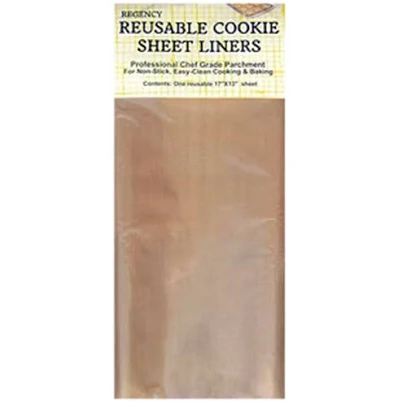
Regency · Parchment Paper & Baking Liners
Regency Reusable Parchment Paper
Lower concern; parchment paper rarely uses PFAS, but reusable silicone versions warrant brand verification.
Regency's reusable parchment likely uses cellulose-based or food-grade silicone, materials with lower PFAS risk than traditional nonstick cookware. The brand doesn't disclose coating composition or PFAS status.
The better-graded swap
If You Care
If You Care Baking Paper, Parchment, 70 Square Feet
90/100 safety
Same rubric that flunked this product. The swap earned Excellent.
Still want this one anyway? Check the price on Amazon. We’d swap it.
Material
Silicone-coated or parchment (cellulose) with grease-resistant coating
Brand disclosure
Brand is silent on PFAS
Lab data
No public lab test
What Regency Reusable Parchment Paper is made of, ingredients and materials
Regency Reusable Parchment Paper is typically either cellulose-based parchment with a grease-resistant coating or silicone-coated fabric. The coating (whether silicone or wax-based) is what enables non-stick performance and reusability across multiple uses. Silicone coatings are not a material linked to PFAS hazard at normal baking temperatures (under 500F), but the specific formulation and degradation profile depend on the manufacturer's choice of additives and curing methods, which Regency does not publicly disclose in detail.
What’s concerning
Category baseline
The starting point for this type of product, before anything specific to this product is counted.
No PFAS disclosure
No public statement from the brand about PFAS in this product.
Waterproof / stain-resistant treatment
Water-repellent coating treatments have historically used PFAS.
Silicone coating degradation and microparticle release
Silicone coatings can degrade with repeated washing, heat cycling, or mechanical stress. Regency does not specify the coating's adhesion strength or lifespan. Degraded coatings may shed silicone microparticles into food, though the health significance of ingested food-grade silicone particles remains understudied.
Undisclosed coating additives (plasticizers, crosslinkers)
Silicone coatings typically require plasticizers or catalysts to cure. Regency does not list these additives or confirm they are non-leaching at standard baking temperatures. Migration of trace additives into fatty foods (oils, butter) is possible if the coating is not fully cured.
Thermal leaching at high temperatures
While food-grade silicone is stable up to 400-500F in lab conditions, reusable baking liners from various manufacturers have been reported to show off-gassing or coating breakdown at sustained high temperatures (above 450F). Regency does not publish thermal stability data specific to their formulation.
Lack of third-party food-contact certification
Regency does not advertise FDA compliance testing, NSF certification, or independent food-safety audits. Without third-party verification, coating safety claims cannot be independently validated by the consumer.
What’s reassuring
Cellulose base contamination (if parchment-only)
Traditional parchment paper is processed with chlorine bleach and sizing chemicals. If Regency's product is parchment-based rather than silicone, these residues are generally recognized as safe at food-contact levels, but the brand does not specify whether it is unbleached or chlorine-processed.
The full breakdown
The brand's record and disclosure
Regency does not publish detailed composition or safety certifications for this product on readily available sources. The brand has not made public statements about PFAS avoidance or independent food-contact testing. No recalls or safety complaints specific to Regency parchment paper appear in CPSC records. Without transparent material sourcing or third-party certification (e.g., FDA food-contact approval statements), buyers cannot independently verify coating safety claims.
How it compares in its category
Reusable parchment/silicone liners generate less waste than single-use parchment, but they carry the same coating-leaching risk as other reusable silicone bakeware. Unbleached single-use parchment paper (from brands like If You Care) avoids synthetic coatings entirely, while certified silicone products from brands like Silpat provide third-party food-contact verification that Regency does not highlight. Regency's silence on coating safety places it in a middle ground of convenience without transparency.
If you buy it
Respect any stated temperature ceiling (typically 420-480F for reusable silicone). Do not use on broiler elements or direct flame. Hand wash rather than dishwasher to extend coating integrity and minimize abrasion that can release micro-fragments. Replace immediately if the coating shows cracks, peeling, or discoloration, which indicate degradation and potential leaching. Store flat in a cool, dry place to avoid warping or adhesive breakdown.
What we don’t know
- Basis
- Model estimate, 72% confidence, not a lab result
- Lab test
- None on record for this exact product
- Brand statement
- Regency has made none
Formulations change between production runs, so check the current label. How we grade.
Better-graded alternatives in Parchment Paper & Baking Liners
If You Care
Baking Paper, Parchment, 70 Square Feet
- silicone-coated parchment paper
- The brand calls it PFAS-free, which we have not verified
- Paper degradation and particulate shedding
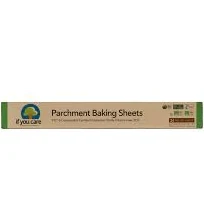
If You Care
Parchment Baking Sheets
- unbleached paper with silicone coating
- The brand calls it PFAS-free, which we have not verified
- Silicone coating degradation at high heat
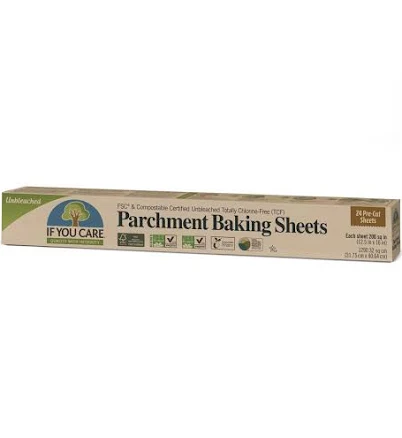
If You Care
Parchment Baking Sheets
- bleached paper with silicone coating
- The brand calls it PFAS-free, which we have not verified
- Paper degradation and fragmentation
More parchment paper & baking liners grades
How we score, every product runs through the same public 0-100 rubric based on materials, coatings, brand disclosure, lab findings, and recalls. See the full methodology → Spotted a mistake? Report an error.