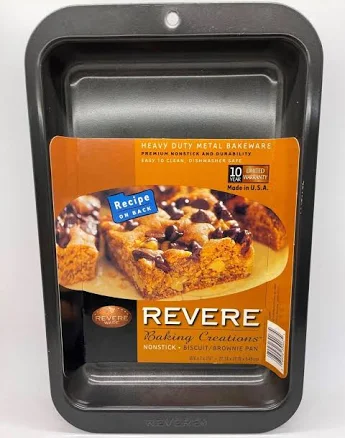
Revere Ware Baking Nonstick Biscuit Brownie Pan 1039067 10 3/4x7x1 3/8, Is It Non-Toxic?
Ask the manufacturer about coating type before using.
Revere doesn't say what nonstick coating this baking pan has. Traditional nonstick products typically contain Teflon-type coating or PFOA compounds.
The better-graded swap
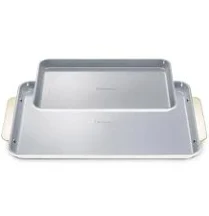
Caraway
Caraway Ceramic Nonstick Baking Sheet Duo
100/100 safety
Same rubric that flunked this product. The swap earned Excellent.
Still want this one anyway? Check the price on Amazon. We’d swap it.
Material
Nonstick coating, type unspecified
Brand disclosure
Brand is silent on PFAS
Lab data
No public lab test
You may also be interested in
Top-graded picks in the categories readers replace first, every one scored on the same rubric.

- polypropylene filter housing, carbon/sediment cartridge
- We found no PFAS statement from the brand
- Bacterial growth in spent cartridges
3 hazards checked on this product, all on its full breakdown.

Aquasure
Premier Series 75 GPD Under Sink Reverse Osmosis Water Filtration System
- RO membrane, carbon filters, stainless steel housing
- We found no PFAS statement from the brand
- Bacterial and microbial growth in housing and filters
4 hazards checked on this product, all on its full breakdown.

Avocado
Vegan Mattress
- organic cotton, natural latex, coconut coir, recycled steel coils
- The brand calls it PFAS-free, which we have not verified
- Heavy metals
2 hazards checked on this product, all on its full breakdown.
Is Revere Ware Baking Nonstick 3/4x7x1 non-toxic? What it is made of
Revere Ware Baking Nonstick pans use a proprietary nonstick coating whose chemical composition is not publicly detailed by the manufacturer. Most nonstick bakeware relies on either Teflon-family coating coatings (which may contain PFAS) or ceramic/silicone alternatives, but Revere has not specified which technology this pan uses. The steel substrate underneath is standard carbon steel, which is stable; the uncertainty centers entirely on the nonstick topcoat and what happens to it under heat stress.
What’s concerning
Category baseline
The starting point for this type of product, before anything specific to this product is counted.
No PFAS disclosure
No public statement from the brand about PFAS in this product.
Non-stick, chemistry undisclosed
Marketed as non-stick without stating the coating chemistry.
Nonstick coating degradation and fume release
Without confirmed coating chemistry, thermal stability is unclear. If the coating is Teflon-family coating-based, overheating or damage can release polymer fumes; baking temperatures are relatively low, but accidental high heat or abrasion poses risk.
Coating peeling into food
Unspecified nonstick surfaces can flake or peel with age or wear, especially if hand-washed roughly or used beyond design limits. Ingestion of small coating fragments is unlikely to cause acute harm, but chronic exposure to unknown polymers is not well studied.
Lack of manufacturer transparency and certification
Revere has not publicly disclosed the nonstick coating chemistry or submitted to independent safety certifications (e.g.or programs that certify lower concern regarding PFAS). This absence of transparency prevents full safety assessment and suggests low priority on chemical disclosure compared to higher-transparency brands.
What’s reassuring
Aluminum migration from substrate
This product appears to use a steel base, not aluminum. Standard carbon steel does not leach appreciably. No aluminum hazard is expected for this specific item.
Lead
No enamel or decorative glaze layer is described; the finish is a modern nonstick topcoat. Lead or cadmium contamination is not a recognized risk for this product type or Revere's bakeware line.
Source, ATSDR ↗How is this PFAS grade calculated?
The brand's record and disclosure
Revere Ware, owned by Worldkitchen LLC, has not published specific safety data sheets or PFAS commitment statements for this product line. The brand does not appear in major PFAS transparency initiatives (like the USEPA Stewardship Program) and has issued no public statement about phasing PFAS out of cookware. This silence is notable given that competitors like GreenPan and T-fal have made explicit nonstick technology disclosures. Revere's historical cookware has generally avoided major recalls, but lack of disclosure is a red flag.
How it compares in its category
Nonstick bakeware is a moderate-risk category, baking pans are typically used at lower sustained temperatures (usually 350-450°F) than stovetop cookware, reducing fume risk from polymer degradation. However, accidental exposure to high heat or preheating an empty pan can still damage coatings. Compared to ceramic nonstick alternatives (which carry fewer PFAS concerns) or uncoated steel/cast iron (which eliminate coating hazards entirely), this product sits in the middle uncertainty zone. Price point suggests it's a budget mainstream product, not a premium or eco-focused alternative.
If you buy it
Keep baking temperature at or below 400°F to minimize nonstick coating stress. Do not preheat the empty pan, as this can degrade the topcoat faster. Hand wash only; the dishwasher can accelerate coating wear. Inspect the pan every 6-12 months for peeling, flaking, or visibly worn spots; discard if coating integrity is compromised. Replace the pan if you ever notice discoloration, odors, or visible damage, as this signals possible polymer breakdown. Contact Revere directly to request the coating chemical specification if you want to make a fully informed decision.
What is not known about PFAS in this product?
- Basis
- Model estimate, 35% confidence, not a lab result
- Lab test
- None on record for this exact product
- Brand statement
- Revere has made none
Formulations change between production runs, so check the current label. How we grade.
What are the PFAS-free alternatives to Revere Ware Baking Nonstick Biscuit Brownie Pan 1039067 10 3/4x7x1 3/8?
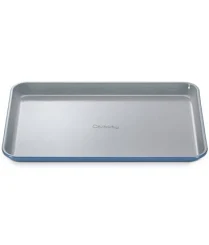
- ceramic nonstick coating
- A third party reports verifying it as PFAS-free
- Ceramic coating degradation over time
- ceramic nonstick coating
- A third party reports verifying it as PFAS-free
- Coating degradation and durability
2 hazards checked on this product, all on its full breakdown.
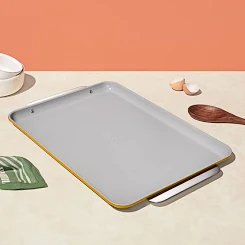
- ceramic nonstick coating
- The brand calls it PFAS-free, which we have not verified
- Ceramic coating degradation and particle shedding
3 hazards checked on this product, all on its full breakdown.
More bakeware grades
How we score, every product runs through the same public 0-100 rubric based on materials, coatings, brand disclosure, lab findings, and recalls. See the full methodology → Spotted a mistake? Report an error.