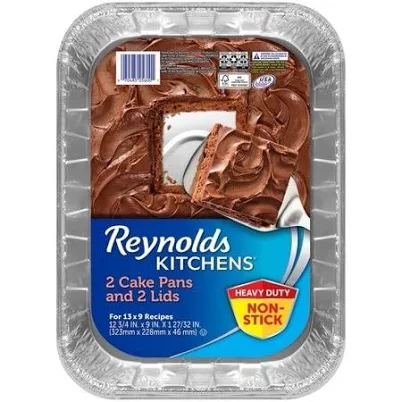
4 pack Reynolds Kitchens Non-Stick Disposable Aluminum Baking Pans with Lids, Blue, 13 x 9 in.
Skip until Reynolds discloses non-stick coating chemistry.
Reynolds does not specify the non-stick coating type on this product. Aluminum baking pans with undisclosed coatings carry PFAS risk; look for brands that explicitly state Teflon-type coating-free or provide coating details.
The better-graded swap
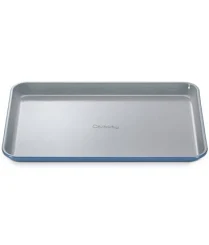
Caraway
Caraway Nonstick Ceramic Medium Baking Sheet
100/100 safety
Same rubric that flunked this product. The swap earned Excellent.
Still want this one anyway? Check the price on Amazon. We’d swap it.
Material
aluminum with unspecified non-stick coating
Lab data
No public lab test
Is 4 pack Reynolds Kitchens Non-Stick non-toxic? What it is made of
These are thin-gauge aluminum sheets with an applied non-stick coating of unspecified chemistry. Reynolds does not publicly disclose whether the coating is Teflon-type coating-based (traditional Teflon), ceramic, silicone, or another formulation. Aluminum itself has no hazard of this kind on record for food contact at normal cooking temperatures, but the coating's stability and thermal tolerance determine the level of concern. The disposable format means single-use lifespan, which reduces exposure to coating wear and leaching from repeated use.
What’s concerning
Category baseline
The starting point for this type of product, before anything specific to this product is counted.
No PFAS disclosure
No public statement from the brand about PFAS in this product.
Non-stick, chemistry undisclosed
Marketed as non-stick without stating the coating chemistry.
Teflon-type coating (Teflon) fume risk if coating is traditional Teflon-family coating
If the non-stick coating is Teflon-type coating-based and exposed to temperatures above 500 degrees Fahrenheit, degradation products may off-gas. Reynolds has not disclosed coating type, so Teflon-type coating-specific risk cannot be ruled out. Single-use format and typical oven temperatures (350-400 degrees) make this a low-probability but non-zero exposure scenario.
Coating degradation and particle shedding over time
Thin applied coatings on disposable pans are inherently less durable than factory-integrated non-stick surfaces. Mechanical wear from pan handling, storage, or reuse (if user ignores single-use recommendation) could release coating particles. No specific product recalls exist, but this is a known failure mode for budget aluminum cookware.
Thermal stability of undisclosed non-stick formulation
Without ingredient disclosure, the thermal tolerance and chemical stability of the coating at high oven temperatures cannot be independently verified. Reynolds provides no temperature guidelines specific to this product, increasing user risk of accidental overheating.
What’s reassuring
Aluminum leaching
Bare aluminum can leach into acidic or alkaline foods; however, the non-stick coating should provide a barrier. No recalls or public health warnings specific to Reynolds baking pans for aluminum migration have been documented. Risk remains largely theoretical under normal use.
Lid material and seal integrity unknown
The product includes lids, but Reynolds does not specify their material (plastic, cardboard laminate, aluminum). If plastic, BPA or phthalate content is possible but undocumented. Single-use format mitigates repeated contact exposure.
The full breakdown
The brand's record and disclosure
Reynolds maintains silence on non-stick coating ingredients and PFAS content despite industry-wide pressure for transparency. The company has not published independent testing, third-party certifications (e.g., GreenGuard), or formal statements on PFAS-free status. This lack of disclosure is common among legacy cookware brands and reflects a business choice to avoid regulatory scrutiny rather than a commitment to safety transparency.
How it compares in its category
Disposable aluminum pans occupy a low-cost, single-use niche distinct from durable cookware. They typically underperform durable stainless steel or cast iron in safety transparency, but the one-time exposure window is shorter than reusable products. However, they generate more waste and may expose users to coating off-gassing during initial heating, which durable pan users mitigate through proper seasoning and maintenance protocols.
If you buy it
Use these pans for their intended single-service purpose (baked goods, takeout, gifting) and replace immediately after use. Do not reuse if coating shows visible wear, scratches, or discoloration. Avoid temperatures above 400 degrees Fahrenheit (204 Celsius) on first use to minimize potential thermal breakdown of the non-stick layer. Do not store food in these pans; transfer contents to storage containers within 2 hours of cooling.
What we don’t know
- Basis
- Model estimate, 35% confidence, not a lab result
- Lab test
- None on record for this exact product
- Brand statement
- Reynolds has made a specific claim
Formulations change between production runs, so check the current label. How we grade.
Better-graded alternatives in Bakeware
Caraway
Nonstick Ceramic Medium Baking Sheet
- ceramic nonstick coating
- A third party reports verifying it as PFAS-free
- Ceramic coating degradation over time
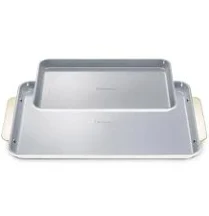
Caraway
Ceramic Nonstick Baking Sheet Duo
- ceramic nonstick coating
- A third party reports verifying it as PFAS-free
- Coating degradation and durability
2 hazards checked on this product. See all of them.
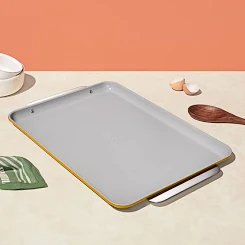
Caraway
Nonstick Ceramic Large Baking Sheet
- ceramic nonstick coating
- The brand calls it PFAS-free, which we have not verified
- Ceramic coating degradation and particle shedding
3 hazards checked on this product. See all of them.
More bakeware grades
How we score, every product runs through the same public 0-100 rubric based on materials, coatings, brand disclosure, lab findings, and recalls. See the full methodology → Spotted a mistake? Report an error.