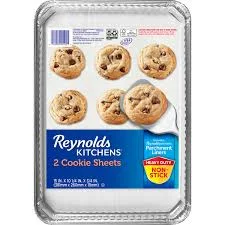
Reynolds Bakeware Cookie Sheets
Skip until coating composition is disclosed.
Reynolds does not disclose the nonstick coating type or PFAS status. Steel bakeware typically uses Teflon-family coating coatings, which may contain PFAS, but brand transparency is absent.
The better-graded swap

Caraway
Caraway Nonstick Ceramic Large Baking Sheet
90/100 safety
Same rubric that flunked this product. The swap earned Excellent.
Still want this one anyway? Check the price on Amazon. We’d swap it.
Material
Steel with unspecified nonstick coating
Lab data
No public lab test
Are Reynolds Bakeware Cookie Sheets non-toxic? What it is made of
Reynolds Bakeware Cookie Sheets are steel substrates with an unspecified nonstick coating applied to the surface. The steel base itself is chemically stable and food-safe, but the nonstick layer is the critical unknown, it could be Teflon-type coating-based (potential fume risk if overheated), ceramic, silicone, or another polymer formulation. Without manufacturer disclosure of the coating type and fluorine content, users cannot assess degradation risk or heating safety thresholds.
What’s concerning
Category baseline
The starting point for this type of product, before anything specific to this product is counted.
No PFAS disclosure
No public statement from the brand about PFAS in this product.
Non-stick, chemistry undisclosed
Marketed as non-stick without stating the coating chemistry.
Nonstick coating degradation and fume release
Unidentified nonstick coating may degrade if overheated or scratched. If Teflon-type coating-based, overheating above 500°F can release Teflon-family coating fumes (polymer fume fever); ceramic or silicone alternatives carry lower risk but performance data is unavailable.
Coating flaking and microparticle ingestion
Worn or damaged nonstick surfaces can shed particles into food. Steel substrate does not leach, but coating fragments may be consumed if sheet damage goes unnoticed.
PFAS
Reynolds has not disclosed whether this coating contains PFAS. Nonstick coatings historically used PFOA and other legacy fluorochemicals; many manufacturers have phased these out but do not always communicate substitutes to consumers. This product's PFAS status remains unconfirmed.
Source, ATSDR ↗What’s reassuring
Steel corrosion and rust
Reynolds cookie sheets are stainless or mild steel; stainless steel does not rust. Mild steel edges may corrode if exposed to moisture, but this is a structural durability issue, not a food-contact safety hazard.
Lead
No recalls or published testing has identified lead or cadmium contamination in Reynolds nonstick coatings. Modern food-contact coatings are regulated by FDA, but independent verification of this specific product is not on record.
Source, ATSDR ↗The full breakdown
The brand's record and disclosure
Reynolds is a subsidiary of Berry Global and has not publicly committed to PFAS-free cookware or disclosed nonstick coating composition for this product line. The company has not released voluntary safety certifications (such as GOTS, Oeko-Tex, or NSF food-contact compliance statements) specific to these cookie sheets. This silence on fluorinated compound use is a significant gap compared to competitor transparency on nonstick chemistry.
How it compares in its category
Most nonstick bakeware on the market uses either Teflon-type coating (Teflon, associated with PFOA/PFAS legacy), ceramic coatings, or proprietary Teflon-family coating. Reynolds' refusal to specify places this product in a higher uncertainty tier than brands like GreenPan or Caraway, which explicitly market fluorine-free alternatives. Uncoated steel or cast iron sheets eliminate nonstick coating hazards entirely, though they require more maintenance.
If you buy it
Use at moderate oven temperatures (under 400-450°F, well below the fume-off point of most nonstick coatings) to minimize degradation. Do not preheat an empty pan on stovetop. Hand-wash rather than machine-wash to extend coating life; dishwasher detergent and high heat accelerate peeling. Replace sheets immediately if coating visibly flakes, chips, or shows signs of wear. Store in a dry location to prevent rust at steel edges.
What we don’t know
- Basis
- Model estimate, 45% confidence, not a lab result
- Lab test
- None on record for this exact product
- Brand statement
- Reynolds has made a specific claim
Formulations change between production runs, so check the current label. How we grade.
Better-graded alternatives in Bakeware
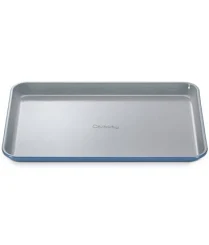
Caraway
Nonstick Ceramic Medium Baking Sheet
- ceramic nonstick coating
- A third party reports verifying it as PFAS-free
- Ceramic coating degradation over time
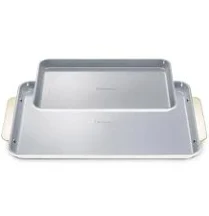
Caraway
Ceramic Nonstick Baking Sheet Duo
- ceramic nonstick coating
- A third party reports verifying it as PFAS-free
- Coating degradation and durability
2 hazards checked on this product. See all of them.
Caraway
Nonstick Ceramic Large Baking Sheet
- ceramic nonstick coating
- The brand calls it PFAS-free, which we have not verified
- Ceramic coating degradation and particle shedding
3 hazards checked on this product. See all of them.
More bakeware grades
How we score, every product runs through the same public 0-100 rubric based on materials, coatings, brand disclosure, lab findings, and recalls. See the full methodology → Spotted a mistake? Report an error.