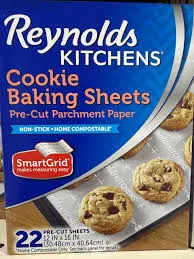
Reynolds Cookie Baking Sheets Parchment Paper Non-Stick 22 Sheets
Parchment lacks disclosure; non-stick coating type unknown. Skip if concerned.
Reynolds parchment paper has a non-stick coating but does not disclose whether PFAS compounds are used. No third-party testing or brand PFAS statement available.
The better-graded swap
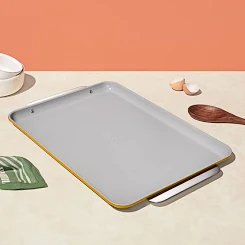
Caraway
Caraway Nonstick Ceramic Large Baking Sheet
90/100 safety
Same rubric that flunked this product. The swap earned Excellent.
Still want this one anyway? Check the price on Amazon. We’d swap it.
Material
Silicone-coated paper (non-stick coating unspecified)
Lab data
No public lab test
Are Reynolds Cookie Baking Sheets Parchment non-toxic? What it is made of
Reynolds Cookie Baking Sheets are silicone-coated paper, meaning a base paper substrate topped with a synthetic rubber-like layer to prevent sticking. Unlike traditional wax or Teflon-type coating (Teflon), silicone does not release toxic fumes at normal baking temperatures. However, Reynolds does not publish the specific silicone formulation, additives, or heat stability threshold for this product, making independent verification of safety limits difficult.
What’s concerning
Category baseline
The starting point for this type of product, before anything specific to this product is counted.
No PFAS disclosure
No public statement from the brand about PFAS in this product.
Non-stick, chemistry undisclosed
Marketed as non-stick without stating the coating chemistry.
Non-stick coating degradation and leaching
Reynolds does not specify the silicone or additives used. Silicone itself is generally stable, but unknown additives or crosslinkers could leach at high heat or with repeated use; no testing data disclosed for this product.
Heat stability and fume risk above recommended temperatures
Reynolds does not publish a maximum safe temperature for this parchment. Silicone is more stable than Teflon-type coating, but exceeding 420-450F could trigger unknown additives to degrade; risk is lower than Teflon-type coating but not quantified.
PFAS
Reynolds does not confirm PFAS-free status. Parchment coatings sometimes use PFAS for stain resistance. This is graded separately at 15/100, but the lack of explicit denial leaves uncertainty.
Source, ATSDR ↗What’s reassuring
Paper substrate bleaching agents or sizing compounds
Base paper may contain chlorine bleach residues or synthetic sizing. Reynolds does not disclose these on packaging. No recalls or adverse reports on file for this product.
Microplastics
No reports of visible flaking or particle contamination in Reynolds parchment. Properly maintained silicone coatings are unlikely to shed, but wear over time (especially if overheated or reused excessively) cannot be ruled out without testing.
Source, EPA ↗The full breakdown
The brand's record and disclosure
Reynolds Kitchens does not provide detailed material safety disclosures for its parchment papers on product packaging or website. The company has not published third-party certifications (e.g., FDA compliance statements, heat-stability test results) specific to this SKU. Reynolds has faced PFAS scrutiny in media reporting but has not publicly committed to PFAS-free formulations across all product lines. This silence on coating chemistry is the primary transparency gap for this product.
How it compares in its category
Silicone-coated parchment is a middle-ground option, lower concern than traditional Teflon-type coating non-stick cookware (no fume risk above 500F), but less transparent than certified parchment from brands like If You Care or unbleached alternatives that disclose all ingredients. Most mass-market parchment papers (including Reynolds) do not disclose PFAS status or maximum safe temperatures, making them less informative than specialty brands but comparable in practical risk to other mainstream options.
If you buy it
Keep baking temperatures below 420F to stay well within silicone stability margins and avoid any low-temperature degradation. Do not reuse sheets more than 3-4 times; discard if surface becomes sticky, discolored, or flakes. Replace immediately if torn or charred. Store in a cool, dry place away from direct sunlight to prevent coating brittleness. Avoid broiling or direct flame contact.
What we don’t know
- Basis
- Model estimate, 42% confidence, not a lab result
- Lab test
- None on record for this exact product
- Brand statement
- Reynolds has made a specific claim
Formulations change between production runs, so check the current label. How we grade.
Better-graded alternatives in Bakeware
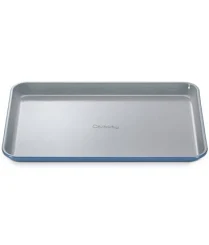
Caraway
Nonstick Ceramic Medium Baking Sheet
- ceramic nonstick coating
- A third party reports verifying it as PFAS-free
- Ceramic coating degradation over time
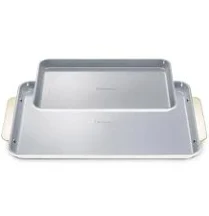
Caraway
Ceramic Nonstick Baking Sheet Duo
- ceramic nonstick coating
- A third party reports verifying it as PFAS-free
- Coating degradation and durability
2 hazards checked on this product. See all of them.
Caraway
Nonstick Ceramic Large Baking Sheet
- ceramic nonstick coating
- The brand calls it PFAS-free, which we have not verified
- Ceramic coating degradation and particle shedding
3 hazards checked on this product. See all of them.
More bakeware grades
How we score, every product runs through the same public 0-100 rubric based on materials, coatings, brand disclosure, lab findings, and recalls. See the full methodology → Spotted a mistake? Report an error.