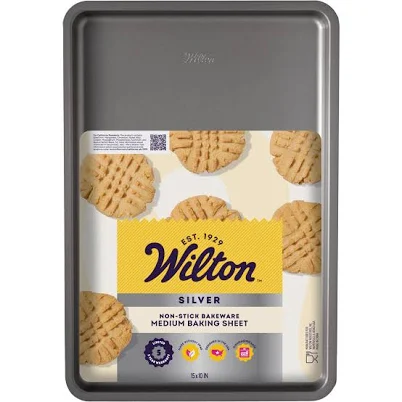
Wilton Large Baking Sheet
Nonstick coating unspecified; PFAS risk unclear without brand disclosure.
Wilton baking sheets use an unspecified nonstick coating. Reynolds provides no public PFAS information, making risk assessment difficult for concerned shoppers.
The better-graded swap

Caraway
Caraway Nonstick Ceramic Large Baking Sheet
90/100 safety
Same rubric that flunked this product. The swap earned Excellent.
Still want this one anyway? Check the price on Amazon. We’d swap it.
Material
Steel sheet with unspecified nonstick coating
Brand disclosure
Brand is silent on PFAS
Lab data
No public lab test
Is Wilton Large Baking Sheet non-toxic? What it is made of
This Wilton/Reynolds baking sheet is carbon steel with an applied nonstick coating of unspecified composition. The steel substrate itself is chemically stable and food-safe at normal baking temperatures. The risk hinges entirely on the coating, if it is a traditional Teflon-type coating-based formula (like Teflon), it can emit toxic fumes above 400-500°F; if it is a ceramic or silicone alternative, the risk profile is substantially lower. Without brand transparency, the actual chemistry remains a guess.
What’s concerning
Category baseline
The starting point for this type of product, before anything specific to this product is counted.
No PFAS disclosure
No public statement from the brand about PFAS in this product.
Non-stick, chemistry undisclosed
Marketed as non-stick without stating the coating chemistry.
Teflon-type coating fume risk (if coating is traditional Teflon)
Coating composition is unspecified. Traditional Teflon-type coating emits toxic fumes (polymer fume fever) above 400-500°F; risk depends on actual coating type and proper use below manufacturer limits.
Coating degradation and metal leaching
Nonstick coatings on steel baking sheets degrade with age, dishwasher use, and abrasion, potentially releasing particles and allowing steel corrosion. Properly maintained below 400°F, this risk is low; neglected sheets pose greater exposure over time.
Non-stick coating particle shedding
Worn or damaged nonstick coatings can shed microparticles into food. Risk increases with age and poor maintenance. Visual inspection before each use can identify chips or peeling before significant ingestion occurs.
What’s reassuring
Lead
No recalls or reports of heavy metal contamination in this product line. Carbon steel substrates used in food service are generally low-risk; however, lack of third-party certification means composition is not independently verified.
Source, ATSDR ↗Aluminum leaching (if substrate contains aluminum)
This product is specified as steel, not aluminum. No leaching risk from the substrate itself, though coating integrity loss could theoretically allow steel oxidation and minimal iron transfer, which is nutritionally neutral.
The full breakdown
The brand's record and disclosure
Reynolds (owned by Reynolds Group Holdings) has not publicly committed to PFAS-free cookware or provided detailed coating specifications for this product line. No major safety recalls specific to this model are documented in FDA or CPSC records, but the brand's silence on nonstick chemistry is notable given industry-wide scrutiny. Competitors like Tramontina and some GreenPan models explicitly advertise ceramic or PFOA-free coatings; Reynolds does not.
How it compares in its category
Steel baking sheets have lower concern than nonstick if uncoated, but coated versions dominate consumer shelves. This product sits in a middle tier, cheaper than premium ceramic-nonstick brands, but offering no transparency advantage over mid-range Calphalon or T-fal models. If nonstick convenience is not essential, bare steel or stainless-steel sheets eliminate coating degradation concerns entirely.
If you buy it
Use only below 400°F to avoid potential fume release; avoid preheating at high temperatures and never broil. Inspect the coating monthly for chips, peeling, or discoloration; discard if damage is visible. Hand wash only; dishwashers accelerate coating wear. Replace every 2-3 years if used regularly, sooner if coating shows wear. If you use it frequently at high heat or notice scratching, switch to uncoated steel or ceramic alternatives.
What we don’t know
- Basis
- Model estimate, 35% confidence, not a lab result
- Lab test
- None on record for this exact product
- Brand statement
- Wilton has made none
Formulations change between production runs, so check the current label. How we grade.
Better-graded alternatives in Bakeware
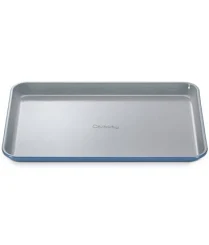
Caraway
Nonstick Ceramic Medium Baking Sheet
- ceramic nonstick coating
- A third party reports verifying it as PFAS-free
- Ceramic coating degradation over time
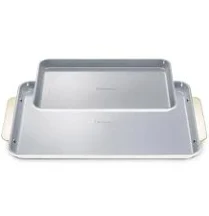
Caraway
Ceramic Nonstick Baking Sheet Duo
- ceramic nonstick coating
- A third party reports verifying it as PFAS-free
- Coating degradation and durability
2 hazards checked on this product. See all of them.
Caraway
Nonstick Ceramic Large Baking Sheet
- ceramic nonstick coating
- The brand calls it PFAS-free, which we have not verified
- Ceramic coating degradation and particle shedding
3 hazards checked on this product. See all of them.
More bakeware grades
How we score, every product runs through the same public 0-100 rubric based on materials, coatings, brand disclosure, lab findings, and recalls. See the full methodology → Spotted a mistake? Report an error.