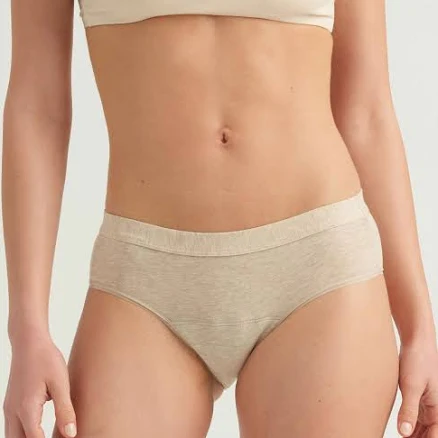
Leakproof Cotton Brief Saalt
Higher uncertainty requires PFAS-free confirmation from brand before purchase.
Organic cotton is paired with an unnamed waterproof barrier. Many modern leakproof products use non-PFAS options, but Saalt's remains unspecified.
The better-graded swap
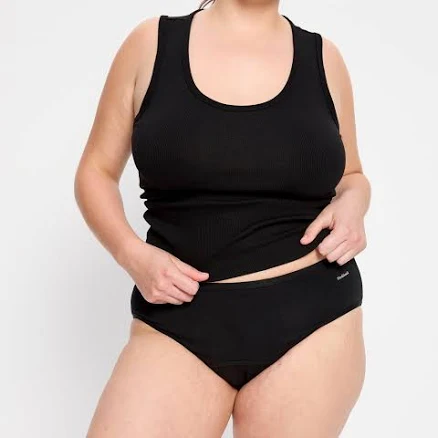
Modibodi
Modibodi Basic Mid-Rise Brief Black
90/100 safety
Same rubric that flunked this product. The swap earned Excellent.
Still want this one anyway? Check the price on Amazon. We’d swap it.
Material
organic cotton with waterproof barrier layer (unspecified)
Brand disclosure
Brand is silent on PFAS
Lab data
No public lab test
You may also be interested in
Top-graded picks in the categories readers replace first, every one scored on the same rubric.

- polypropylene filter housing, carbon/sediment cartridge
- We found no PFAS statement from the brand
- Bacterial growth in spent cartridges
3 hazards checked on this product, all on its full breakdown.

Aquasure
Premier Series 75 GPD Under Sink Reverse Osmosis Water Filtration System
- RO membrane, carbon filters, stainless steel housing
- We found no PFAS statement from the brand
- Bacterial and microbial growth in housing and filters
4 hazards checked on this product, all on its full breakdown.

Avocado
Vegan Mattress
- organic cotton, natural latex, coconut coir, recycled steel coils
- The brand calls it PFAS-free, which we have not verified
- Heavy metals
2 hazards checked on this product, all on its full breakdown.
What Leakproof Cotton Brief Saalt is made of, ingredients and materials
Saalt's brief combines organic cotton (which avoids synthetic pesticide residues) with an undisclosed waterproof barrier layer. The barrier material is the critical unknown, period underwear waterproofing is typically achieved with synthetic polymers (polyurethane, polyester blends) or, increasingly, alternatives not linked to PFAS. Without Saalt's specification, you cannot confirm whether the barrier contains legacy Teflon-type coating, polyurethane with plasticizers, or options with lower concern. Organic cotton itself is low-hazard, but it is only one component.
What’s concerning
Category baseline
The starting point for this type of product, before anything specific to this product is counted.
No PFAS disclosure
No public statement from the brand about PFAS in this product.
Waterproof / stain-resistant treatment
Water-repellent coating treatments have historically used PFAS.
Waterproof barrier composition (unknown polymer type)
The unspecified waterproof layer could be polyurethane, polyester-blend, or PFAS-containing polymer. Without disclosure, you cannot rule out chemical leaching during menstruation when skin contact is prolonged and warm. Saalt has not published barrier material safety data.
Microplastics
If the barrier is primarily synthetic polymer (common for waterproofing), repeated washing and wear will cause microscale shedding. Period underwear is worn against mucous membranes, elevating concern for microplastic ingestion via vaginal absorption compared to standard apparel.
Source, EPA ↗Adhesives or chemical treatments in seam construction
Seams and elastic waistbands may use synthetic adhesives or chemical bonding agents not disclosed in marketing materials. These contact skin and are exposed to moisture, creating a pathway for slow leaching during use and washing.
Skin irritation from barrier material or residual processing chemicals
Users with sensitive skin or chemical sensitivities have anecdotally reported itching or rashes with period underwear products, though no systematic study of Saalt specifically exists. Risk is tied to barrier material identity and post-manufacturing rinsing standards, both opaque for this product.
What’s reassuring
Formaldehyde / VOCs
Organic cotton reduces pesticide burden, but the fabric still undergoes dyeing and finishing steps. GOTS-certified cotton carries restrictions on formaldehyde and azo dyes, but Saalt does not claim GOTS certification. No specific formaldehyde or dye-related complaints or tests for this product have been documented.
Source, ATSDR ↗How is this PFAS grade calculated?
The brand's record and disclosure
Saalt has not publicly disclosed the composition of its waterproof layer or provided third-party testing for PFAS or other chemical residues. The brand does not appear on standard sustainable textile databases (GOTS, bluesign) with published chemical inventories. No independent recalls or safety violations have been documented for this product. The lack of proactive transparency on barrier materials is a compliance gap typical of smaller period-product brands, but it is not evidence of harm.
How it compares in its category
Period underwear is a newer category; competitors range from Knix (which has published PFAS testing) to Thinx (which faced early PFAS lawsuits, now reformulated). Saalt's organic cotton claim is a competitive strength, but the barrier remains the limiting factor. Most mainstream alternatives either certify PFAS-free barriers (Knix) or use traditional polyurethane-based waterproofing without explicit PFAS testing (Thinx, Aerie). Saalt's silence on this specification places it in a middle ground, not proven safe, but not proven unsafe.
If you buy it
Wash in cold water and air dry to preserve the waterproof layer; machine heat and dryer exposure can degrade polymeric coatings and increase leaching risk over time. Replace every 6-12 months or when waterproofing visibly degrades (staining, permanent odor). Before purchase, email Saalt directly requesting the chemical name and PFAS status of the barrier material; many brands will respond if asked. If you are sensitive to synthetic chemical contact or pregnant, consider waiting for written confirmation.
What is not known about PFAS in this product?
- Basis
- Model estimate, 45% confidence, not a lab result
- Lab test
- None on record for this exact product
- Brand statement
- Saalt has made none
Formulations change between production runs, so check the current label. How we grade.
What are the PFAS-free alternatives to Leakproof Cotton Brief Saalt?

- organic cotton, waterproof backing layer
- A third party reports verifying it as PFAS-free
- Coating degradation and microparticle shedding
2 hazards checked on this product, all on its full breakdown.
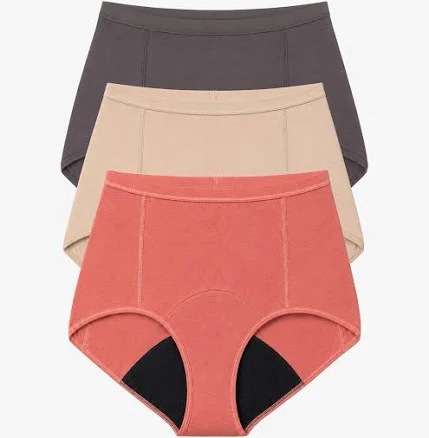
- organic cotton blend, water-resistant gusset
- The brand calls it PFAS-free, which we have not verified
- Microplastic shedding from water-resistant barrier

- Organic cotton, wood pulp fiber
- The brand calls it PFAS-free, which we have not verified
- Azo dyes and synthetic dyes
2 hazards checked on this product, all on its full breakdown.
More period underwear grades
How we score, every product runs through the same public 0-100 rubric based on materials, coatings, brand disclosure, lab findings, and recalls. See the full methodology → Spotted a mistake? Report an error.