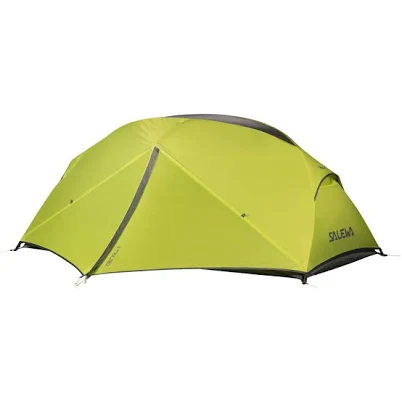
Salewa · Camping Tents & Tarps
Salewa Denali II Tent
Skip until Salewa discloses water-repellent coating chemistry or switches to PFAS-free waterproofing.
This 3-season tent combines polyester and nylon treated for water resistance. Salewa does not reveal coating chemistry, and traditional outdoor tents typically use PFAS treatments.
Still want this one anyway? Check the price on Amazon. We’d swap it.
Material
polyester/nylon tent fabric with water-repellent coating (water-repellent coating) coating
Brand disclosure
Brand is silent on PFAS
Lab data
No public lab test
What Salewa Denali II Tent is made of, ingredients and materials
The Denali II uses polyester and nylon fabric with a water-repellent coating (water-repellent coating) coating to shed water without pooling. Polyester and nylon themselves are stable synthetic polymers with minimal leaching risk under normal use. However, the water-repellent coating's chemistry is not publicly disclosed by Salewa. Most commercial water-repellent coating treatments historically relied on PFAS compounds, though some newer formulations use fluorine-free alternatives; without transparency, the specific chemistry cannot be verified.
What’s concerning
Category baseline
The starting point for this type of product, before anything specific to this product is counted.
No PFAS disclosure
No public statement from the brand about PFAS in this product.
Waterproof / stain-resistant treatment
Water-repellent coating treatments have historically used PFAS.
water-repellent coating leachates (composition unknown)
Polyester/nylon substrates themselves are chemically inert, but the applied water-repellent coating water repellent chemistry is not disclosed. If PFAS-based, they could leach into soil or groundwater if tent fails, though direct human dermal exposure during use is minimal.
Polyester/nylon fiber shedding (microfiber release)
Extended use and weathering can generate microfiber particles from the tent fabric. While not unique to Salewa, repeated washing or aggressive cleaning accelerates shedding; this is primarily an environmental concern during laundry or breakdown.
Adhesive off-gassing from seams and patches
Polyurethane-based sealing adhesives used in tent construction can emit low levels of volatile organic compounds (VOCs), especially in warm or enclosed storage. This is standard for the category and dissipates with airing out before first use.
What’s reassuring
Flame retardants
No public recall or test data indicates Salewa applies brominated or chlorinated flame retardants to the Denali II. Standard polyester and nylon do not require statutory flame treatment for outdoor tents, unlike upholstered furniture.
Source, EPA ↗Heavy metals
Salewa does not market the Denali II with extensive printed graphics. Standard acid or disperse dyes used on polyester are regulated in major markets, and no specific recalls exist for Salewa tents on this hazard.
Source, FDA ↗The full breakdown
The brand's record and disclosure
Salewa (owned by Dynafit, part of Oberalp Group) has not published detailed chemical composition or water-repellent coating supplier information for the Denali II. The brand has not signed the Cradle to Cradle Chemical Certification or committed to PFAS phase-out timelines as of available public records. This silence on waterproofing chemistry is a red flag in an industry where major competitors (including some tent makers) are increasingly disclosing fluorine-free alternatives or PFAS elimination commitments.
How it compares in its category
Most mainstream tent brands (Big Agnes, MSR, REI Co-op) have begun publishing water-repellent coating information or marketing PFAS-free options, putting pressure on competitors to disclose. Salewa's mid-range position and heritage focus on alpine durability may explain prioritization of water-repellent coating performance over transparency, but this lags industry disclosure norms. Ultralight and eco-focused brands now routinely specify silicone or paraffin-based water repellent alternatives.
If you buy it
Store the tent in a dry location away from direct sunlight to preserve fabric integrity and reduce off-gassing of any coating chemicals. Do not use excessive heat to dry (keep below 60C/140F) as this can degrade the water-repellent coating layer and potentially volatilize coatings. Reapply approved aftermarket water-repellent coating (silicone-based or PFAS-free formulations) every 2-3 seasons rather than relying on original coatings as they degrade. Avoid prolonged contact between the tent floor and bare skin if you have sensitive skin, in case residual coating compounds persist.
What we don’t know
- Basis
- Model estimate, 45% confidence, not a lab result
- Lab test
- None on record for this exact product
- Brand statement
- Salewa has made none
Formulations change between production runs, so check the current label. How we grade.
More camping tents & tarps grades
How we score, every product runs through the same public 0-100 rubric based on materials, coatings, brand disclosure, lab findings, and recalls. See the full methodology → Spotted a mistake? Report an error.