Salewa · Camping Tents & Tarps
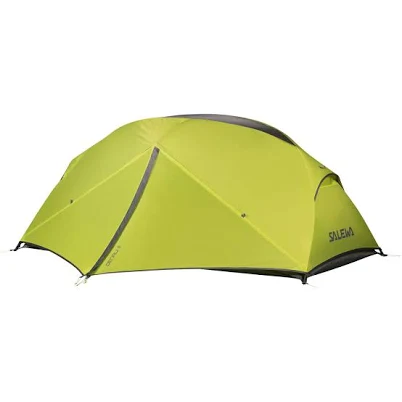
Salewa Denali III Tent
High uncertainty; tent waterproofing likely involves PFAS without public disclosure.
This 3-season backpacking tent has polyester treated for water repellency, likely containing PFAS. Salewa provides no transparency on coating chemistry or alternatives.
Still want this one anyway? Check the price on Amazon. We’d swap it.
Material
Polyester tent fabric with water-repellent coating (water-repellent coating) coating
Brand disclosure
Brand is silent on PFAS
Lab data
No public lab test
What Salewa Denali III Tent is made of, ingredients and materials
The Denali III uses polyester fabric as its primary material, which is stable and does not inherently leach toxic compounds under normal camping conditions. The critical component is the water-repellent coating (water-repellent coating) coating applied to the fabric. Modern water-repellent coating finishes on budget and mid-range tents typically use either fluorinated compounds (PFAS-based, extremely water-resistant but persistent) or newer fluorine-free alternatives (less durable but lower chemical burden). Salewa does not publicly specify which type is used on this model, creating uncertainty about long-term chemical exposure, particularly in high-heat storage or if the coating degrades and flakes.
What’s concerning
Category baseline
The starting point for this type of product, before anything specific to this product is counted.
No PFAS disclosure
No public statement from the brand about PFAS in this product.
Waterproof / stain-resistant treatment
Water-repellent coating treatments have historically used PFAS.
Volatile organic compound (VOC) off-gassing from water-repellent coating
New polyester tents commonly release odorous volatiles from factory-applied coatings during the first few uses. This is not acutely toxic in outdoor settings with good ventilation, but confined indoor storage or poor air circulation in a packed tent may increase short-term exposure.
Coating degradation and microparticle shedding
Water-repellent coating coatings on polyester tents are not permanent and degrade with UV exposure, abrasion, and washing. Flaking or peeling coating may shed fine particles, though the risk of inhalation or ingestion during typical camping use is low unless the tent is used in confined spaces.
What’s reassuring
Polyester fiber shedding under stress
Polyester fabric used in tents is tightly woven and does not shed microfibers under normal use conditions. Shedding risk is primarily a concern for synthetic textiles with looser weaves or when fabrics are abraded repeatedly.
Heavy metals
Salewa's Denali III uses standard polyester in typical earth-tone and bright colors. No recalls or safety alerts for heavy metal contamination or restricted azo dyes in this tent or Salewa's polyester lines are on record.
Source, FDA ↗Flame retardants
Camping tents sold in North America and Europe are not required to meet flammability standards like furniture or children's sleepwear, and polyester tents do not typically carry added flame retardants. The fabric itself is moderately flammable but not treated with chemical FR agents.
Source, EPA ↗The full breakdown
The brand's record and disclosure
Salewa (owned by Dolomite) does not maintain a public PFAS policy or commitment to fluorine-free water-repellent coating alternatives. The brand has not published transparency reports or third-party test results for chemical coatings on its tent line. No major recalls or safety controversies involving this specific tent model are on record. However, Salewa's silence on water-repellent coating chemistry is typical of many outdoor brands and reflects broader industry reluctance to disclose or phase out PFAS in textiles.
How it compares in its category
Mid-range dome tents like the Denali III occupy a price and performance middle ground; they are not marketed as chemical-free and do not carry third-party certifications (such as OEKO-TEX or bluesign) that would restrict or test for hazardous coatings. Competitors such as Big Agnes and MSR similarly do not disclose water-repellent coating chemistry on most models, making this tent representative of the category norm rather than an outlier. Higher-end brands (e.g., Hilleberg) and budget eco-focused brands may offer more transparency, but not always lower chemical use.
If you buy it
Air out the tent in sunlight for several hours after purchase and before first use to allow off-gassing of any residual coating volatiles. Avoid storing it in hot vehicles or sealed bags for extended periods, as heat can accelerate coating degradation and potential particle shedding. During use, the tent itself does not pose inhalation or contact hazards in normal camping; polyester does not break down or leach from normal wear. If the water-repellent coating visibly flakes, delaminates, or stops beading water after years of use, consider re-coating with a fluorine-free alternative (e.g., Nikwax NikProof or Granger's) rather than discarding the tent.
What we don’t know
- Basis
- Model estimate, 45% confidence, not a lab result
- Lab test
- None on record for this exact product
- Brand statement
- Salewa has made none
Formulations change between production runs, so check the current label. How we grade.
More camping tents & tarps grades
How we score, every product runs through the same public 0-100 rubric based on materials, coatings, brand disclosure, lab findings, and recalls. See the full methodology → Spotted a mistake? Report an error.