Salewa · Camping Tents & Tarps
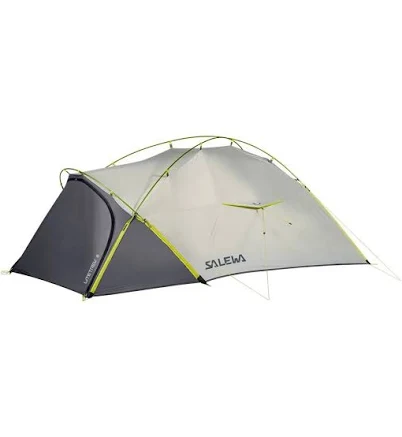
Salewa Litetrek III 3-Person 3-Season Tent
Skip until Salewa discloses tent fabric coating chemistry or commits to PFAS-free treatments.
This 3-season tent uses polyester requiring water-repellent treatment to function. Salewa does not publicly disclose what water-repellent coating chemicals are involved.
Still want this one anyway? Check the price on Amazon. We’d swap it.
Material
Polyester with water-repellent coating (water-repellent coating) coating, unspecified chemistry
Brand disclosure
Brand is silent on PFAS
Lab data
No public lab test
What Salewa Litetrek III 3-Person 3-Season Tent is made of, ingredients and materials
The Litetrek III uses polyester fabric with a water-repellent coating (water-repellent coating) coating whose chemical composition Salewa does not publicly specify. Polyester itself is chemically stable in normal use, but water-repellent coating finishes on outdoor textiles historically relied on fluorochemicals (PFAS) to repel water; modern alternatives exist (wax, silicone, polyurethane) but are not confirmed here. The tent also includes seams and taped seams, which may contain adhesives whose components are not disclosed.
What’s concerning
Category baseline
The starting point for this type of product, before anything specific to this product is counted.
No PFAS disclosure
No public statement from the brand about PFAS in this product.
Waterproof / stain-resistant treatment
Water-repellent coating treatments have historically used PFAS.
PFAS
Salewa has not disclosed whether the water-repellent coating treatment uses fluorinated compounds (PFAS) or fluorocarbon-free alternatives. Historical industry practice suggests PFAS is possible; no independent testing or brand statement confirms or rules this out.
Source, ATSDR ↗Polyester fiber degradation and microfiber shedding
Polyester tents shed microfibers during washing, weather exposure, and abrasion, especially as coating degrades. Risk is low during typical camping use but increases with mechanical stress and UV exposure over years.
Mold and bacterial growth from moisture retention
If stored wet or in damp conditions, polyester fabric and seam tape can support mold and mildew growth. This is a use and maintenance issue, not an inherent product hazard, but relevant to health and product lifespan.
What’s reassuring
Adhesive residues in seam tape
Seam-sealed tents use polyurethane or acrylic adhesives; Salewa does not disclose specific formulations. No safety incidents or hazardous volatile emissions are documented for this model. Risk is minimal in outdoor use with good ventilation.
Formaldehyde / VOCs
Polyester camping tents typically use low-impact dyes; no safety alerts or recalls for Salewa tents on this basis. Risk is minimal, but dye formulations are not disclosed by the brand.
Source, ATSDR ↗The full breakdown
The brand's record and disclosure
Salewa (owned by Meindl Group, under Dolomite) has not published specific material composition data or PFAS commitment statements for tent lines. The brand does not maintain a public restricted substance list for fabrics or coatings. No recalls or safety controversies specific to this model are on record, but the absence of transparency on water-repellent coating chemistry is notable in an industry where PFAS disclosure is increasingly expected.
How it compares in its category
Mid-range recreational camping tents like this typically use polyester with legacy water-repellent coating treatments; some competitors (e.g., Decathlon, Big Agnes entry lines) now market PFAS-free or fluorocarbon-free water-repellent coating options. Salewa does not advertise such claims for the Litetrek III. High-end and eco-focused brands increasingly disclose water-repellent coating chemistry; Salewa's silence reflects an older industry standard, not best practice.
If you buy it
Wash the tent exterior with plain water only; do not machine wash, as detergents can degrade water-repellent coating coatings and leach coating chemicals. Store dry in a cool place; UV exposure over years will degrade the polyester fibers and coating. After 3-5 years of heavy use, or if water no longer beads on the outer fabric, consider replacing rather than re-treating (reapplication chemicals add more coating exposure). Avoid contact between the inner tent fabric and skin for extended periods; good ventilation in use reduces moisture and mold risk.
What we don’t know
- Basis
- Model estimate, 45% confidence, not a lab result
- Lab test
- None on record for this exact product
- Brand statement
- Salewa has made none
Formulations change between production runs, so check the current label. How we grade.
More camping tents & tarps grades
How we score, every product runs through the same public 0-100 rubric based on materials, coatings, brand disclosure, lab findings, and recalls. See the full methodology → Spotted a mistake? Report an error.