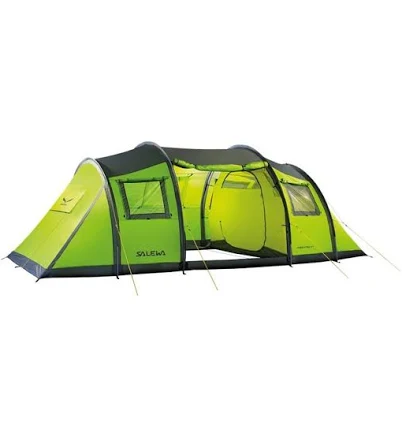
Salewa · Camping Tents & Tarps
Salewa Midway VI Tent
Tent uses standard waterproof treatment; PFAS status unclear without brand disclosure.
This 3-season tent features polyester with waterproof coating that Salewa does not publicly identify. Waterproof outdoor gear commonly uses fluorinated treatments.
Still want this one anyway? Check the price on Amazon. We’d swap it.
Material
Polyester tent fabric with waterproof coating (type unspecified by brand)
Brand disclosure
Brand is silent on PFAS
Lab data
No public lab test
What Salewa Midway VI Tent is made of, ingredients and materials
The Midway VI uses polyester fabric (likely 75-150 denier) with an unspecified waterproof water-repellent coating (water-repellent coating) treatment, typical for mid-range expedition tents. Polyester itself is chemically inert when intact, but the factory-applied water-repellent coating is the exposure point, it may contain fluorochemicals (PFAS), silicone, or wax-based polymers depending on Salewa's supplier. The coating degrades with UV exposure and mechanical wear, potentially releasing microparticles over years of use.
What’s concerning
Category baseline
The starting point for this type of product, before anything specific to this product is counted.
No PFAS disclosure
No public statement from the brand about PFAS in this product.
Waterproof / stain-resistant treatment
Water-repellent coating treatments have historically used PFAS.
PFAS
Salewa does not disclose whether the Midway VI water-repellent coating contains PFAS (C6, C8, or GenX variants). Industry standard circa 2020-2024 for polyester tents includes both formulations with PFAS-associated chemistry and formulations without such chemistry; no public test data available for this model.
Source, ATSDR ↗Microplastic shedding from degraded coating
Polyester tent fabric sheds microscopic polymer particles as the water-repellent coating breaks down under UV and mechanical stress, particularly after 3-5 years. These particles can be inhaled during setup/takedown and may accumulate in soil and water at campsites.
Volatile organic compounds (VOCs) from factory finish
New polyester tents often off-gas formaldehyde resins and aromatic hydrocarbons during the first 1-3 weeks of storage before use. Airing the tent outdoors for several days before first deployment reduces this exposure. Salewa provides no ventilation guidance in standard documentation.
Adhesive/tape sealant chemistry
Seam sealing tape (applied to water-vulnerable stitching) composition is not disclosed; polyurethane-based sealants are common and generally stable but may release isocyanate vapors if thermally stressed or aged in high humidity.
What’s reassuring
Azo dyes in colored seams and thread
The Midway VI's seams and stitching may use azo dyes, which can break down into aromatic amines under sweat or sun exposure; no recalls or safety alerts reported for this brand's tent dyes to date.
The full breakdown
The brand's record and disclosure
Salewa (owned by Dynafit/Atlantic) does not publicly disclose waterproof coating chemistry or PFAS avoidance commitments on product spec sheets. The brand has no known major consumer safety recalls for tent coatings or fabric contamination. No third-party certifications (e.g., OEKO-TEX, bluesign) are advertised for this model, which would have provided independent verification of restricted chemicals.
How it compares in its category
Mid-weight recreational/expedition tents typically use polyester + water-repellent coating, making the Midway VI a standard choice chemically. Competitors like Marmot and MSR also do not disclose PFAS status on many models, making this a category-wide transparency gap. Higher-end tents (Black Diamond, Hilleberg) sometimes list silicone-based or PFOA-free coatings, though price premiums are substantial. Budget tents under $200 rarely disclose coating type at all.
If you buy it
Store in a cool, dry, dark place away from prolonged sunlight to slow water-repellent coating degradation and microparticle shedding. Do not use heat guns or high-temperature camp stoves inside for extended periods, as accelerated thermal breakdown of the coating can occur. After 5-10 years of regular use or when water no longer beads on fabric, the water-repellent coating is spent; re-treatment products (silicone or fluorocarbon-free options available) extend life. Wash only with mild soap and cool water; avoid detergents with optical brighteners, which can damage the coating.
What we don’t know
- Basis
- Model estimate, 35% confidence, not a lab result
- Lab test
- None on record for this exact product
- Brand statement
- Salewa has made none
Formulations change between production runs, so check the current label. How we grade.
More camping tents & tarps grades
How we score, every product runs through the same public 0-100 rubric based on materials, coatings, brand disclosure, lab findings, and recalls. See the full methodology → Spotted a mistake? Report an error.