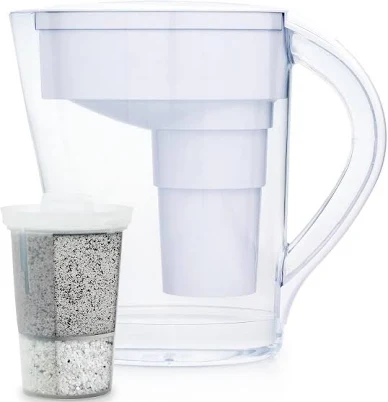
Mina Alkaline Water Filter Pitcher
Lower-concern option; pitcher itself unlikely to leach PFAS, but no brand transparency on filter specifics.
Santevia's Mina pitcher uses standard plastic construction and activated carbon or mineral filtration not inherently associated with PFAS. The brand provides no public disclosure about PFAS in filters or pitcher components.
We flunk more products than we pass. This one earned its grade. How we grade
Material
Plastic pitcher with activated carbon/mineral filter cartridge
Brand disclosure
Brand is silent on PFAS
Lab data
No public lab test
What Mina Alkaline Water Filter Pitcher is made of, ingredients and materials
The Mina pitcher uses standard food-grade polypropylene (PP) or polyethylene terephthalate (PET) plastic housing with a replaceable cartridge containing activated carbon and mineral media (typically calcium/magnesium). These materials are chemically stable at room temperature and do not leach estrogens or heavy metals under normal use. The cartridge itself is a composite of carbon granules and mineral compounds designed for adsorption rather than ion exchange, meaning no ion-exchange resin degradation products should shed into water.
What’s concerning
No PFAS disclosure
No public statement from the brand about PFAS in this product.
Bacterial contamination in filter cartridge
Activated carbon is a porous medium that can harbor pathogenic bacteria if not replaced regularly or if water sits stagnant. Santevia does not publish cartridge microbial testing data, so residual bacterial load post-filtration is unknown. Users must adhere to replacement schedules and discard standing water.
Mineral cartridge integrity and dissolution
Santevia advertises pH elevation via mineral media, but does not disclose the exact mineral composition or dissolution rate. If cartridges shed dust or mineral particles into water, intake of undissolved material is unlikely to cause harm but defeats the filtration purpose. No health incidents are reported.
Filter efficacy decline and contaminant break-through
Like all activated-carbon pitchers, the Mina's ability to reduce chlorine, sediment, and odor degrades sharply after the manufacturer's replacement window. Exceeding cartridge life risks incomplete filtration; Santevia provides no real-time saturation indicators, so users rely on calendar timing.
Mold or algae in pitcher water chamber
Transparent or translucent pitcher housings allow light penetration, which can promote algal growth. The mineral media does not provide chlorine residue to inhibit microbial growth. Regular cleaning and dark storage mitigate this risk.
What’s reassuring
Base material not linked to PFAS
The main material recorded for this product is not one associated with PFAS.
Leaching from polypropylene or PET pitcher housing
Food-grade polypropylene and PET do not leach BPA, phthalates, or other endocrine disruptors under room-temperature water exposure. No recalls or complaints for this product exist in public health databases. Risk remains theoretical and within accepted food-contact polymer standards.
The full breakdown
The brand's record and disclosure
Santevia has no documented safety recalls or toxicity complaints in public databases for this pitcher model. The brand does not publish detailed material safety data sheets or third-party testing reports on its website, which limits transparency but also means no scandals or misrepresentations are on file. The company markets the product as alkaline-boosting rather than making therapeutic claims that would trigger FDA scrutiny. No major controversies regarding manufacturing or ingredient sourcing have been reported.
How it compares in its category
Pitcher filters occupy a middle ground in water treatment, they remove common contaminants via carbon but do not achieve the purity of reverse-osmosis systems or the convenience of faucet-mounted units. The Santevia Mina is typical for this category in using activated carbon and mineral cartridges; comparable models from PUR, Brita, and ZeroWater use similar chemistries. At the 9-cup size, it is on the larger end, reducing replacement frequency and cost per use relative to smaller pitchers.
If you buy it
Replace cartridges every 2-3 months or after 40 gallons, whichever comes first, to prevent bacterial biofilm growth inside spent carbon and maintain mineral dissolution rates. Store the pitcher in a cool, dark place away from direct sunlight to slow algae growth in the filtered water chamber. Do not expose the plastic housing to temperatures above 60°C (140°F); hand-wash only. Discard water that sits in the pitcher longer than 48 hours at room temperature, as carbon does not provide residual antimicrobial protection.
What we don’t know
- Basis
- Model estimate, 62% confidence, not a lab result
- Lab test
- None on record for this exact product
- Brand statement
- Santevia has made none
Formulations change between production runs, so check the current label. How we grade.
Better-graded alternatives in Water Filters

Aquamira
Water Storage Treatment 2 oz Glass Bottles 60 gallons Purification
- glass bottles, sodium dichloroisocyanurate treatment chemical
- We found no PFAS statement from the brand
- Chemical overdose or misuse
5 hazards checked on this product. See all of them.

Big Berkey
Empty Housing with NO Filters Included
- Stainless steel housing and spigot
- We found no PFAS statement from the brand
- Bacterial growth and biofilm if filters not replaced
5 hazards checked on this product. See all of them.
LifeStraw
Home Glass Water Filter Pitcher
- Borosilicate glass pitcher, replaceable activated-carbon filter cartridge
- Bacterial growth in filter cartridge if unmaintained
5 hazards checked on this product. See all of them.
More water filters grades
How we score, every product runs through the same public 0-100 rubric based on materials, coatings, brand disclosure, lab findings, and recalls. See the full methodology → Spotted a mistake? Report an error.