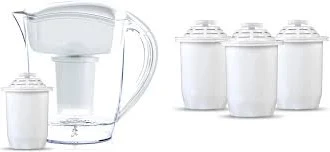
Santevia Classic Alkaline Water Filter Pitcher & 3-Pack Replacment Filter
Lower-concern filter, but Santevia provides no PFAS transparency; verify if carbon filters are independently tested.
Santevia's Classic pitcher uses standard activated carbon filtration, a lower-PFAS-risk material class. The brand makes no statement about PFAS testing, source claims, or filter composition details.
We flunk more products than we pass. This one earned its grade. How we grade
Material
Plastic pitcher, activated carbon filter cartridge
Brand disclosure
Brand is silent on PFAS
Lab data
No public lab test
What Santevia Classic Alkaline Water Filter is made of, ingredients and materials
The pitcher is polycarbonate or polypropylene plastic housing with an activated carbon filter cartridge containing granular carbon and likely ion-exchange resin media. Activated carbon is inert in cold water and does not leach; the plastic pitcher housing poses minimal leaching risk under normal refrigerated storage since cold water limits migration of any plastic additives. The filter cartridge itself is a consumable that contacts water directly, so replacement frequency and media quality matter for safety.
What’s concerning
No PFAS disclosure
No public statement from the brand about PFAS in this product.
Filter cartridge bacterial/mold growth
Activated carbon cartridges can support bacterial biofilm if not replaced regularly or if pitcher is left sitting with wet filter between uses. Santevia does not specify filter housing material or antimicrobial additives, so maintenance is critical.
Unverified contaminant removal claims
Santevia claims chlorine and lead removal but does not publish NSF 53 or equivalent third-party certification. Without independent lab data, the actual removal efficiency and safety margins are unverified. Buyers assume performance without regulatory backing.
Filter cartridge sourcing and quality control
Replacement cartridges are not traceable to third-party manufacturing standards or quality audits. Inconsistent carbon media quality could result in variable contaminant removal between batches, and no recall mechanism exists if a cartridge batch is contaminated.
PFAS
Carbon filters can adsorb some PFAS depending on media type and contact time, but Santevia does not state whether filters are designed or tested for PFOA/PFOS. Buyers relying on this pitcher for PFAS reduction have no assurance of effectiveness.
Source, ATSDR ↗What’s reassuring
Base material not linked to PFAS
The main material recorded for this product is not one associated with PFAS.
BPA & bisphenols
Polycarbonate and polypropylene pitchers are low-migration under cold, short-term contact typical of refrigerated water storage. No leaching incidents reported for this brand. Risk increases if pitcher is left in sunlight or used with hot water.
Source, FDA ↗The full breakdown
The brand's record and disclosure
Santevia markets alkaline and mineral water filter pitchers but provides no published third-party testing data, NSF certification, or explicit PFAS removal claims on available product pages. The brand does not disclose the origin, sourcing, or contaminant-removal specifications of its replacement filters. No major safety recalls or contamination incidents are on record for this product line, but the absence of certification (NSF, WQA) or independent lab reports limits verifiability of filtration claims.
How it compares in its category
Pitcher filters are a low-cost, no-installation category; Santevia's design is typical (gravity-fed carbon cartridge). Competitors like Brita and PUR carry NSF 53 certification for lead and chlorine removal, whereas Santevia does not disclose equivalent third-party validation. Alkaline mineral pitchers add ion exchange and mineral cartridges, which are not regulated or certified as medical devices, so marketing claims about pH or mineral content are not independently verified by the FDA or EPA.
If you buy it
Replace filter cartridges every 2, 3 months or after 40 gallons (follow the label), as saturated carbon loses adsorptive capacity and can harbor bacterial biofilm if stored wet between uses. Store the pitcher in the refrigerator to minimize plastic leaching and bacterial growth. Do not use with hot water; pitcher plastic is not rated for temperatures above 40°C. If tap water quality is poor (high lead, industrial contamination), request a water quality test before relying solely on this pitcher; consider NSF-certified filters for higher-risk scenarios.
What we don’t know
- Basis
- Model estimate, 62% confidence, not a lab result
- Lab test
- None on record for this exact product
- Brand statement
- Santevia has made none
Formulations change between production runs, so check the current label. How we grade.
Better-graded alternatives in Water Filters

Aquamira
Water Storage Treatment 2 oz Glass Bottles 60 gallons Purification
- glass bottles, sodium dichloroisocyanurate treatment chemical
- We found no PFAS statement from the brand
- Chemical overdose or misuse
5 hazards checked on this product. See all of them.
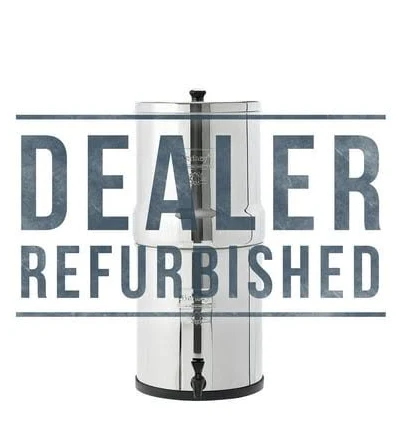
Big Berkey
Empty Housing with NO Filters Included
- Stainless steel housing and spigot
- We found no PFAS statement from the brand
- Bacterial growth and biofilm if filters not replaced
5 hazards checked on this product. See all of them.
LifeStraw
Home Glass Water Filter Pitcher
- Borosilicate glass pitcher, replaceable activated-carbon filter cartridge
- Bacterial growth in filter cartridge if unmaintained
5 hazards checked on this product. See all of them.
More water filters grades
How we score, every product runs through the same public 0-100 rubric based on materials, coatings, brand disclosure, lab findings, and recalls. See the full methodology → Spotted a mistake? Report an error.