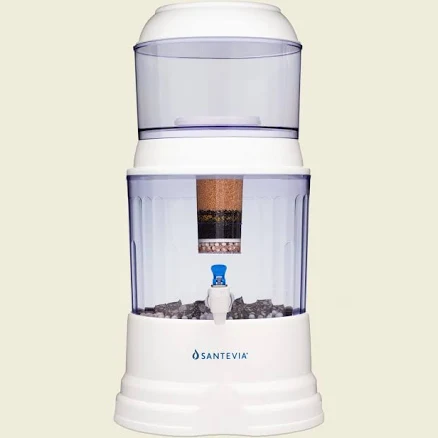
Santevia Gravity Water System Dispenser Model
Lower PFAS concern; gravity filters use standard carbon and mineral media without known Teflon-family coating coatings, but brand offers no transparency.
Santevia gravity dispensers use replaceable filter cartridges typically containing activated carbon and mineral media with lower inherent PFAS risk compared to nonstick or water-resistant coatings. The brand makes no PFAS claim or third-party verification claim.
We flunk more products than we pass. This one earned its grade. How we grade
Material
Gravity filter pitcher with carbon and mineral-based filter cartridges
Brand disclosure
Brand is silent on PFAS
Lab data
No public lab test
What Santevia Gravity Water System Dispenser is made of, ingredients and materials
Santevia Gravity pitchers use activated carbon cartridges combined with mineral-based media (typically zeolite, ion-exchange resin, or similar). The plastic housing is typically polypropylene or BPA-free copolymer, and water never heats during gravity filtration, which eliminates thermal leaching risk. The filter media themselves are not designed to dissolve or shed into water at room temperature under normal use; the main risk is microbial colonization if cartridges are not replaced on schedule.
What’s concerning
No PFAS disclosure
No public statement from the brand about PFAS in this product.
Bacterial growth in filter cartridge if unmaintained
Gravity filters rely on user discipline to replace cartridges on schedule. Exhausted activated carbon loses adsorption capacity and can harbor bacteria; Santevia provides no automated replacement alerts or NSF certification that would verify microbial reduction claims.
Heavy metals
Activated carbon and zeolite sourced from unknown suppliers could contain trace heavy metals or manufacturing residue. Without NSF or WQA certification and no public test data, there is no independent verification that Santevia's cartridges are contaminant-free before use.
Source, FDA ↗Mold or biofilm in pitcher housing if stored wet
The plastic pitcher body can develop mold or bacterial films if left standing with stagnant water. Santevia provides no antimicrobial coating or guidance on drying; user maintenance is critical to prevent this common gravity-filter problem.
What’s reassuring
Base material not linked to PFAS
The main material recorded for this product is not one associated with PFAS.
Plastic housing leaching (polypropylene or similar)
Gravity filters operate at room temperature, which minimizes BPA and phthalate release from standard food-grade plastics. Santevia does not specify plastic grade (virgin vs. recycled) or publish migration testing, but no recalls or complaints about leaching are on public record for this model.
The full breakdown
The brand's record and disclosure
Santevia does not publicly disclose detailed material sourcing, third-party testing results, or filtration certifications (NSF, WQA, etc.) on their standard product pages. The brand markets mineralizing features but offers no transparency on whether filter media contain contaminants like heavy metals or on housing material safety. This lack of disclosure is not unusual for gravity-filter brands but limits independent verification of safety claims.
How it compares in its category
Gravity filters as a category avoid the Teflon-type coating/heated-plastic risks of electric dispensers and have lower concern than pitcher filters with unspecified plastic. Santevia's positioning as a mineral-adding filter is common; competitors like BRITA (carbon only) and ZeroWater (ion-exchange) are similarly opaque on housing materials but more widely NSF-tested. Santevia pitchers lack independent certification badges that would signal third-party validation.
If you buy it
Replace cartridges every 2 months or per manufacturer guidance to prevent bacterial biofilm growth inside spent filter media. Store the pitcher away from direct sunlight and heat to prevent any degradation of the plastic housing. Do not use hot water in the pitcher or refill it with boiling water, as this could stress the plastic. Empty and dry the pitcher weekly if not in regular use to reduce mold risk in standing water.
What we don’t know
- Basis
- Model estimate, 72% confidence, not a lab result
- Lab test
- None on record for this exact product
- Brand statement
- Santevia has made none
Formulations change between production runs, so check the current label. How we grade.
Better-graded alternatives in Water Filters

Aquamira
Water Storage Treatment 2 oz Glass Bottles 60 gallons Purification
- glass bottles, sodium dichloroisocyanurate treatment chemical
- We found no PFAS statement from the brand
- Chemical overdose or misuse
5 hazards checked on this product. See all of them.

Big Berkey
Empty Housing with NO Filters Included
- Stainless steel housing and spigot
- We found no PFAS statement from the brand
- Bacterial growth and biofilm if filters not replaced
5 hazards checked on this product. See all of them.
LifeStraw
Home Glass Water Filter Pitcher
- Borosilicate glass pitcher, replaceable activated-carbon filter cartridge
- Bacterial growth in filter cartridge if unmaintained
5 hazards checked on this product. See all of them.
More water filters grades
How we score, every product runs through the same public 0-100 rubric based on materials, coatings, brand disclosure, lab findings, and recalls. See the full methodology → Spotted a mistake? Report an error.